Our coffee table at home was always covered with publications like The Presbyterian Outlook and newsletters from organizations that fought racism and systemic poverty in the United States and our nation’s militaristic interventions in Central America. Our dinner table conversations centered as much around social justice concerns as the activities of three teenagers and the local church my father pastored.
In 1986, we discussed the federal conviction of pastor John Fife and seven others on alien smuggling charges. Fife had started a fire in the faith community in 1982 when he led Southside Presbyterian Church in Tucson, Arizona, to become the first Sanctuary congregation in the United States. He and Southside were responding to the deaths of migrants in the desert and to the U.S. government’s policy of sending undocumented immigrants back to American-backed death squads in Guatemala and El Salvador. The witness of Southside Presbyterian Church to the gospel call to care for travelers and prisoners in our midst inspired more than 500 other congregations across the country to become Sanctuary churches.
The audacity of Southside inspired me, too. During the summer of 1989, I lived in Guatemala City with a matriarchal Guatemalan family — three women and one young son who had fled poverty and violence in the mountains to make a life in the city. During the day, I volunteered at a childcare center. On the weekends, an intrepid nun took me throughout the Guatemalan countryside to see firsthand the effects of civil war, government intimidation and the “disappearance” of indigenous people. My extended interactions with women, men and children in Guatemala brought home to me the shameful reality of our nation’s Central American policies. The importance of personal connections to transform hearts is something John Fife has spoken about. As long as our sisters and brothers suffering elsewhere remain abstractions, we will not be broken by Scripture and moved to change.
In Guatemala I also witnessed much joy, including the wedding of Presbyterian mission co-worker Dennis Smith to Guatemalan mission worker Maribel Perez. Both Dennis and Maribel have had long careers training pastors and community leaders in Central America (and now in Brazil) to be effective servants and communicators in the midst of trauma and uncertainty.
Their work, as that of so many faithful Presbyterians in Central America, speaks to the commitments the Presbyterian Church (U.S.A.) has made since the early 1980s to work for peace with justice in U.S. policies toward the nations south of our border and in our interactions as a church with immigrant communities. It is worth pulling out the General Assembly minutes for the 195th assembly in 1983 and reading the report “Adventure and Hope: Christians and the Crisis in Central American” or the 199th General Assembly (1987) Task Force on Central America report.
“Theological reflection on the unjust use of force in Central America by the government of the United States and governments of the region are not theological hairsplitting or covert political ideology,” the 1987 report asserts. “The poor of Central America – widows, orphans, refugees, hungry and homeless – are suffering and dying from the regional implementation of the policies” of the United States.
We are called today to view our future in light of our history and the audacity of the gospel.
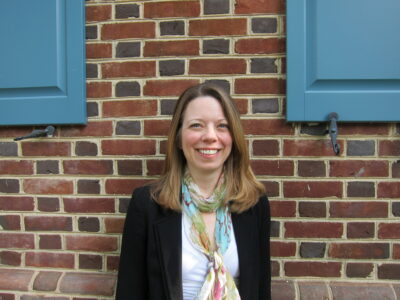 Beth Shalom Hessel is the executive director of the Presbyterian Historical Society in Philadelphia.