
The power of divine play at Sophia’s Theme Park
Concerned with reports of increasing numbers of pastors experiencing burnout and depression due to exhaustion during the COVID-19 pandemic, McCormick Theological Seminary..


Concerned with reports of increasing numbers of pastors experiencing burnout and depression due to exhaustion during the COVID-19 pandemic, McCormick Theological Seminary..

The actress's portrayal of the Shaker movement founder has earned her a Golden Globe nomination.
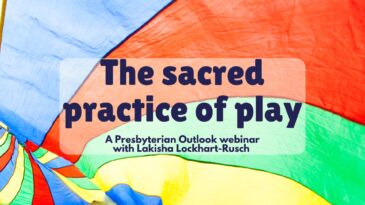
Join Dr. Lakisha R. Lockhart-Rusch for an interactive webinar that invites you to move, reflect, and reimagine what it means to play with intention.

We have always had prophets who have used their creative witness to leave this world better than they found it. — Winterbourne Harrison-Jones

The ongoing challenge, says Sarah Ann Bixler, is to reconcile experiences of trauma with our theology.

Joseph Holmes, an award-nominated filmmaker and culture critic, shares his thoughts.

Who gets counted and who does not in the Presbyterian Church (U.S.A.)? Or maybe the better question is: Who counts and who..

Welcome Invite various persons to bring a designated item and use this liturgy as a way to begin your time of learning..

My introduction to play happened during a season of exhaustion. As the solo pastor of one church and session moderator of five..

Dru Johnson Eerdmans, 176 pages Reviewed by Thomas G. Long The great scholar of ritual Catherine Bell once commented on how dramatically..
Holy Play: The Joyful Adventure of Unleashing Your Divine Purpose by Kirk Byron Jones. San Francisco: Jossey-Bass, 2007. ISBN 0787984523. Pb., 188 pp., $21.95.
She had been dead for perhaps two decades when I became their pastor, but the people of the church in rural Southside Virginia where she had taught Sunday school for some forty years still quoted Mrs. Cowie: "A Christian is not supposed to have fun!" Kirk Byron Jones dares to disagree. In Holy Play: the Joyful Adventure of Unleashing Your Divine Purpose Jones asserts not only that life is to be enjoyed but that having fun is living faithfully and that our passions and joys are means through which we discover divine purpose for our lives. To use Jones's words, "This book will teach you how to stop waiting for God to tell you what to do and start confidently doing what God has been inspiring you to do all along" (xiv).
What happens when God loves the people we’d rather resent? Rose Schrott Taylor explores Jonah’s anger, God’s mercy and the boundaries we’re invited to cross.
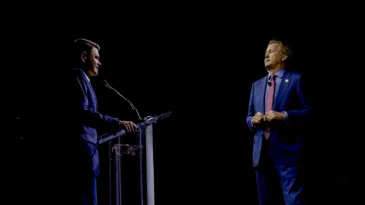
In a state where two-thirds of the adult population identifies as Christian and 45% say religion is 'very important' in their life, the candidates are asking voters to choose between two dramatically different views of Christianity.

As Katy Shevel prepares for a sabbatical, Ruth Haley Barton's vision of Sabbath reshapes her understanding of rest — not as self-care, but as a rhythm God intends for the whole church.

First Presbyterian Church of Kerrville, Texas, worships one year after the devastating Hill Country floods.
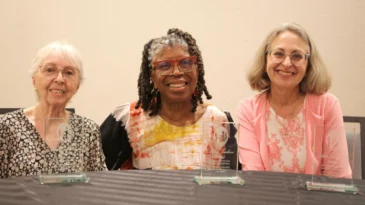
The Rev. Adele Langworthy and the Rev. Blanca Estrella Otaño-Rivera and Ruling Elder Selma Jackson are celebrated at biennial breakfast.
Two proposals blasting the idea are recommended, while one commemorating Presbyterian role in American Revolution was rejected.
As GA considers CON-10, David W. Congdon argues that neither Scripture nor Reformed theology requires monogamy and that God's abundant love offers a foundation for affirming polyamorous relationships.
From the Nicene Creed to a proposed 21st-century confession, Presbyterians are considering how the church should articulate its faith in a changing world.

Poetry is not proclaimed in a vacuum. Neither is prayer. Both teach us to construct our words with care and intention. — Kathryn Lester-Bacon

Tony Stiff explores how disability and queer theology together challenge the church to expand belonging and reimagine true inclusion.
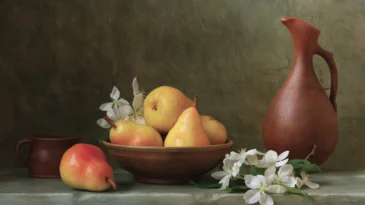
Heartache and wonder can coexist, writes Christopher Elwood.

Mathew Frease frames empathy as a radical, Christ-centered practice that connects people, transforms relationships, and expands our capacity for justice across difference.

Palestinian Christians have developed one of the most important liberation theologies of our time — and most American churches have never encountered it, writes Christopher Tweel.

Poetry set to beats reminds listeners of their purpose and self, writes John Molina-Moore.
© Copyright 2026 The Presbyterian Outlook. All Rights Reserved. Privacy Statement. Website by Web Publisher PRO