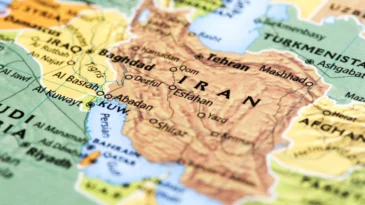
Lebanon has received a flood of refugees from neighboring Syria and Iraq that dwarfs the “border crisis” in the United States. Lebanon is a country of 4 million inhabitants; in the last three years, they have absorbed an additional 1.5 million refugees from Syria and 750,000 refugees from Iraq. This has increased the population of the country, smaller than the state of Connecticut, by 50 percent. Obviously this puts an enormous strain on the resources of a country that has had its own share of challenges, including a 15-year civil war that just ended in 1990, a series of terrorist attacks and suicide bombings, and attacks and occupation by neighboring Israel on and off over the last 20 years.
How does a country and a church practice radical hospitality in an inhospitable context? Powerfully and beautifully. The Presbyterian Church in Lebanon (called the National Evangelical Synod of Syria and Lebanon (NESSL), is responding to the call to love their neighbor as their self and opening up its churches, schools, and hearts for this incredible influx of refugees and immigrants.
In the first few years of the war the church responded at the national and congregational level. People opened their homes to relatives fleeing the violence and the church was serving an average of 400 families per month with food distributions, blankets and clothing, and subsidies for heating oil in the cold winters. On August 1, 2013, NESSL launched a relief program to reach and serve 3,000 families a month in both Syria and Lebanon. It was planned to be centered in Damascus with six other locations scattered around Syria. They have expanded and are serving more than 26 sites. And they are serving families outside of the church, including Muslims.
Recently, it was my privilege to join a delegation of the Presbyterian Church (U.S.A.) in a visit to the NESSL in Beirut. There we learned of the incredible work being done by the church. Mary Mikhael, the former president of the Near East School of Theology, spoke to the delegation saying, “The need continues to be very great. We can only do this work in partnership. We are blessed to work with the PC(USA), World Mission, PDA (Presbyterian Disaster Assistance), and individual congregations. It is a great ministry, greatly needed. It is your ministry too, as much as ours. We are grateful and we pray for continuation of this ministry together, and to God be the glory.” The delegation received a report on funds received from the PC(USA) to remodel an unused school into apartments for refugee families and they were able to tour the converted school and meet with two of the refugee families being sheltered there.
The church is providing a powerful witness in a very challenging context. It is not just the Presbyterian church doing this. Most of the Christian churches in Lebanon, as well as many of the Muslim communities, are doing what they can to take care of so many people displaced by war, violence and terrorism.
This is not to say that there aren’t tensions around the presence of so many immigrants and refugees. The infrastructure and resources of the nation are burdened by this dramatic increase in their population in such a short time. There are debates about closing the borders. But at the end of the day, Lebanon, her people, and the church here are practicing radical hospitality in an inhospitable context, taking care of the least of these, living into a call to hospitality that is as old as the ancient civilizations here and reflected in Leviticus 19: 33–34: “When [a foreigner] resides with you in your land, you shall not oppress the [foreigner]. The [foreigner] who resides with you shall be to you as the citizen among you; you shall love the [foreigner] as yourself, for you were [foreigners] in the land of Egypt: I am the Lord your God” (NRSV).