We stood in that field a good distance from Georgia Diagnostic and Classification State Prison while I related to my other friends from the Mercy Junction Justice and Peace Center the lack of hope I felt going into the vigil. This particular prison is the location of the death chamber for the state of Georgia. Those who are given the death sentence are strapped to a bed that stretches their arms eerily like that of a crucifix. In complying with the state’s order, a mix of poison is introduced into the prisoner’s blood stream and he or she is killed by the state.

As I stood with a group of clergy, anti-death penalty activists and a group of women called Struggle Sisters, I realized that there was something going on amongst this group of women that could only be attributed to the Holy Spirit. Kara Tragresser, Mercy Junction’s building manager, had been instrumental in organizing this group of ex-felons to come to the defense of their friend and spiritual mentor Kelly Gissendaner.
It was a hopeless case. A woman who had conspired to kill her husband with the help of her boyfriend was the case that the media knew. It was the one that was constantly told and retold to justify the needle, the poison and the sense that vengeance was justice. Yet, the Struggle Sisters were full of hope that they could change the course of the state to kill. Their faith was infectious.
As the night wore on, the witness and testimony of these women was astounding. They told stories of how Kelly had saved them while they were put in isolation, how she was the only representation of a Christian faith that had seemed so judgmental of them and how Kelly believed in them when they had given up on themselves. The stories of redemption, salvation, love and mercy overwhelmed me. No trained clergy, no theologian, and certainly no evangelist could have created such a witness to the goodness of grace.
As we held hands in a giant circle, I was honored to lead the group in prayer — but when I was done, I was held captivated by the prayer of one of Kelly’s previous neighbors in isolation. We sang and Kara read a poem written by Kelly that meant so much to the women who loved her. Then we waited for the news of Kelly’s execution.
We waited, and waited, and waited. Minutes turned into hours. As the hours dragged on, we knew something was happening beyond last-minute appeals. Our group from Chattanooga left to return home and it was on the road that we heard the glorious news: Kelly’s execution had been delayed because the poisons to be used had been “cloudy” and in an “abundance of caution,” a death would not happen that night. We were elated and realized we had been witness to something not only legal, but deeply spiritual.
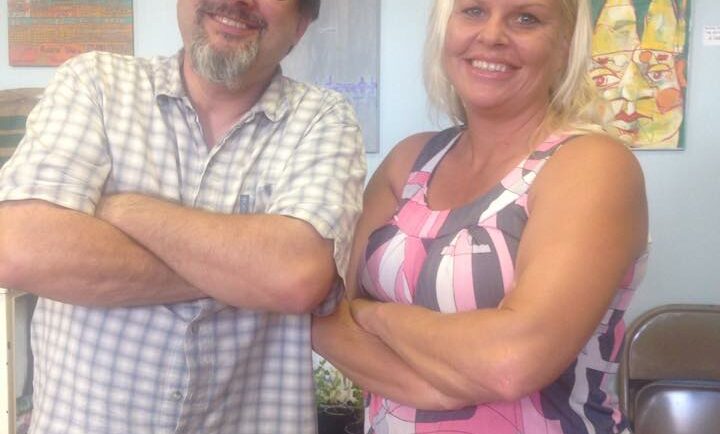
Since that night, the community of Struggle Sisters has grown. Carol Howard Merritt (my wife) has agreed to be this group’s pastor. In honor of these courageous women, I thought it would be important for you to hear answers to questions from one of their own. Kara Tragesser agreed to answer a few questions and to ask me, a representative for the church, a few of her own.
Brian’s questions for Kara
What is your relationship to the prison system?
I was incarcerated in March 1999 and stayed there for 10 years. I was released in March 2009. Although I was free, I left my sisters behind and feel the pain of their incarceration daily. Most were fatherless, abused and neglected as children. I would say at least half are in prison for being with a man while he committed a crime.
What was the most surprising thing you learned while being incarcerated?
That you become a thing instead of a person; you become dehumanized and aren’t allowed to show any emotions to the superiors. You are not allowed to have a bad or sick day without being tortured throughout the day. Even when grieving a death of a family member, you are locked in a cell and stripped of your belongings. Also, there are severely mentally ill people who are there and don’t even know why they are there.
What would you want people to know about those incarcerated and freed from prison that are part of the Struggle Sisters?
These people are humans worthy of redemption and love. When you watch TV and see the media dehumanizing someone for a crime, remember they could be your mother, sister, daughter, niece or grandchild worthy of love. Next, people deserve second chances and don’t deserve to be labeled by their worst crime. We are denied jobs, turned away from churches and kept away from their children. If everyone could learn to stop judging, the world would be a better place. Many women inside prison only have each other because they have no family or lost their support group and family while incarcerated.
What sustained you during your 10 years of incarceration?
My personal relationship to God and trying not to give up because my family and children would suffer more if I was not strong enough to carry on. It was also important to educate myself along with the women who I was incarcerated with because they were my family. When I felt like I couldn’t carry on, a sister was there to help carry me!
What can the church learn from those who have been or are currently incarcerated?
That they also believe in God and don’t need “saving.” They need to be treated equally and loved. Most were raised in or around the church and have distrust when it comes to churches. Many have lost their faith that other than a personal relationship with God they feel they are being judged, talked down to and not being respected. Handouts can be rude if it’s not truly from the heart and only obligatory.
Kara’s questions for Brian

Do you feel that locking a girl in prison for having a miscarriage will teach her a lesson or break her completely? (This refers to a recent case that has incarcerated a woman for putting her miscarried fetus in a dumpster.)
I feel that it is the height of cruelty to incarcerate someone that has suffered a tragedy. It compounds misery and corrodes any sort of moral movement our society can have toward mercy. Criminalizing young women is a troubling trend in a law-oriented society. It is especially pernicious and cynical to
target mothers of certain races and classes. A lesson is being taught to these women and it is that we will have punitive laws to regulate them more than other citizens. These will also be laws that lack restoration and are as cruel as any crime that could be committed.
How do you think humans could help change people’s minds on hiring felons and giving people chances that have been incarcerated? How can we get people to see them as human?
It goes to the heart of what it means to have faith. If this is not a faith that affirms the struggle for equality that is inherent in Peter’s vision from God, then I question that faith’s foundation. We are constantly challenged in our communities of faith to expand our definitions of grace and mercy toward those who are our neighbors. How can I call unclean what God has called clean? Unless those claiming to follow Jesus realize that their same Christ was a convicted felon and executed by the state, they cannot find solace for their own souls. The entire faith of following Christ is founded around convicts, heretics, strangers, outcasts and strangers. To attempt to domesticate it for civility or the sake of manners is to denude it of its power for salvation. The church needs to lead, pressure, agitate and walk amongst those who are our incarcerated and ex-incarcerated brothers and sisters. They are more than equals, they are absolutely accepted by God.
If you are a follower of Christ, how can you pick and choose those who you help while judging others? Doesn’t God love everyone and love prisoners?
I think that we have been far too safe as people claiming to create faith communities. We are far too comfortable creating spaces where everyone looks exactly like us. We want class, education, politics, life experiences and race to create the great boring Church of Homogeny. It is because we fear to painfully learn faith from the poor, the abused, the thief, the murderer, the addict, the mentally ill, the aged, the immigrant and the forgotten. We want to pretend that church is a place of manners and not a place we struggle with tears, pain, laughter and joy. We want to replace the tragic sense of suffering with shallow moments of inspiration. The Spirit will not allow this type of faith to go unchallenged.
 BRIAN MERRITT is an evangelist for the Presbytery of East Tennessee and founder and worship co-director of Mercy Junction Justice and Peace Center. KARA TRAGRESSER is the building manager for Mercy Junction. She has been instrumental in starting the Struggle Sisters ministry, a group key to advocating for death row inmate Kelly Gissendaner. Kara served 10 years in Georgia penitentiaries for her role in a robbery.