by Patrick J. Willson
How shall we preach “The Gospel for an Age of Doubt”? Although that may sound like a new volume from WJK, it was the title of Henry van Dyke’s 1895 Lyman Beecher Lectures on Preaching at Yale Divinity School. Van Dyke preached at Brick Presbyterian Church in New York and is best remembered these days for his Christmas story “The Other Wise Man.”
When the Outlook asked for my thoughts on the prospects of preaching in the 21st century, I could not help thinking how van Dyke looked into the 20th century and saw the task as preaching “The Gospel for an Age of Doubt.” Looking out from a pulpit, even in the midst of a worship service, preachers can feel all manner of doubts and hesitations, most particularly their own. They preach anyhow. Tempting as it is to long for some bygone era when faith seemed natural, the day has never dawned in which the gospel could slip into our souls hand in glove. When Paul declared, “I see how extremely religious you are in every way” (Acts 17:22), it was merely a bit of flattery to warm up his Athenian audience.
Preaching and its search for a response of faith have never been dependent on the credulity of a particular era. The 21st century tends to speak of our own “age of doubt” in terms of secularism, theoretically an era where imaginations are bolted shut against religious ideas as tightly as the jail cells containing the apostles in Acts 16. Ours is a time rife with religious alternatives and alternatives utterly unreligious. Christian fundamentalists and atheistic fundamentalists clamor for attention, but that leaves plenty of territory for a fresh word about God’s work among us.
As formidable as secularism may appear, it is built on a fault line and the after-tremors from that earthquake that shook the Philippian jail (Acts 16:26) continue to be felt. Secularism is not as settled as it may seem. If ours is an age of doubt, it is also an age of doubting our doubt. The British novelist Julian Barnes, by no means a believer, begins his contemplations of his own mortality saying, “I don’t believe in God, but I miss Him.”
Preachers know something about that. Augustine taught us (and the Gospel of John before him) that we have a hunger for God and if not for “God” — problematic as that word can be in secular time — we have a hunger for “something” beyond or deeper down than the poor rations provided by secularism. Celia, in T. S. Eliot’s “The Cocktail Party” described this: “I want to be cured/Of a craving for something I cannot find/And the shame of never finding it.”
The task of preaching is to speak of God: what God has done and is doing and means to do before this story is all over. This secular season when nothing is incontestable affords opportunity for daring preaching. Physicists — whether they are probing black holes thousands of light years away or examining the finer than dust evidences of atomic particles — startle us by saying, “It’s stranger than we knew.” That seems an appropriate way to begin our preaching. We have opportunities to say what no else is saying.
Some judge Paul’s attempt at preaching resurrection in Athens a failure, but Dionysius the Areopagite was obviously compelled by Paul’s story; while “some scoffed,” yet others said, “We will hear you again about this” (17:32). So they will be back next Sunday. They will listen again, hoping to hear something they cannot quite name. But they are listening and that is how it happens: one text at a time, one bit of the story after another. Faith takes place not according to our calculations of time of doubt and promise, but in a time that belongs only to God.
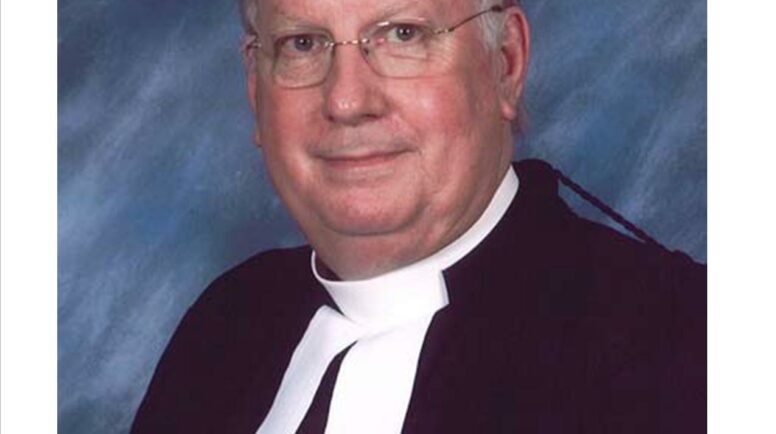
 Patrick J. Willson has been serving for the last year as adjunct lecturer in homiletics and liturgics at Austin Presbyterian Theological Seminary.