My time at seminary seems like a lifetime ago – and it almost was, starting in the summer of 1978. When I arrived on the campus of Union Theological Seminary in Virginia (its name back then), it was like I had traded one campus (college) for another (graduate school). Second-career students, non-Presbyterians and people seeking non-parish calls were all rarities. We spent much of our time complaining about meals in the cafeteria (no longer there), discussing the best time of day to snag a book on reading reserve (can you imagine!) and worrying over which presbytery execs we knew or didn’t know (the gatekeepers for placement at that time). One thing we didn’t complain about, debate or worry over was the future of the Presbyterian Church (U.S.A.) or the future of Union Theological Seminary. Both seemed as impregnable and secure as the towers of Watts . . . and the denomination’s commitment to seminary-trained clergy. Oh my, how mercifully little we knew!
 When I pull into the parking lot in front of Union Presbyterian Seminary at Charlotte early on a Saturday morning, the cars now assembled here tell a different story. There are telltale signs of vocations other than those of pastors or church educators – the ungraded papers of a public school teacher, the implements of a lawn care specialist, the parking decal of an area physician. While the tags and stickers are concentrated in this region of North Carolina, there are South Carolina, Virginia and Tennessee tags here as well. A quick scan reveals lots of signs of church involvement on Sundays – some cars bearing the Presbyterian seal, others the Methodist flame, some the markings of AME or AME Zion. Many – no, most – inside have trouble naming a presbytery exec, don’t know what a reserved reading room is and have no expectation of cafeteria food for breakfast, lunch and dinner. And none of them think the future of the PC(USA) or UPSem Charlotte is impregnable or secure – though they are all learning that the future of the Church of Jesus Christ is as a matter of faith. It has been a long time since most of these students strode a college campus, and many of them will leave this place for ministry placements which we, long ago, would have labeled “non-traditional.” But, again, how mercifully and gracefully little we knew, way back then.
There are times I wish God would shine the light of the Kingdom’s way a little further into the future, so I could have some advance warning regarding how we as God’s people need to shift and adjust moving forward. There are other times when it is very clear that such knowledge would be “too wonderful for me.” It would blow all my “decently and in order” fuses, and send me scampering into whatever bunkers were at hand. There has been a lot of such scampering lately, and that is not the goal of this article. No, let me share with you some of my concerns about the changes I have seen, and some of the hopes I have for the present and the future, speaking from my current vantage point as a seminary dean.
My concerns
In short, the system – go to college, go to seminary, spend a lifetime (with benefits!) in pastoral ministry – has broken down. The finances are not working (the average congregation has less than 100 members; the average starting package is just south of $60K). The seminaries and presbyteries are not cooperating on a daily basis (the presbyteries are staffing congregations as best they can; the seminaries are struggling to secure and maintain endowment). We have debated and debated some issues well past the point of any collective wisdom or consensus, but others we have not talked about at all. The denomination resolutely demands that we hold on to all the requirements for teaching elders and educators in our congregations. I agree. We need deeply and widely educated ministers now more than ever. But the old ecosystem for accomplishing this task is in tatters, and precious few teaching or ruling elders are encouraging their children to take up this honorable vocation. I sometimes wonder how many of us who started out long ago at Union Theological Seminary in Virginia would do so now. There are reasons, good reasons, for running toward the bunkers.
My hopes
My hopes begin with God’s promises toward the Church and the world in Christ. Hallelujah! But these promises are made incarnate most regularly in one place and one place only for me – our students (and the families, congregations and communities that send them here). These students come to this campus with their eyes wide open. They are largely second-career folk who will most likely continue some aspects of their current vocation on the other side of ordination. They are church folk, though they are far more creative than I in imagining what “church” may be moving forward. They are disciples of Christ who want to plunge deep in learning – and then insist on taking what they’ve learned not only to their sanctuaries, but to the streets and offices and schools where they witness and work. They are nimble. They are resilient. They are less hung up on what the church has been and more excited about what the church will be. They give me hope amidst all these changes, and they give me some ideas regarding theological education.
Let me try out some words, then give you an image. Strong and flexible. Low-to-the-ground. Getting out where people are rather than expecting people to come to us. 1001 Worshipping Communities. GRIT. Poly-vocational. Messy education. My particular institution seems to love one word above all others: Rigor. But we all know where too much “rigor” leads (rigor + mortis), right? Or, “rigor” unattached to “praxis.” I believe we can hold to high standards for education and preparation, but be far more creative and flexible in our delivery and in our partnerships. Small, regional, close to the ground and congregations. Congregations which share in the sending and training will surely share in the funding. Right?
My vision
On a recent trip to Costa Rica, I was walking the campus of a seminary with its president. “Where are all the faculty?” I asked, about halfway through the tour. “Oh,” she said, “They’re mostly out in the field. Our faculty are only allowed three months in residence at the seminary. The rest of the year, they’re out where our pastors and educators are – practicing the faith, all over Central and South America.” Interesting, I thought. And still do – both looking back and peering ahead, as best I can, with hope.
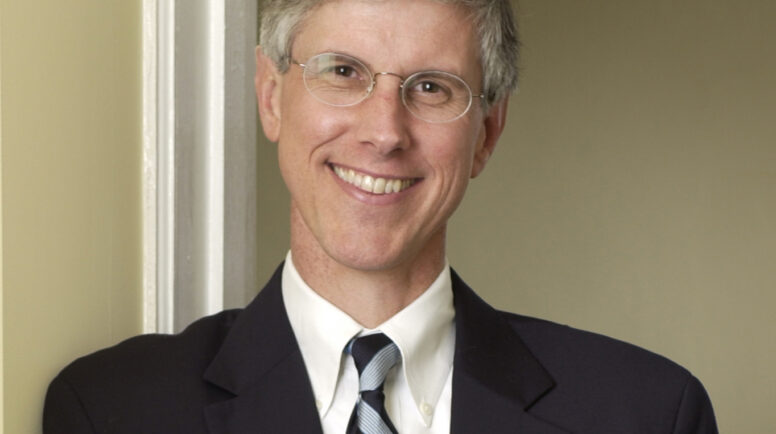
 Richard Boyce is dean and associate professor of preaching and pastoral leadership at Union Presbyterian Seminary at Charlotte, a part-time, non-residential extension of Union Presbyterian Seminary in Richmond. Classes are held year-round, mostly on Saturdays, from 8-5.