by Christopher Edmonston
When we read the Christmas story closely we find theological intrigue and dramatic tension. Will Joseph and Mary get out of Nazareth alive with their nonconforming pregnancy? Will they make it to Bethlehem in time for the birth? Will the vision of the prophets be fulfilled through them? Will anyone ever believe their story?
Skeptics of the incarnate miracle seem to emerge this time of year to ask: What if Mary just made the whole thing up? What historical logic or biblical calculus counters that bowshot? Christmas is, after all, a matter of faith. Joseph and Mary believed that the boy would be divine and that they should name him Jesus. We, heirs of the grace of that birth, bear that very faith within us too.
Like Sarah who laughed, and Hannah who prayed, and Elizabeth who believed, Mary takes her position among the sage women who dared to take God at God’s word. As Joseph and Mary walk to Bethlehem they are not on a bank holiday. They are on an exhausting, life or death mission whose sole purpose is the completion of a nine-month pregnancy that ends only with the difficult prospect of human birth. Joseph and Mary go to Bethlehem because they believe the promises of the angels: They are the first to believe that the gospel is true.
Nine months ago I met with a group of Christian scholars, pastors and divinity school administrators. Convened to talk about the next era of congregational life and church growth, we met a pastor named Michael Mather from Broadway United Methodist Church in Indianapolis. Mather asked us, “What if the church actu- ally acted as if the gospel were true?”
What if we weren’t so afraid of failure, scared of irrelevancy, caught in culture fights, bogged down by budgets and paralyzed by the weakness of missions two sizes too small? What if congregational life and the future of congregational formation were all about the radical belief that the gospel is the most powerful tool of transformation that exists? Mather’s call was to stop investing in fear and believe with reckless abandon that God will show up — even in the most unlikely of places. God has done this before: in a manger, on a cross.
Nine months ago the question was posed. It longs to be born, church by church, pew by pew, one act of ministry at a time. Like the journey to Bethlehem, the pathway to the birthplace is gruel- ing. But when we act as if the gospel were true, something beautiful is born and the church is fostered for the age to come.
Just before the gospel of Jesus Christ is proclaimed for the first time to Mary, the angel Gabriel says to her, “Be not afraid.” Gabriel knows the gospel is the antidote to fear. Fear that never completed a journey. Fear that never raised a child. Fear that never grew a church.
What if we lived as if the gospel were true? We would be born anew, afraid no more.
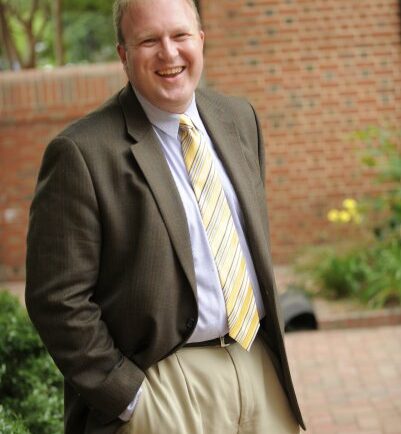
 CHRISTOPHER EDMONSTON is the pastor of White Memorial Presbyterian Church in Raleigh, North Carolina.