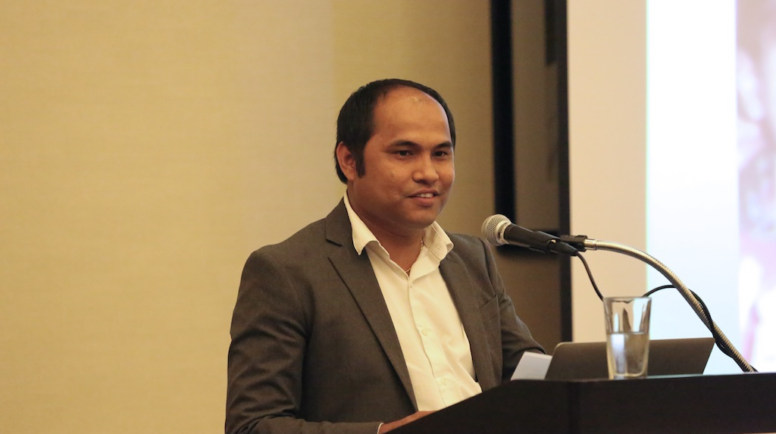

PORTLAND, Ore. – Late one cold and windy winter night when he was a boy, Som Nath Subedi felt his father pour icy water over his head. Subedi asked his father why he had done this.
“When my father answered, he told me that he couldn’t sleep, that he was tired, hurting so much and feeling so oppressed from being forced from his country,” Subedi said. He and his family lived for 20 years in a refugee camp when they were forced from their home in Bhutan.
“I had my eyes closed for almost 20 years,” began Subedi as he addressed the World Refugee Day luncheon on June 20 at the 2016 General Assembly. He had no country, no land, no running water, no electricity, no school, no books, no resources, and no benefits.

And then, one day, after being vetted by more than a half dozen United States agencies, he was accepted for resettlement in the U.S. “I came with nothing in my pockets, but I brought resiliency, work ethic and strength,” he shared. “That day I opened my eyes – it was like looking into the sun, arriving in America.” He was excited and nervous, yet experienced intense cultural shock.
Subedi is now a refugee leader in Portland, Oregon, as well as the coordinator of Parks for New Portlanders, an initiative to make Portland’s parks welcoming and inviting to refugees.
“Being an American is about second chances – most of us who come as refugees come for a chance at a better life,” he said. Because he’s experienced that second chance, he wants to do all he can to offer it to other recently arrived refugees – and he wants everyone to do their part.
“How can you help a new refugee?” Subedi asked those gathered. Easy. Accept them, be a mentor, help share stories of refugees’ contributions to society in a cultural climate where they can often be seen as a “burden,” and call Congressional representatives to urge them to do more for refugees.
But perhaps the most important thing?
“Talk to them – we talk about refugees too much. Just talk to them – say hello.”