Every immigrant fellowship in the Presbyterian Church (U.S.A.) has its own story – from the Bible study that started meeting in someone’s kitchen to the pastor with a zeal for evangelism who walks the neighborhood building relationships with new arrivals.
The immigrants come from all over the world – from Burundi, Korea, Guatemala, Haiti, Laos, Rwanda and so many other places.
The challenges of immigrant ministry can be considerable – finding pastoral leadership, the money to pay a pastor and a place to meet; helping people transition to a new country and a new way of life; and figuring out to worship authentically in a mostly-Anglo Presbyterian world are just a few.
And the joys can be immeasurable too – especially when a faith community and people who speak your language help to make a new land feel like home.
The diversity of how immigrants worship in the PC(USA) is immense. Here are a few of their stories.
MULTICULTURAL CONGREGATION
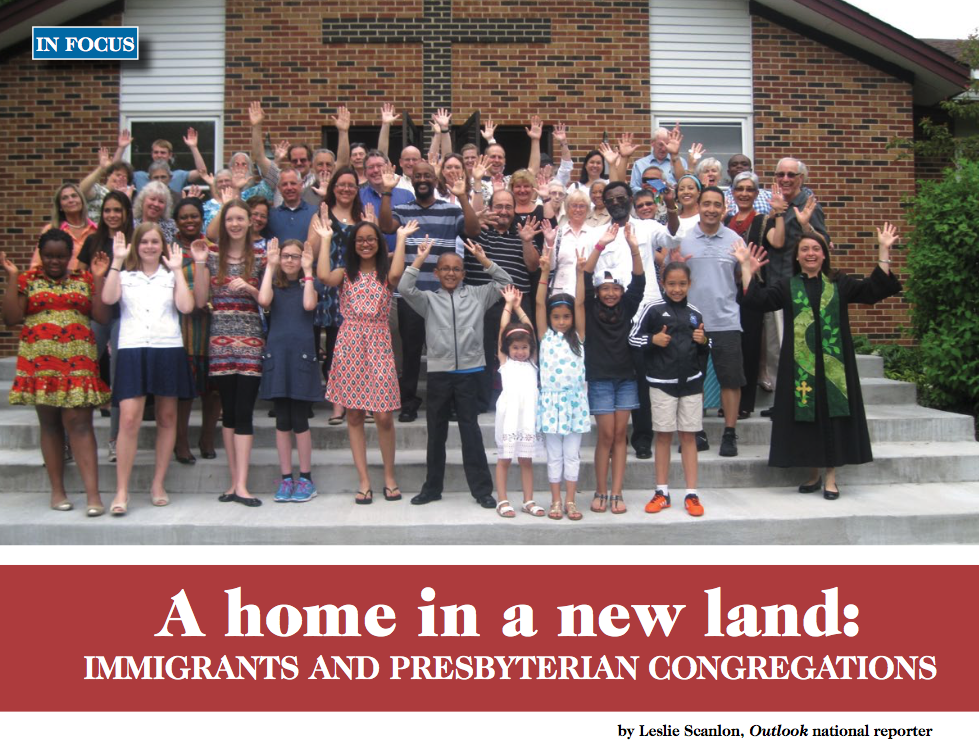
Lisa López is pastor of Christ Presbyterian Church in Hanover Park, in the western suburbs outside Chicago, a small congregation with about 45 in worship typically, most of them first-generation immigrants from all over the world – El Salvador, Lebanon, Brazil, Ghana, Nigeria, Cameroon, Mexico, Scotland, the Philippines. They come to Hanover Park because it’s where they can find affordable housing and work.
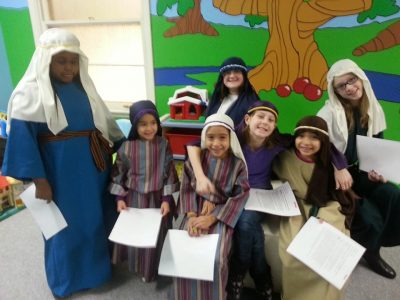
“It’s hard to say there’s a dominant culture in numbers,” López said. “When you look out, you see a sea of faces of all different colors.”
Worship is conducted mostly in English, although the music comes from all over and the passing of the peace is done in a rainbow of languages and takes at least five minutes, because “everybody has to hug everybody else. It’s intense,” López said.
Prayer concerns involve the cares of the world – dangers to the water supply in Brazil; the Boko Haram attacks in Nigeria.
Sometimes there are muffins for coffee hour. “Yesterday we had soup,” she said. “It was full of seafood,” a dish from West Africa.
Part of the connective tissue at Christ Presbyterian is similar to what one would find at many Anglo congregations – Bible studies; a mentoring program at a nearby school; a women’s group.
What also bonds this multicultural congregation together, however, is that so many are new to this country – people share the common experience of being recent immigrants. They all can say, “I come from somewhere else, but I’m trying to make a home here,” López said. She has some of that sense too – she’s always been a U.S. citizen, but grew up in Puerto Rico. Her congregants say of her: “You’re just like us. You grew up somewhere else and then came here.”
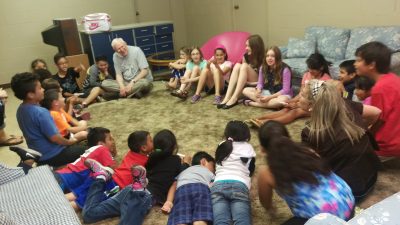
Their struggles have a lot in common as well – economic instability; concerns about health for loved ones near and far; difficulties with immigration status; discrimination in the workplace.
How did they end up at Christ Presbyterian? Some in the congregation grew up Presbyterian in their home countries, so when they came to the U.S., they went looking for a Presbyterian church. Some of the Nigerians were Anglican, but they could find no nearby Episcopal church, so “they settled for Presbyterian because they don’t have a car,” López said.
A family from El Savador came because neighbors invited them to worship. A Filipino father and son were driving around, looking for a church. They passed by megachurches because they wanted a more intimate faith community. They spotted the sign for this small Presbyterian church, pulled into the parking lot and knocked on the door.
 “There’s not one way that people attach,” López said. “They do stay for the same reason.” People say, “I stay because they remembered my name. Or I didn’t feel like I was lost here. Why they come – there are a number of different stories. But why they stay is always the same. They found warmth and grace, and they wanted to come back because of the people they met.”
Many in the congregation don’t have extended family nearby. At work, “they are surrounded by European Americans who don’t necessarily hug and kiss all the time, but maybe they grew up in a culture that did. Church is a place where they bring that” – their authentic selves.
The people in the congregation value its multicultural nature. “It’s important to them that their faith community will be a place where people are from all over,” López said. In other places in their community, “they see the segregation. It is important to them that church would not be segregated.”
Having such variety of experiences and cultural expectations also can pose challenges. “Our session meetings are incredibly long,” López said, as things get translated and PC(USA) requirements and expectations are explained.
And as a pastor, she’s learned not to make assumptions about what people want or need. One family expected the whole church to show up at their home when a sibling died 4,000 miles away. And “there are a couple of people who, when they’re sick, they don’t tell anybody. … We’ve learned as a community the lesson of ‘you make no assumptions.’ You ask what people want.”
NESTING CHURCHES
It started with one couple: a Pakistani physician and his wife, who immigrated to the United States, found a spiritual home at Christ Memorial Presbyterian Church in Columbia, Maryland, and who over time helped many in their extended family make the same journey.
Now, roughly 100 people connected to Christ Memorial are Pakistani – some who attend English-speaking worship on Sunday mornings, some who come for an Urdu service in the fellowship hall on Sunday afternoons. Some do both.
Christ Memorial also provides space for a small Korean group – typically six to eight people – who gather on Sunday mornings in a classroom to worship in Korean.
That’s a fairly typical arrangement in the PC(USA) – a mostly Anglo congregation with a building enters into some sort of “nesting” arrangement, either formal or informal, with an immigrant fellowship. Some immigrant groups are working within the PC(USA) system toward becoming chartered congregations.
In other cases, the arrangement is not so precise. The immigrant group may meet for Bible study or to worship, but may not have the pastoral leadership or financial resources or even the desire to move toward some kind of official designation in the PC(USA).
In other places, the immigrant fellowship is growing faster than the Anglo church that houses it – such as at Southminster Presbyterian Church in Indianapolis, where a Mizo fellowship group from Burma started meeting at the church on Sunday afternoons about four years ago and since then has doubled in size, from about 60 people to more than 120, said Ron Rockey, Southminster’s associate pastor.
The Anglo congregation worships at 10 a.m. on Sunday mornings; the Mizo group (which is nondenominational but led by a Presbyterian) at 1 p.m., in a service that lasts two to three hours and often is followed by a meal. There’s only occasional contact between the two communities, Rockey said – it’s difficult because of the language differences.
In some nesting arrangements, the two congregations will occasionally worship or hold celebrations together. At Christ Memorial in Maryland, the Pakistani group has a pastoral leader who preaches in Urdu, but some who participate are members of Christ Church and attend the English-speaking service as well. “It’s technically not its own congregation,” Scott Hoffman, pastor of Christ Memorial, said of the Pakistani fellowship.
Hoffman has officiated at some Pakistani weddings and funerals, and “they call me pastor,” he said. “They have a high regard for the person in that position.”
The Pakistani group doesn’t linger on the technicalities of the relationship, Hoffman said. Many individuals “kind of hover in between two identities, member and also outsider.” The Anglo congregation has supported PC(USA) mission work in Pakistan because of those connections, Hoffman said, and “the people from our congregation think of them as friends.”
THE IMMIGRANT PASTOR
Jorge Abdala speaks four languages – Portuguese, Spanish, English, Italian – plus “a little bit of French.” That’s been vital to his evolving ministry – first as a pastor in his hometown of São Paulo, Brazil, then coming to the United States to work with Knox Fellowship and, in 2006, starting a Portuguese-language Bible study for Brazilian immigrants in space provided at First Presbyterian Church in San Mateo, California.
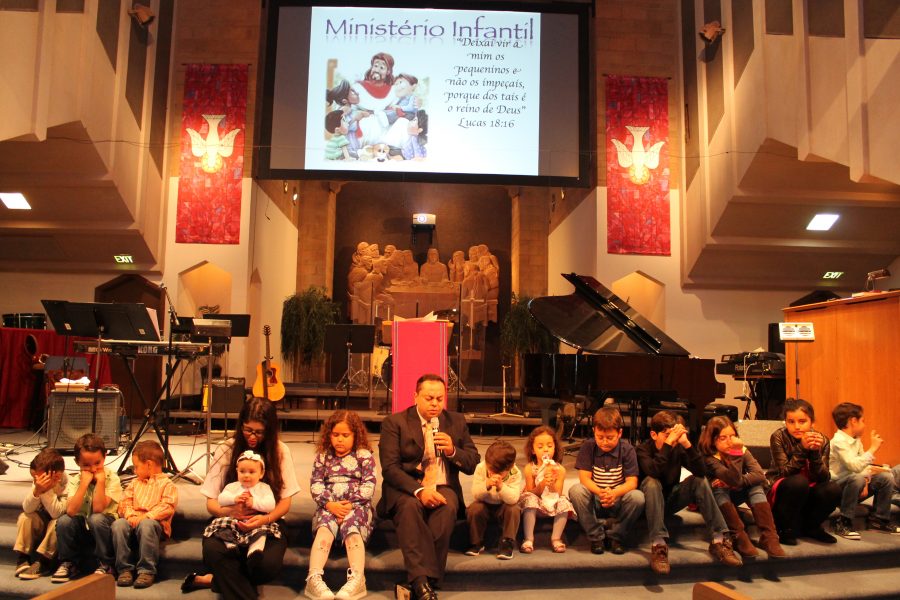
The fellowship, Primeira Igreja Presbiteriana em San Mateo, started with about a dozen people and has grown to about 80, meeting at 6 p.m. Sunday nights in the sanctuary. Some of the participants were Presbyterian in Brazil, while others attended Baptist, Assemblies of God, Catholic and nondenominational churches.
Along the way, Abdala has become connected to others involved in Portuguese-language ministry in the U.S. For his doctoral dissertation at San Francisco Theological Seminary, he conducted a study of pastors, leaders and members of Brazilian immigrant ministries in the PC(USA).
One of the most common misperceptions: “People will look and say this is just another Latino ministry. … In fact, Brazilians are not Hispanic,” Abdala said. That distinction affects a lot, he said, including evangelism; how they preach and teach; and what music they use in worship.
 Many of the Brazilians came to the U.S. for economic opportunity, Abdala said. “When they come to the church, what they found is a place where they can gather with the same language, the same food” they knew in Brazil. In a new land, “the church becomes more like a place of refuge. And also an open space where they can open their hearts, share their problems. The church becomes a real family for those immigrants.”
In the fall of 2016, Abdala began another ministry – becoming the pastor for a Hispanic congregation called Latinos Unidos en Cristo, which has existed for about 25 years. That congregation worships at 12:30 p.m., also at the church in San Mateo.
Sounds busy? That’s typical for an immigrant pastor, Abdala said. He preaches and teaches and provides pastoral care, but also goes to court with people whose immigration status is jeopardy and serves as a translator for people seeking jobs. “When people ask me about a day off, I usually say, ‘What is that?’ … As an immigrant pastor, you have to wear different hats. That takes a lot of time, energy and grace from God.”
In the PC(USA), many immigrant churches are small and face financial difficulties – but so are many predominantly white Presbyterian congregations, so numerical growth shouldn’t be the only measure of success, Abdala said.
In their congregations, many immigrants value “the openness to difference, inclusiveness,” Abdala said. “We can be the body of Christ.”