 Carol Howard Merritt
Harper One, San Francisco. 240 pages
Reviewed by Meredith L. Kemp-Pappan
At the church where I serve as pastor, I teach the youth Sunday school class. Recently, we read and discussed the greatest commandment: “You shall love the Lord your God with all your heart, and with all your soul, and with all your strength, and with all your mind; and your neighbor as yourself.” One of my precocious teenagers remarked, “But what if you don’t love yourself?”
Impressed by her insight, I gently explained what it means to love yourself as child of God. But her question floated in the air, lingering as a dense mist. As a pastor, I take serious my vows to teach my congregation to love and serve others and yet, I ought to remind them that they, too, are worthy of self-love.
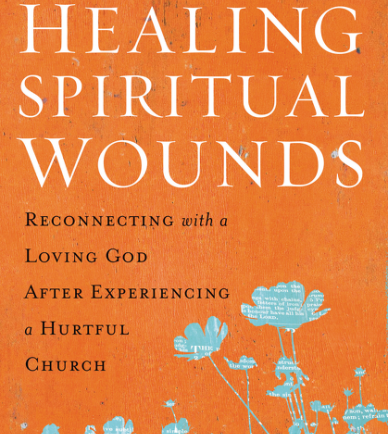
Carol Howard Merritt’s latest book, “Healing Spiritual Wounds,” addresses a truth that many Presbyterians are wary to admit: Some children and adults have experienced spiritual and physical harm at the hands of the church. The church often emboldens the abuser, uses Scripture to justify violence and teaches that love is a commodity to be traded and earned. While all of us have been disappointed by the actions of the church, for some, the church has so shattered their identity as a child of God that they no longer love themselves. Merritt observes, “Jesus said that we should love our neighbors as we love ourselves, and that command is impossible to follow unless we have love for ourselves.”
Part spiritual autobiography, part workbook, “Healing Spiritual Wounds” is more than a religious self-help book: Merritt offers no glib advice or easy answers. Instead, through her own experience and the experiences of other characters in her narrative, she grants readers permission to explore their own spiritual wounds. Each chapter concludes with helpful exercises designed to foster further self-examination. “The reason religious wounds can cut so deeply,” she writes, “is that they carry the weight of God with them. In some way we have felt that God was behind what wounded us.” Merritt’s prescribed homework walks the reader through a gentle process designed to help the reader separate God from their experience of being wounded.
As with her other books, “Tribal Church” and “Reframing Hope,” Merritt has given the church a timely and essential tool for addressing the current climate. No doubt there are many Christians who have found themselves alienated and disheartened by recent political events. This book provides a helpful vocabulary and structure for those who (perhaps for the first time) are voicing disappointment in the church. Though one could call Merritt a modern prophet, she is at her most vulnerable and pastoral in this book. A church that tends to its wounds is a prophetic one!
While those in caregiving ministries (such as deacons and Stephen Ministers) will find this book an indispensable tool for their work, sessions and presbyteries would be wise to engage this book in a group study. As the Presbyterian Church (U.S.A.) continues to discern its way forward, we cannot hope to minister to a hurtful and jaded world until we have attended to our spiritual wounds. Merritt’s honest, self-effacing prose invites all of us to examine scabs, scars and callouses, and she provides the balm that will aid in our healing.
Meredith L. Kemp-Pappan is pastor of Central Presbyterian Church in Oklahoma City, Oklahoma.