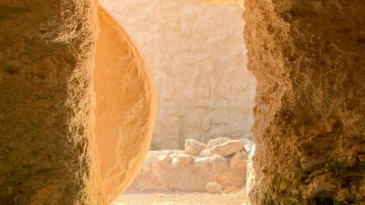
 But Jesus said, “Let the little children come to me, and do not hinder them! For the kingdom of heaven belongs to such as these.” Matthew 19:14
One time during a parent-teacher conference, my son’s high school English teacher asked me what I’d done to raise such a great kid — this energetic instructor had just had his own first baby and truly wanted to know. After my surprise (and making sure he actually had the right parent), I confessed that my real secret was our church. Having a consistent group of caring adults truly invested in one’s children, truly interested in them and actually seeming to enjoy their presence (what?) has made all the difference. (And here’s an important aside: The aforementioned, now grown-up kid, when asked recently what he remembers best about Sunday school, instantly said, “The teachers.” He can name each one, and what made him or her so special to him.)
If we are to undertake the care and nurture of strong, big-hearted, service-minded, questioning, intelligent children of faith, we need to make those children priority one. We can’t offer children curricula du jour from a box, presented by untrained, unappreciated adults who come and go because making a nine-month commitment is too hard, in places of worship that give a lukewarm welcome to young people. The whole church (and the whole Church, capital C) needs to work together to give primary focus to the souls of its children. The whole congregation (it’s mandated!) must take the time, make the time and take responsibility for raising up kids to real and lifelong greatness. Or at least to being ready for confirmation.
 Truly involving kids in every aspect of the church — not just shuffling them off to their own activities a couple times a week — takes a concerted effort and a lot of intentionality. The success of any confirmation undertaking is, if not dependent upon, then certainly hugely enhanced by the investment a church has given its early-childhood priorities. Like all education — and so many aspects of life — faith formation is done in layers: hearing this story again, rethinking that concept, being challenged by a new perception, pondering life’s relativities. Children who have experienced — really experienced — church and who’ve learned from it, felt its warmth, been nurtured by its community and observed its heroes will be more ready and better equipped for (and more blessed by) a meaningful confirmation journey.
Meanwhile, we adults have a lot to learn from children and much to gain from all they have to offer each one of us.
START IN THE SANCTUARY
I grew up in a large and beautiful church during an era and culture where between baptism and confirmation, children were seldom seen in worship. Not long ago I attended a small church in a converted garage where children ran up and down the aisles while eating cake. Really.
 I’m thinking there must be a happy medium somewhere in there.
Historically, of course, children were always a part of the worshipping community. In churches and temples throughout the world, children sat fidgeting for the sometimes hours-long services and rituals their elders observed — often several times a week. Then somewhere along the line not too long ago, folks got hip to the idea of creating a separate experience for kids, which would address children’s unique learning needs while at the same time (not just coincidentally, I’m sure) allow for adults to worship with less distraction.
There are wonderful, obvious advantages to providing what is now thought of as the traditional, old-school church school setting for kids whose educational needs are varied and developing. But much has been sacrificed as well: experiencing worship as a natural event, with one’s family and church family; hearing important liturgies, prayers and hymns repeated so that they become one’s own; sharing in the same experience, so that conversations and reflections may continue at home; and, for many children, the simple and often rare joy of sitting on a parent’s lap between long and busy workweeks.
Many houses of worship combine both experiences: inviting children to worship at the beginning of the service, then offering a separate option midway through the liturgy, providing the best of both worlds — though shortchanging both as well. It’s a challenge for every congregation to decide its own best options. The important thing is to be willing to explore new avenues, remain open to new ideas and be ever-welcoming and ever-honoring of its youngest members. I’ve often said (and it’s easy for me, who isn’t officiating one every week) that worship services should be engaging and compelling to every age group. Imagine how captivating it would be for all of us to have hands-on activities right there in the pew — to have moving music, and messages/graphics/presentations that grabbed one’s imagination every week! I never gave a children’s message when someone didn’t approach me afterward and tell me he or she got more out of it than the main sermon. It’s not that I’m such a hot-shot preacher (though if you’re hiring, I am one), it’s that words and stories that are compelling to children can be even more so to adults.
In this emerging new world of re-defined and uniquely created churches, the issues of child nurturing are being considered afresh — or are being ignored. Many new emerging churches offer innovative ways of doing worship and service (with some innovations going back to the early church) while providing not much more than babysitting service to its younger constituents. Yikes. Talk about throwing the baby out with the bath water.
START EARLY
The old adage “Give me a child until he is seven and he is mine forever”(awkward as it may sound if taken the wrong way) speaks to the importance of early childhood learning and nurturing. And so did Jesus, with all his parables about childlike faith and planting in fertile soil, building houses on rocks and mustard seeds. An abundance of studies now confirms what we’ve known all along: Early childhood experiences markedly affect one’s entire life, many leaving scars or blessings that are permanent. The physical and spiritual nurture of children, forming their faith on rock, is mandated not just by our denomination and the larger church, but of course by Jesus himself as he sternly instructed that children be brought to him not just for their benefit, but as a model to adults.
As a church, we are called not only to lead our children towards lives of strong and serving faith, but to honor them and to lead the world in honoring and advocating for all children. Confirmation should be the culmination of that process, that careful and intentional faith formation among our youngest members. It should indeed confirm that young souls are equipped to continue their lifelong journey, in new ways as they mature, and in fresh and brave ways as they move into the world as young adults.
HERE’S WHAT IT TAKES
First, it takes leadership at every level. Great children’s programming, and every child in the church, must be the priority of everyone from the head of staff to the maintenance crew to the men’s prayer group to the session.
 It takes getting off our duffs, taking time and setting real priorities. Life is short, kids grow up fast and by the time you get around to thinking about getting those committees organized, they’ll be in their teens and out the door. A new sound system, another assembly overture — not kids — can wait.
It takes intentionality, coordination, and a plan. There’s nothing magical about children’s ministry (except, of course, for the joy it brings). It doesn’t happen by accident. Purposeful adults must come together to create a big picture with goals and strategies to bring it to life. Each age level and spiritual step must be understood, accounted for, valued and coordinated with the next. A church must have a plan towards which those on staff and in the congregation can work and dream.
It takes setting an example. Kids are watching us. Don’t be that congregation that gets bogged down and sidetracked by petty differences or that overreacts to crises. Our children need heroes. We all need folks to look up to and believe in, who are filled with integrity, strength and a welcoming spirit. Children feel welcomed and nurtured when everyone is welcomed and nurtured. Children learn what they see.
It takes great curricula — and great creativity to work within and around the curricula. A curriculum is a wonderful tool to help share the biblical story with its many lessons — not a constraint to limit its telling.
And most importantly, it takes caring individuals: volunteers and a highly valued, sincerely lauded faculty. Volunteers are needed for all the planning, the many details and special events; faculty teach and build relationships. There’s no way around it: Relationships are simply what it’s all about. A movie here, a video game there, computer projects or a fun app are fine in their limited orbs, but nothing can replace the unique, life-affirming relationship that bonds individuals, and which takes time. When you’ve got, in many cases, only 45 minutes a week, you need to make the most of it.
It takes prayer. Lots of it. And for each and every child.
Finally, it takes fun. It won’t all be fun, certainly, but it’s got to start there.
Positive attitudes and kind words, a welcoming atmosphere, engaging conversation and intriguing activities create a place where children will happily return again and again.
CHURCH AS HOME
Create a harbor that will be there for kids when challenges arise and questions emerge, when growing up means looking outward and inward. Build a sanctuary to which kids can come home — and from which they can fly. The church will then be there for them when it’s time to be confirmed. And confirmation will be more than just another item to check off one’s Milestone List of Lame Obligations.
 And kids might actually come without being prodded.
Fred Astaire once said, “Old age is like everything else — to make the most of it, you have to start young.” That can surely be said of confirmation: Start early and by the time they’re old geezers of confirmation age, children will be confirmation-ready.
And after that: take-on-the-world-ready.
 Phyllis Beattie is a pastor member of the Presbytery of Chicago. Her ministry focuses on children and advocacy. Some of this article is excerpted from “Honoring Children: A Commonsense Guide for People of Faith,” which will be published in 2018.