ST. LOUIS – The Presbyterian Mission Agency (PMA) is hoping to help commissioners at the 2018 General Assembly better understand budget implications of some of the recommendations the assembly is considering — costs it estimates at about $5.3 million for the agency, if the assembly were to approve all the recommendations before it this year.
Among the big-ticket items: about $3 million (over two years) to set up a department within PMA to focus on the ministry of small congregations, which an overture from Grace Presbytery is recommending. Also: about $855,000 if the assembly adopts a recommendation from the Way Forward Commission that the Presbyterian Church (U.S.A.) prioritize translation services.
Those figures were presented to the Coordinating Committee of the Presbyterian Mission Agency Board, meeting in St. Louis just prior to the start of the 223rdGeneral Assembly, which opens for business June 16.
PMA’s senior leadership is strategizing how best to present information to commissioners on a variety of subjects – including the PMA budget, its Mission Work Plan and the confirmation of Diane Givens Moffett as the agency’s new president/executive director.
The discussion also gave a glimpse into how PC(USA) agencies and entities – all of whom understand how the system works – try to make their case to the assembly through plenary presentations, time given in committee meetings, open hearings and comments attached to recommendations.
PMA, for example, is responding to a comment from the Way Forward Commission asking the assembly to review the PMA’s Mission Work Plan “with care.” The commission states that it concurs with the emphases of the Mission Work Plan the Presbyterian Mission Agency Board (PMAB) has approved (focusing on congregational vitality, addressing poverty and dismantling structural racism and white supremacy), but wants the plan to give more financial details on how money will be spent to accomplish what PMA is attempting to do.
“Without specifics, it is unclear how the PMAB will develop a detailed budget to address these issues in a manner accountable to the General Assembly or how future General Assemblies will have useful measures for determining whether the PMAB has accomplished this plan,” the Way Forward comment states.
Rhashell Hunter, director of Racial Ethnic & Women’s Ministries and part of a three-person team named help lead PMA during its leadership transition, said the PMA presentations both during plenary and before the Mission Coordination Committee will explain that the Mission Work Plan “is intended to be high level,” with a more detailed budget developed once the assembly approves the PMA mission budget.
PMA’s budget is funded 80 percent through restricted dollars, and the PMA staff tries to “bend it towards the emphases” as much as possible, said Barry Creech, director of policy, administration and board support.
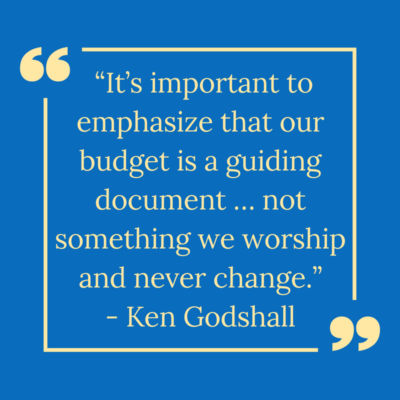
With the PMA budget, “we make adjustments all the time, for changes in revenues and expenses, without which we couldn’t run the agency,” said Ken Godshall, the board’s chair. “It’s important to emphasize that our budget is a guiding document … not something we worship and never change.”
 Godshall said that it’s estimated the changes the Way Forward Commission is recommending regarding the PC(USA), A Corporation, would cost about $1.6 million – although it’s not clear exactly what’s included in that. Denise Hampton, PMA’s controller, said costs might rise for the Office of the General Assembly but drop for PMA if PMA no longer provides shared services for other agencies.
Also a proposal from the Presbyterian Mission Agency Board to divide the A Corporation into two corporations is estimated to cost $2.9 million, according to the document presented to the coordinating committee.
While the assembly doesn’t convene until June 16, the assembly’s The Way Forward Committee starts early – scheduled to meet for several hours in the afternoon June 15.