LOUISVILLE – It’s a new season, a new chapter at the Presbyterian Mission Agency.
As a series of denominational leaders brought greetings and reports during the opening plenary of the Presbyterian Mission Agency Board meeting Sept. 27, the metaphors rang many and mighty.
The idea was this: The Presbyterian Mission Agency (PMA) and its board has new leadership and a new culture – and a commitment to work in partnership with other agencies on behalf of one church. That’s a message crafted after a tumultuous season of conflict over who should control the Presbyterian Church (U.S.A.), A Corporation board, and about the balance of power among the six PC(USA) agencies.
“We are people who have been called to turn this world upside down,” said J. Herbert Nelson, the denomination’s stated clerk. “We have six agencies, but we have one ministry. … Our call is to work together.”
Diane Moffett, who started work in June as PMA’s executive director and president, described her first few months leading the agency as exciting, joyful, prayerful and challenging. Moffett said she’s working to develop more trusting and transparent relationships with staff, in part through periodic all-staff meetings and email messages she sends to the staff each Friday.
On Sept. 29, the board will hold a conversation on the idea of “finding your shy,” based on Simon Sinek’s book “Find Your Why.”
The PMA leadership cabinet has developed the following “why” statement, Moffett said: “We believe God calls us to act boldly and compassionately, so that faith comes alive and the world wakes up to new possibilities.”
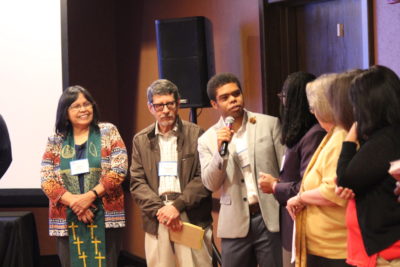
Moffett said she has spoken with Bridget-Anne Hampden and Chris Mason, co-chairs of the new PC(USA), A Corporation board, and told them she wants collaborative relationships as “we press the reset button.”
Moffett said: “We’re going to continue to work together as we perform this surgery … as we build a new house. It will be important to press the reset button together, relying on the Holy Spirit.”
Joe Morrow, a pastor from Chicago and the PMA board’s chair, spoke of “a time of change,” of new issues requiring attention in the denomination and the nation. He said Moffett “has hit the ground running” and is “building a new culture in the agency.”
The reality is that “creating something new is often untidy,” Morrow said. “In fact, it can be downright messy,” with the new season feeling like a construction zone. The creative work being done there is “the work of all of us,” he said, involving education, evaluation, discernment and advocacy.
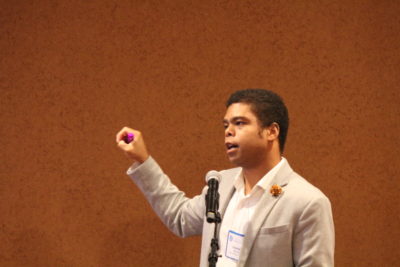
As the work continues, Morrow said, eventually the shape of what’s emerging becomes more clear.
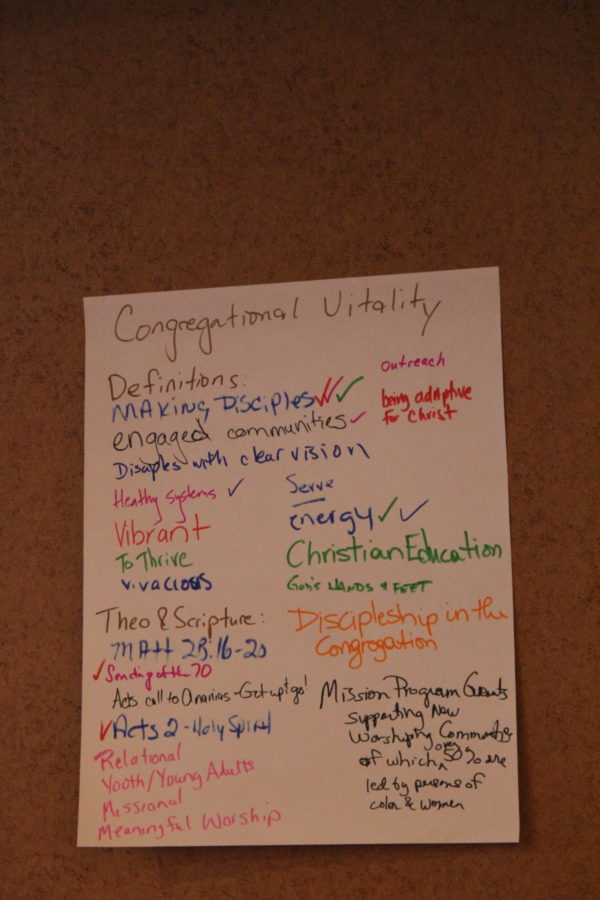
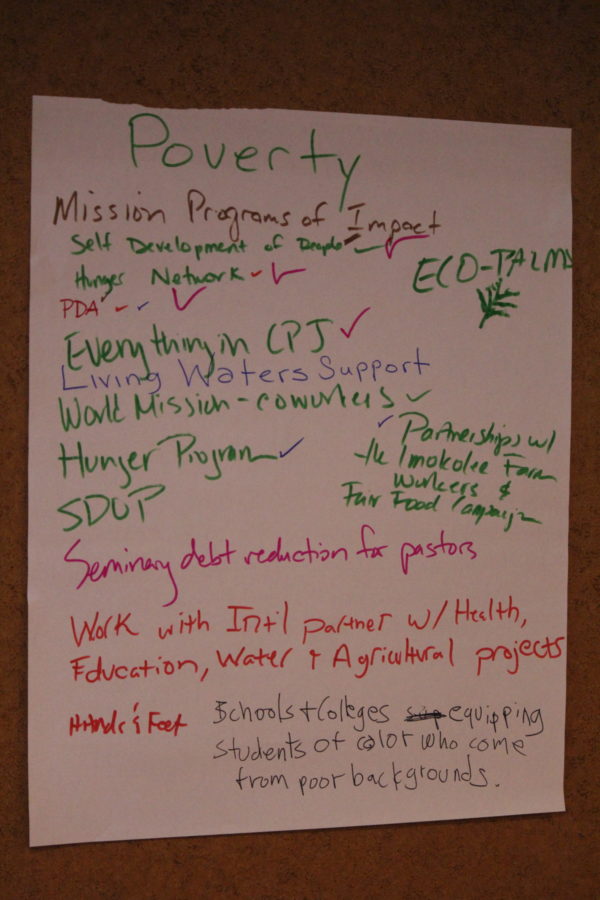
The board also spent time in small-group “community conversations” around the three emphases of PMA’s Mission Work Plan: poverty; structural racism and white supremacy; and congregational vitality. They talked around tables about the meaning and implications of those phrases in their own lives and contexts, and in the work of the church.
For example: “Poverty is more than growing up poor,” said board member Patsy Smith of Oklahoma. “There is an intersectionality” involving race and power, and endless complexities, such as differences between urban and rural poverty.
Morrow said the board will take a “deeper dive” into each of the three emphases in a series of upcoming meetings.
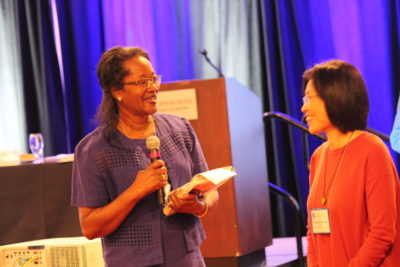
Also, in prayers and in worship, board members touched on the news of the day and the wounds of the earth.
Judy Wellington, a Native American pastor from Arizona, preached from Jeremiah 10:12-13, about God making the earth and establishing the world, and about the importance of a “relational respect for creation.”
When natural disaster strikes, prayers often are offered for the people affected, but often not for creation, unless she’s with indigenous people, Wellington said. She called for “prayers for the life here” – the birds, the animals, the trees – and for a recognition of the ways that “indigenous lives have been saved in the U.S. by reconnecting with this relationship.”
Marci Auld Glass, a pastor from Idaho, offered an opening prayer that acknowledged indirectly the nation’s biggest agenda item of the day: the dramatic testimony before the Senate Judiciary Committee from Supreme Court nominee Brett Kavanaugh and Christine Blasey Ford, who accused him of sexually assaulting her when the two were in high school.
Glass offered prayer for those whose voices are unheard, unvalued, maybe disbelieved. She prayed for women who have long kept silent, and are now speaking their truths for the first time. She prayed that people hearing those voices show compassion, and listen.