CHICAGO – Presbyterian Church (U.S.A.) leaders prayed for the city of Chicago Oct. 5, just before a verdict was returned in the murder trial of a white police officer charged with killing a white teenager, Laquan McDonald. A jury found Jason Van Dyke guilty of second-degree murder for shooting McDonald 16 times in 2014.
This case has been closely watched around the nation, resulting in a U.S. Department of Justice investigation that found excessive force was used and described systemic mistreatment of black and Hispanic people common in some of the poorest neighborhoods of Chicago.
With the Chicago verdict and the national tumult this week surrounding the nomination of Brett Kavanaugh to serve on the U.S. Supreme Court, “it’s one of those God moments,” J. Herbert Nelson, stated clerk of the PC(USA), said in an interview. “All these things are converging. There is the dichotomy of hope and loss and pain” and a sense that “God is working through these things, right now.”
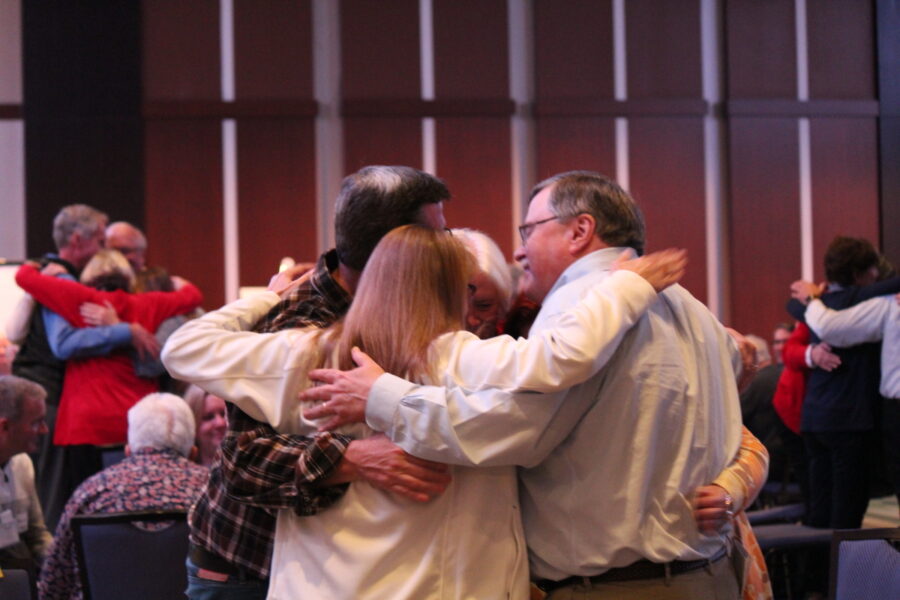
This came during a training session at the Mid Council Leaders Gathering on “fearless dialogues,” on learning how to engage meaningfully with people across differences. So these presbytery and synod leaders had been talking for hours about questions such as “who is our neighbor?” and “how can we learn to see and hear one another while engaged in difficult conversations?”
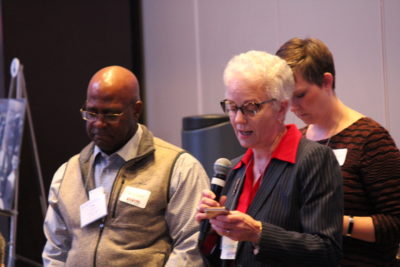
Minutes before the verdict was announced, Sue Krummel, executive presbyter for the Presbytery of Chicago, told the gathering that thousands of police officers had been dispatched to prepare for possible riots and schools were sending children home early. “I never faced this in Peoria, I tell you,” Krummel said.
She read from the Psalms, asking for God’s presence.
“This is hard,” said Craig Howard, the transitional presbyter for the Presbytery of Giddings Lovejoy and a Chicago native who remembers rioting in the 1960s, when west Chicago burned. Emotionally if not physically, “there is a tattoo of Chicago on my heart,” he said. “All of this comes back right now,” Howard said.
He told the mid council leaders: “I don’t have a prayer, but I am going to pray.”
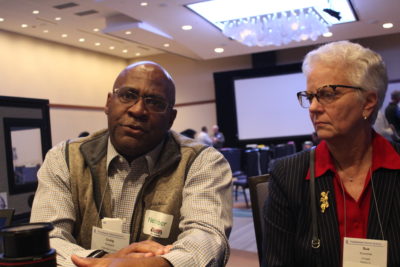
Howard prayed for the support of “God the rock that holds our faith,” and “no matter which way this verdict goes, for we live in a nation in which it can go either way … that we find a way to be disciples of peace” and to “continue to cry out for justice.”
Presbytery and synod leaders prayed for the city of Chicago; for the families of McDonald and of the police officer who shot him; for parents rushing home to be with their children; for the police officers trying to keep the city safe.
They prayed for the nation, as the Senate Judiciary Committee prepares to vote on Kavanaugh’s nomination.
Then Krummel announced that a verdict had been reached.
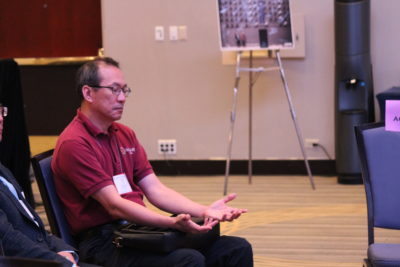
Afterwards, she said in an interview: “The circumstances that led to the jury trial was sad for many people. The verdict changes the lives of the people who are involved in probably unpredictable ways. There are churches across the Presbytery of Chicago who will have vigils tonight. … They know this has been a hard time for the city of Chicago and it has reemphasized the violence” that affects so many.
Earlier this week, Krummel and other presbytery leaders sent out a call for prayer, quoting the Confession of Belhar from South Africa and reminding Presbyterians “of what they already know: that God loves all of God’s children,” and calling them to live together in a way that acknowledges that love.
Pastors “need to remind themselves not to become callused,” she said. “Sometimes chaplains have the same challenge, because they see so much suffering.” For each family affected by tragedy and injustice, “it’s the biggest disaster in their lives.”
The nation has a history of police violence against African-Americans, Howard said. And “whenever there is a particular people in our society that are unfairly burdened by those who are supposed to protect and care for members of our society, we should all be concerned. That’s what makes it a justice issue.”
Howard has family in Chicago. “It’s the greatest place to eat in the country, has the greatest theater, parks,” he said. And, as a black man, “you have to be careful what street you’re going down.”
Nelson spoke a message of hope — even as he acknowledged the anxiety “about what could have happened in the streets of Chicago,” about what’s happening in Washington. Some are ready to take direct action in the streets, he said. “We are seeing women speaking.” He does not see complacency.
While the mid council leaders had spent the day talking about hearing one another, the nation has seen rallies held by Donald Trump this week at which the president and the crowds jeered Christine Blasey Ford, the woman who publicly accused Kavanaugh of sexual assault — prompting women all over the country to tell their own stories of rape and sexual assault, some of them for the first time ever.
Nelson spoke of a nation with “two polarized cultures,” and said the “Fearless Dialogues” training is “tooling the leaders in the church to be able to go back and model what it means to have a dialogue that is both respectful and open, and to teach and train others. That’s the beginning of the process.”
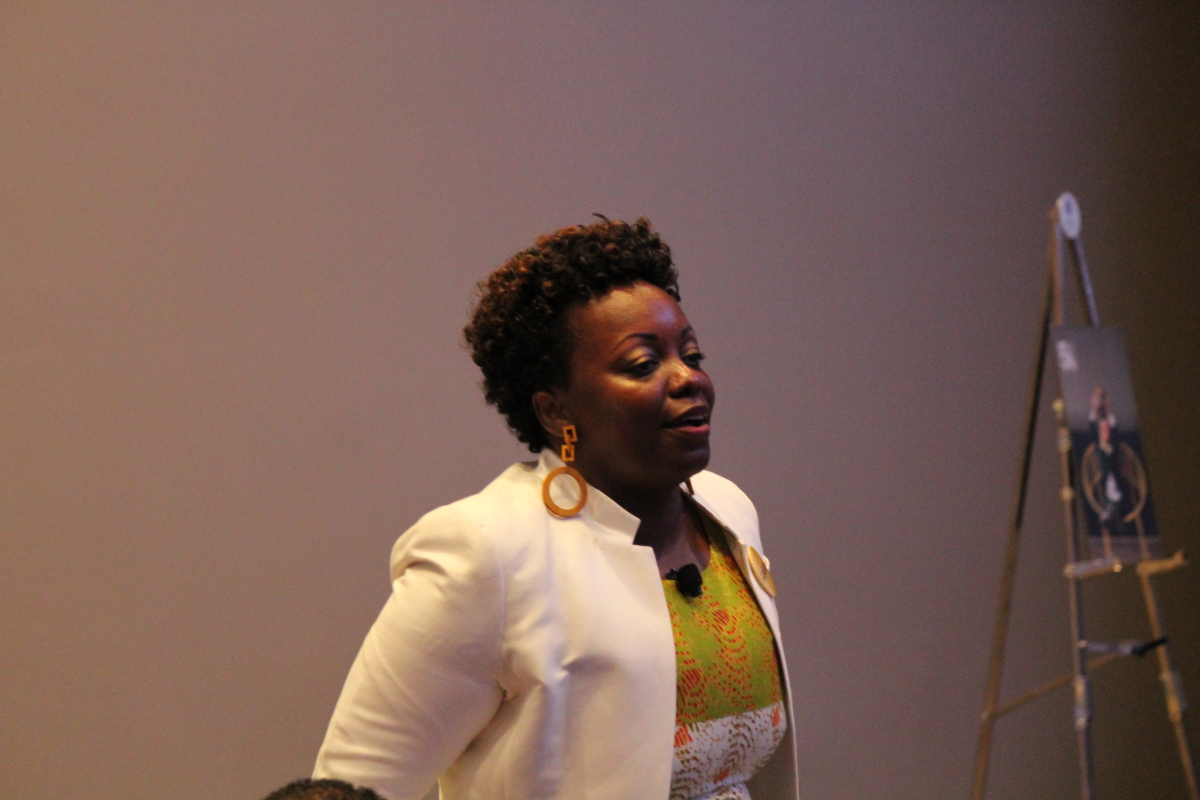
Gregory C. Ellison II, an associate professor of pastoral care and counseling at Candler School of Theology at Emory University and the author of “Fearless Dialogues: A New Movement for Justice,” led the training, along with Georgette Ledgister, executive director of the Fearless Dialogues organization.
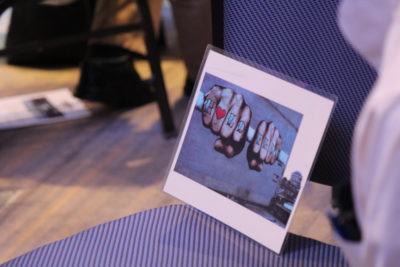
The group spent time on the ideas of learning to really see and hear others, to think about who is silenced and not represented. In one small-group exercise, they looked at photographs intended to be intentionally provocative and described what they saw.
What did they see in the photos?
“The power of trusting black women.”
For an image of hands gripped tightly: “Those who don’t have the strength to hang on are not pictured.”
They saw an image of Christ in the faces in the photos.
What does it feel like to feel invisible?
Sometimes “it feels like church,” one leader answered, “these very friendly churches that do not greet visitors” or sessions that refuse to change.
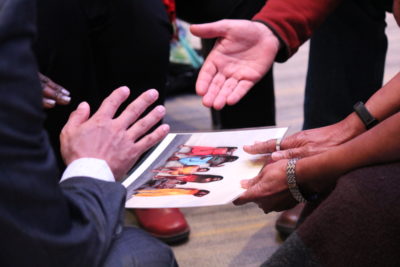
Ellison said during his doctoral studies, he worked with young black men in Newark and “I heard the same narrative day in and day out. I do not feel I am a full human being. … When you don’t feel seen and you don’t feel heard, it affects how you relate to the people around you. It impacts how you envision your future. And it begins to break down your sense of self.”
As leaders in the church, “we have a call to search for hope,” Ledgister said.
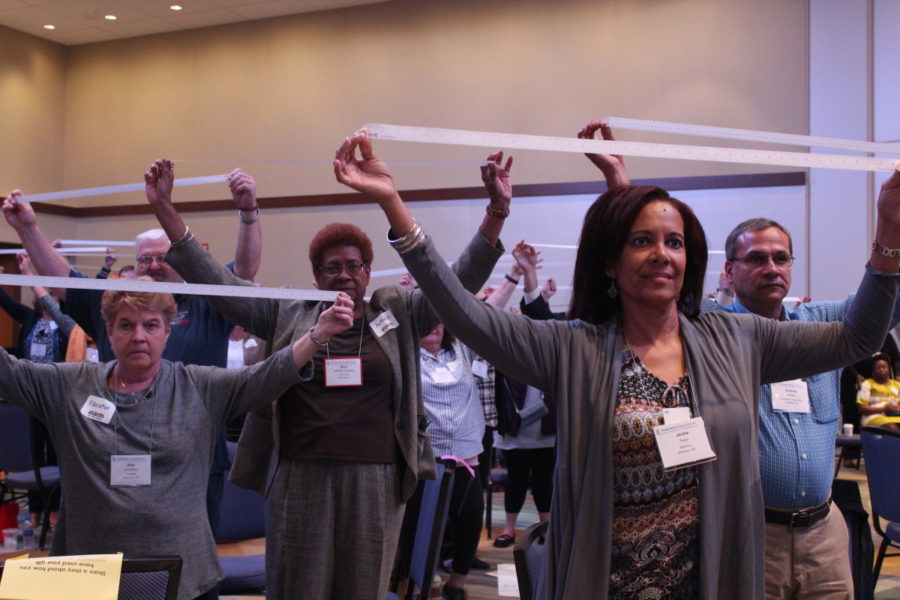
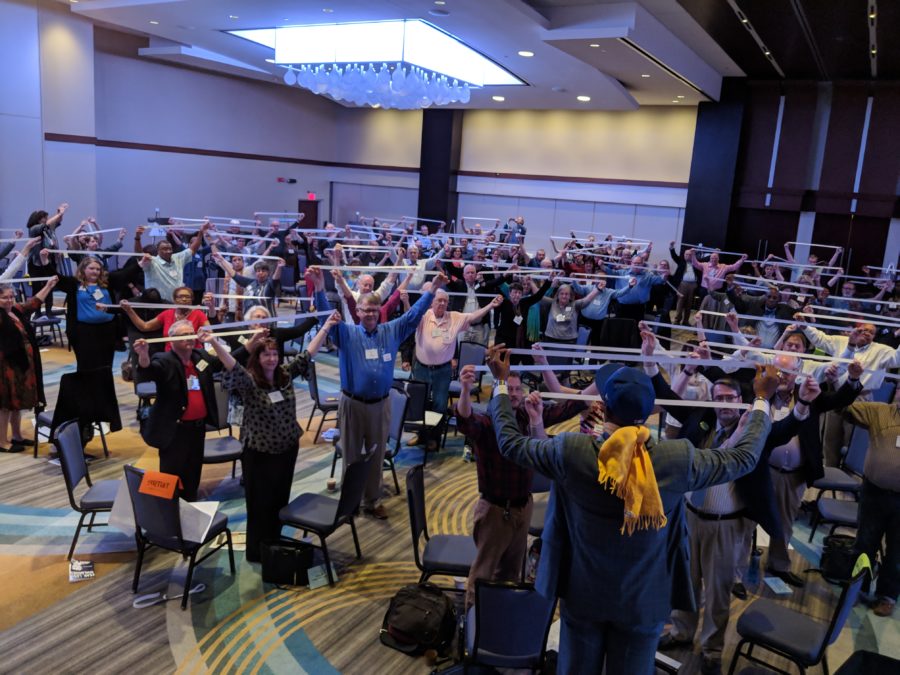
She and Ellison ended the training with the “three foot challenge” – handing each participant a measuring tape, three feet long.
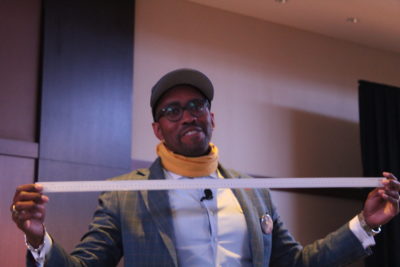
In the next three days, notice the people within three feet of you: the people next to you on the train, in line with you as you shop, the clerk at the grocery store, Ellison said. See them. Talk to them. Hear their stories.
“We believe that once you see, you cannot unsee,” Ellison said. When you see a homeless person as someone’s brother or son or father, “you can’t step over that person as a piece of trash.”
So notice three people in the next three days, he challenged the crowd.
Write their names on the measuring tape.
Put that tape somewhere that reminds you of your own responsibility to see, to hear, to make change.