SAN BENITO, TEXAS – She’s a native of Zimbabwe, and she arrived in the United States last February on a flight from Dublin.
She’d flown from Africa to Ireland – fleeing violence after an attack, trying to reach some contacts there, but was but back on the plane when the authorities found she didn’t have a passport. The flight’s next stop: Los Angeles.
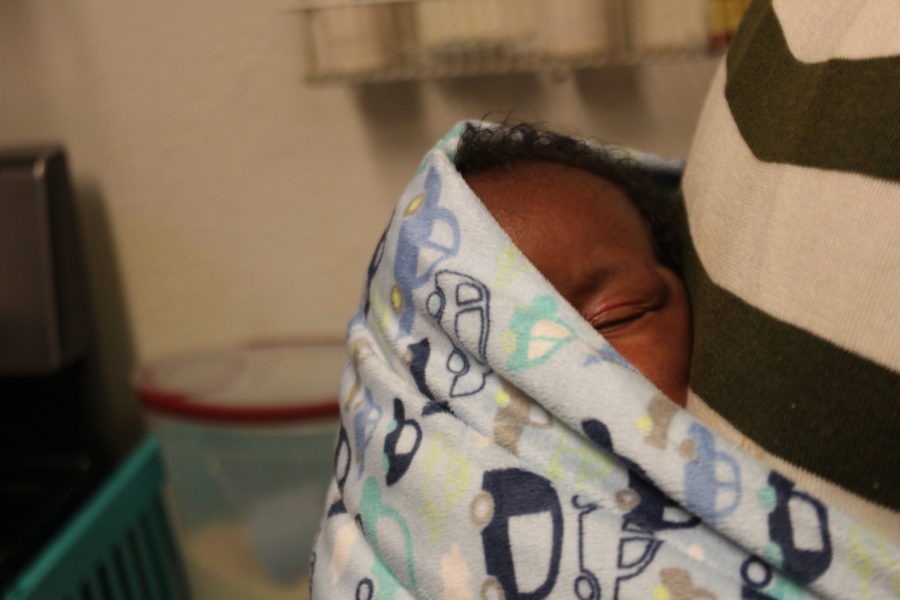
She’s 34 years old, with a month-old baby, both of them now living at the La Posada Providencia shelter in San Benito, Texas. When she fled, she left behind two other children: a 14-year-old son and a 4-year-old daughter, who are now with her mother. She left suddenly, because “it was not safe to stay.”
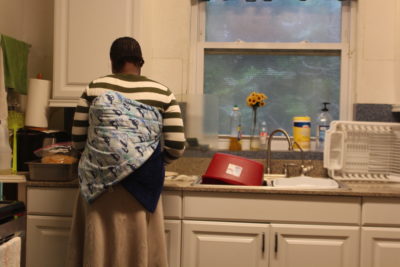
When she landed in California, she was put in a detention center for two months. “Being in a new country, it’s like prison,” said the woman, who could not give her name out of concern for her safety, but was using the name Shalom. “It was not easy. Cold. Eating the same food every day, and discovering I was pregnant” – the result of her attack.
When she got off to Los Angeles, Shalom was terrified. She had been told in Dublin “we will sort you out when you get there” – that’s all she knew. “It was my first time flying” – she’s from a rural area – and when she got off the plane “I went to the officials – big, tall guys.”
She was put in a room, interrogated, searched, chained by her hands and feet, asked what she knew about terrorism. “I have never cried that hard in my life,” Shalom said, even though “I have lost some family members. I thought, ‘God, have you forsaken me? Is this how you forsake your people?’ This is the end.”

A medical examination revealed that she was pregnant, and Shalom said her faith would not allow her to consider abortion. She knew no one in the United States, so during her detention began writing letters to shelters whose names she found on the internet, seeking a place to go when she was released from detention. When she got found a spot at La Posada and was released, Shalom took a Greyhound bus from California to Texas. While in detention, she completed all her asylum paperwork.
“They are my family now,” Shalom said of the volunteers, sisters and staff at La Posada. “They have helped me a lot. The Bible says His ways are not my ways. I have seen it come to pass. … He has been leading me all the steps of the way,” she said, quoting from the 41th chapter of Isaiah: “Do not fear, for I am with you, do not be afraid, for I am your God.”
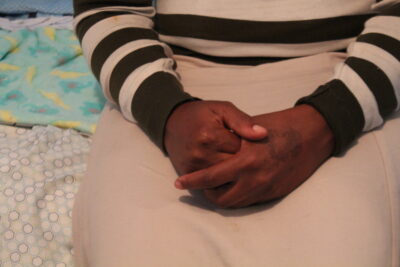 Shalom is a Pentecostal Christian, and says “my faith is the only thing that keeps me going, far from home.”
With a phone the Red Cross provided, Shalom calls her children back in Zimbabwe. “For them, it’s a joy to hear from me, but after I talk to them, it is heavy,” she said. Most times, she closes the door to her room and cries.
She wants her children to know she is “fighting for them to come to this side. They are still young,” and her mother is sick. “They need me the most. … What if the people who came after me come after them? What will they do?”
She listens to a recording on her phone of her four-year-old daughter saying, “Mama, I love you!”
Shalom, who speaks seven languages and is fluent in English, is studying to take the GED. Her dream is to become a registered nurse, and to translate for patients who do not speak English.
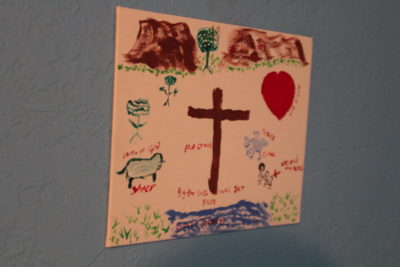
She said her experiences since fleeing Zimbabwe have “made me realize more things about God, more things about faith. It has made me appreciate God and faith more. I have all this,” she said – gesturing at her small, neat La Posada dorm room. She has a safe place to sleep, food to eat, clothing.
“Even the air I am breathing,” Shalom said. “The fact that I am here with two hands, two feet and two eyes. There are people representing my age group in the mortuary. I just thank God. The only thing I can do is have faith in God and hope for the best. I cry and shout at God at times. I do have my moments … but I believe my God is bigger than this asylum thing.”
What does Shalom want Americans to understand about asylum seekers?
“Each and every case is different,” she said. “For some of us, it’s a matter of life and death. You are running away from death and trying to seek refuge. They must try to get closer to immigrants and hear their stories. We are all human beings under God.”