 Elenora Giddings Ivory
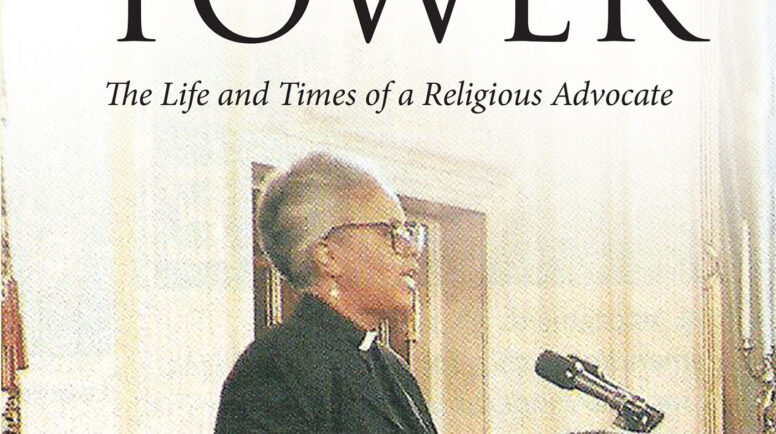
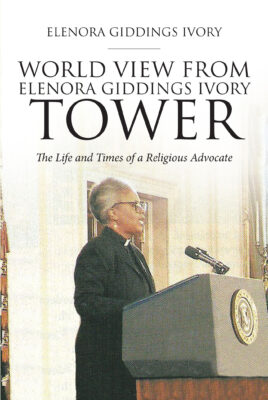
Christian Faith Publishing, 178 pages
Elenora Giddings Ivory has spent over 40 years serving the church and working with ecumenical and interfaith advocacy. In this collection of essays, Ivory demonstrates that her faith demands her speak and act to “feed the hungry, clothe the naked, heal the sick, and set free the captives.” How we treat “the least of these” is how our nations will be judged.
The book is organized as a series of letters written to her grandchildren, Andrew and Simon. Each letter discusses an event in recent history. A major theme is that justice is not liberal or conservative; justice is justice, and all Christians are called to participate in the work of justice.
Ivory weaves together her personal life story, Scripture and recent historical events. She reflects on the beginning of her church activism in Manalapan, New Jersey. When the residents of migrant labor housing asked for clean drinking water, the state’s response was to tear the housing down. Ivory connects this with
Matthew 35:25 (“I was thirsty and you gave me something to drink”) and with the ongoing crisis in Flint, Michigan. Ivory blends past and current events together, showing that while there has been progress, we continue to live in a society that requires activism.
Another essay recalls how tensions were raised in her hometown in 1971 when black mothers asked the school board for the system to include multiracial pictures, varied cultures and African-American history. The families wanted to know about themselves; they wanted to teach their children that there was much more to learn than that they were from slavery. It is important, Ivory writes, that “our achievements and triumphs also need to be known and taught.” Telling the whole story is vital. Ivory rejects temptations to speak of racism as a southern problem or a relic of the past. Racial aggression and emotional, verbal and physical aggression are still widely faced in the United States.
Another theme of this book is how we are bound to each other. Ivory affirms that we cannot be ourselves without community, reciting the African spiritual wisdom, “I am because we are.” She connects this to Paul’s description of the church as the body of Christ in 1 Corinthians 12:14-26. Because, in Ivory’s words, “the wellbeing of the ‘I’ is caught up in the wellbeing of the ‘we,’ which is community. Christians are called and bound to the work of justice.”
This book is a gift to the church. It is Ivory’s personal story of her work, but it is also a testament to the work we are all called to do in our daily lives. From her work, Christians can glean something to take away: an action step, a particular cause to take on or a way to witness in the world.
Ivory closes her work with the scriptural command to “wipe the dust off your feet” (Matthew 10:15). Her closing is a charge to us all to wipe the dust off our feet and to wipe the dust off of others from whatever they are facing in life. This book offers deep insights that can teach many of us in learning to serve in the world, both domestically and internationally. May we keep on steppin’ as we go forward to serve Jesus Christ in the world.
JOANNA HIPP is a free-range pastor in the Presbytery of Charlotte. She is a member of the presbytery’s ministry resource committee, vice president of the alum board of Louisville Seminary and serves on the Charlotte Clergy Coalition for Justice.