LOUISVILLE – There’s been a lot of discussion about the role white evangelical Christians played in the 2016 presidential election. And what’s on a lot of people’s minds now is: What’s likely for 2020?
Robert P. Jones, a religion researcher who’s the founder and chief executive officer of the nonpartisan Public Religion Research Institute, is winner of the 2019 Grawemeyer Award in Religion for his book “The End Of White Christian America,” published in 2016.

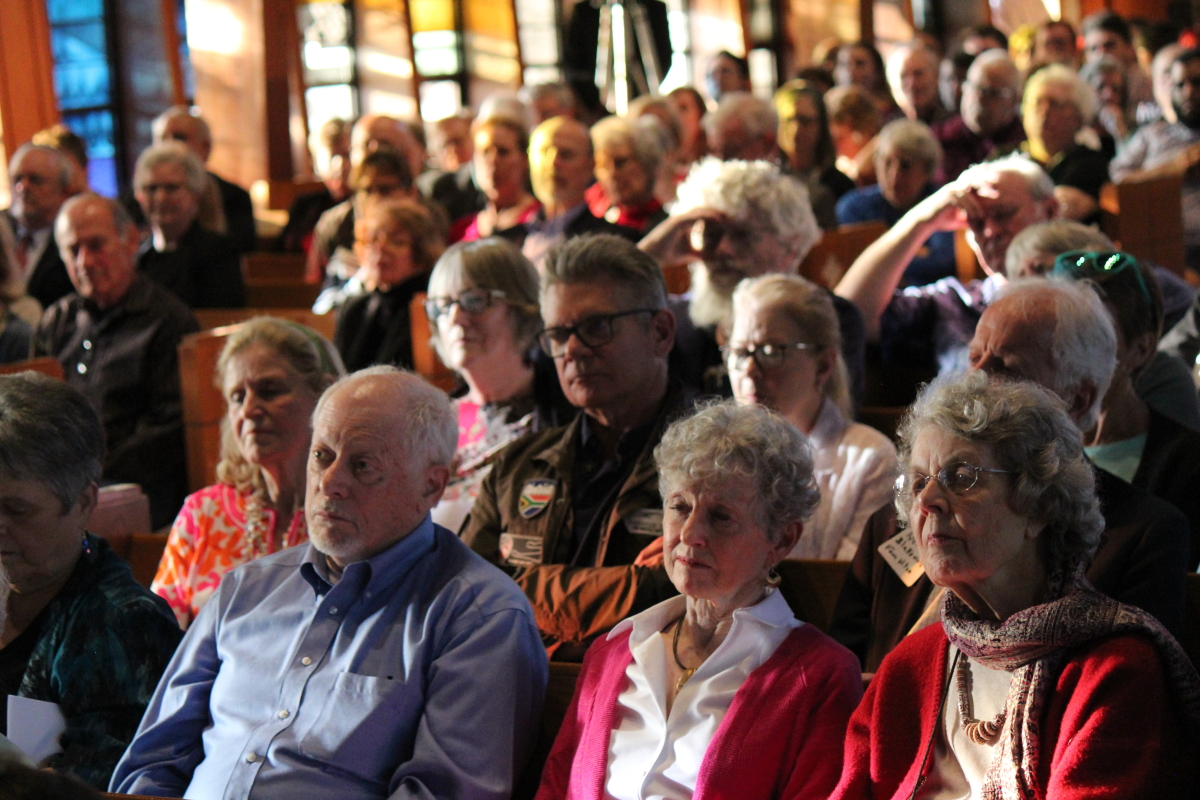
On April 9, Jones spoke at Louisville Presbyterian Theological Seminary about the trajectory he has chronicled of the declining influence of white Protestants in American public life. What the research shows are demographic and opinion trends that are likely to produce real shifts in the nation’s political life – if not immediately, then in the not-too-distant future.
In his book, Jones wrote this: “White Christian America had its golden age in the 1950s, after the hardships and victories of World War II and before the cultural upheavals of the 1960s. June Cleaver was its mother, Andy Griffith was its sheriff, Norman Rockwell was its artist, and Billy Graham and Norman Vincent Peale were its ministers.”
White Protestants controlled the levers of power – “Presbyterians, you’re right there,” Jones told the crowd.
That was also a time, however, when blacks suffered under Jim Crow laws; when Japanese-Americans had fresh memories of entire families being interned in camps during World War II; when many businesses wouldn’t hire women or people of color. Jews and Catholics weren’t admitted to the country club, then; they’re now the majority on the U.S. Supreme Court.
The last decade or so have produced shifts that for some bring grief and a sense of loss, and kindle in others hope for a future in which power is spread more broadly.
These changes spark strong feelings. Jones, who was raised as a Southern Baptist in Mississippi, said a shouting match broke out between audience members last week during a question-and-answer session in Florida.
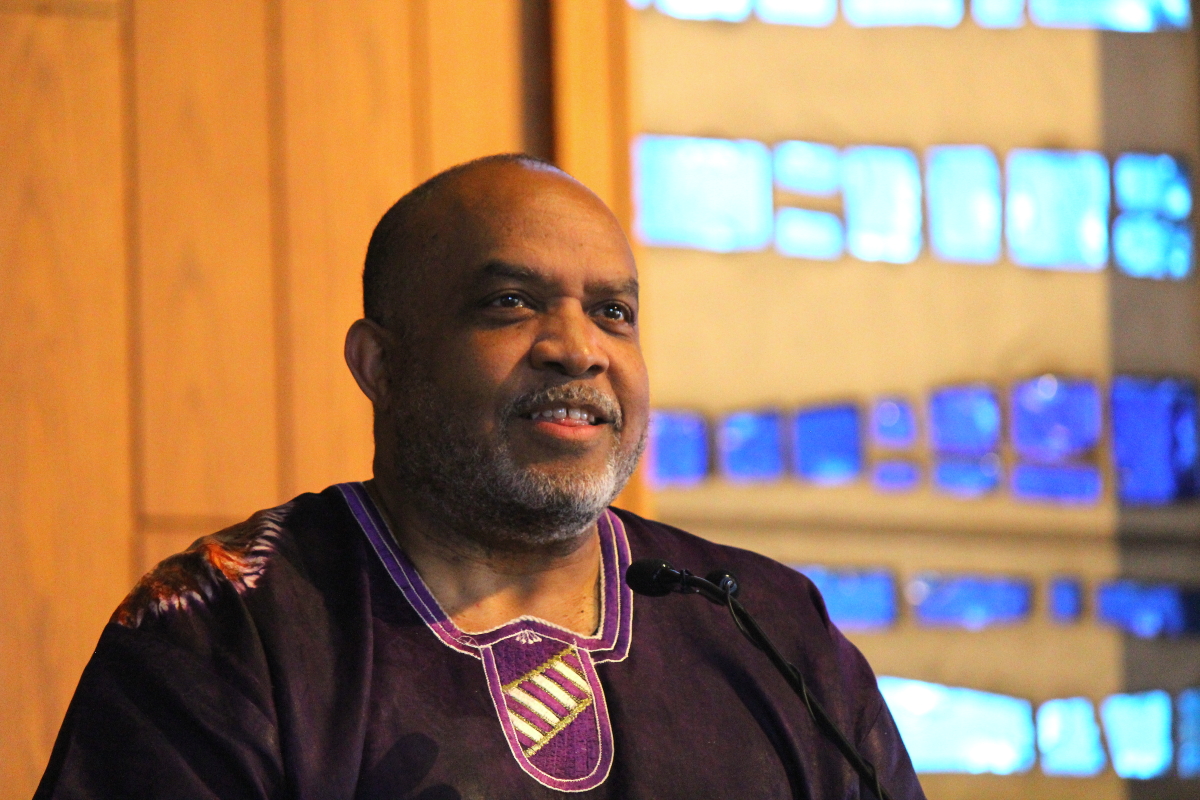
Mostly, he responds to opinions with numbers. Here’s some of what the data shows.
Same sex marriage. Jones uses the national opinion swings regarding same sex marriage as a lens to reflect more pervasive changes.
In 2004, white Christians of all kinds (Protestant, Catholic, Orthodox, nondenominational) accounted for nearly six in 10 American adults (59 percent). By 2018, that number had dropped to 41 percent.
During that same time span, the country had elected, then re-elected, its first African American president. And views on same-sex marriage took a remarkable turn.
In 2004, about a third of American adults expressed support for same-sex marriage. By 2018, that support had doubled, to 64 percent. And “among young people, it’s north of 80 percent,” Jones said.
“If you’re a conservative white evangelical Protestant, this is a head-splitting amount of change,” he said, moving from being the moral voice of public life to losing on a bellwether issue in the court of public opinion and on the U.S. Supreme Court, which in 2015 ruled same-sex marriage legal in all 50 states.
Religious non-affiliation.At 41 percent overall, white Christians no longer make up a majority of American adults. Another quarter (23 percent) are non-white Christians; 6 percent are from other religions; and 25 percent claim no religious affiliation – a rate that’s quintupled since the 1990s, Jones said.
There are age differentials as well, with close to two-thirds (63 percent) of those above age 65 identifying as white Christians, but only a quarter (23 percent) of those ages 18 to 29. About 4 in 10 young people claim no religious affiliation, saying essentially “I am atheist, agnostic, or nothing,” Jones said.
Some may say, essentially, that young people have always been less religious, so that’s not surprising. But Jones points to a progression: in 1986, about 1 in 10 Americans in their 20s were religiously unaffiliated. Thirty years later, in 2016, nearly 4 in 10 (38 percent) of Americans in their 20s were religiously unaffiliated.
That trend towards non-affiliation is happening across the board, he said – in the heartland as well as on the coasts. Even white evangelical denominations such as the Southern Baptists are losing members. “It’s Kansas, it’s Oklahoma, it’s Kentucky,” Jones said. “It’s being felt everywhere.”
Impact on elections. What’s the likely impact of all this, both on what happened in the 2016 election and in 2020? The answer, essentially, is that “Democrats have a demographic win at their backs, but Republicans have a time machine,” Jones said.
In 1994, white Christians accounted for nearly three-fourths of the electorate (74 percent), compared to under half in 2014 (48 percent). But “white Christians turn out to vote at rates higher than other Americans do,” he said– consequently they’re over-represented at the ballot box. In 2016, white evangelical Christians accounted for 15 percent of the U.S. population, but 26 percent of the votes cast in the presidential election – the same percentage as a decade earlier.
That high rate of voting by white Christians “has the effect of taking us back eight to 10 years” demographically, Jones said. “The ballot box (demographics) looks very different than the population as a whole.”
And he contends that for white evangelicals, “there is a kind of anger” at the turn American life and politics have taken. “It comes from a sense of entitlement, from a loss of power.” When running for president, Donald Trump essentially said to those voters “I’m your last chance,” Jones said. “It’s either me or a very different future. That was the appeal.”

Trump’s approval ratings in his presidency have never gone higher than 43 percent overall, Jones said. Among white evangelicals, the approval rating is much higher – ranging from 65 to 77 percent. “Basically two-thirds (of white evangelicals) support President Trump,” he said. “It’s been very, very steady.”
Another finding: in 2011, about 30 percent of white evangelicals said they thought a person who commits an immoral act in their private life could still behave ethically and fulfill their duties in public and professional life. In 2016, that number more than doubled, to 72 percent.
Jones also spoke of a growing partisanship and divide between those of differing political views. There’s an increasing percentage of people who say they’d be unhappy if their son or daughter married someone of a different political party. A majority of both Democrats and Republicans say they believe the other party is leading the country in a dangerous direction.
Democrats and Republicans have differing views on pluralism and religious diversity– for example, whether it’s better to have a country made up of people from all over the world and from different religious backgrounds, or not.
Has American culture and way of life changed for the better, or the worse, since the 1950s?
Those who say “better” tend to be Democrats, the religiously unaffiliated, young people, whites with college degrees, African Americans and Latinos.
Those who say “worse” tend to be Republicans, whites without college degrees, senior citizens, white mainline Protestants, white Catholics, and about three-quarters of white evangelical Protestants.
So what does he see looking ahead? “2020 is a little bit of a wild card,” Jones said. By 2024, he expects the voting reality of the demographic changes to become easier to see.
He also uses the metaphor of a family dinner table at Thanksgiving. Increasingly, white Christians will find their seats at the table along with others of different races and views. “This time, they will be guests, rather than hosts,” Jones said.
He described buying an antique dining table for his own home – and discovering one of the chairs could only be placed at the head of the table, because it was taller and had side arms. The idea of privilege “was built into our furniture,” Jones said.
His family’s solution: that’s where his young daughter sits.