 BALTIMORE – Pay attention.
Drive around the city where you live, and see the disparities.
In Baltimore, where the 2020 General Assembly will meet next June, they’re not hard to spot. Baltimore is “a very hyper-segregated city, racially and economically,” said Kate Foster Connors, director of The Center, a ministry of the Presbytery of Baltimore that connects visiting church groups with the work of local congregations, giving them a starting spot for thinking abut issues of race and class back home.
As in many places, the disparities in Baltimore are embedded in the city’s history. In Fells Point, a neighborhood in southeast Baltimore, tourists and locals now drink beer in the bars and restaurants and snap selfies on the cobblestone streets. In the late 1700s to the mid-1800s, enslaved blacks were held in sweltering “slave pens” on these same streets, and marched in chains to the harbor to be forced aboard slave ships heading south to the plantations.
“I saw a mother whose very frame was convulsed with anguish for her first born, a girl of 18, who had been sold to this dealer and was among the number then shipped,” an abolitionist wrote, as cited by a Baltimore Sun story on the city’s slave history. “I saw a young man who kept pace with the carriages, that he might catch one more glimpse of a dear friend, before she was torn forever from his sight. As she saw him, she burst into a flood of tears, sorrowing most of all that they should see each other’s faces no more,” the abolitionist wrote.
Even before the Civil War, Baltimore also was a city with a sizeable population of free blacks. In 1910, the Baltimore City Council passed an ordinance designed to create residential segregation, after George McMechen, a young black graduate of Yale Law School, moved into a house in Bolton Hill, in what had until then been an all-white neighborhood. The city reacted by passing what became the nation’s first residential segregation ordinance — banning any whites from moving onto a block that was majority black, and any blacks from moving onto a block that was majority white.
Next up: redlining, discriminatory lending practices by banks that relied on designations from a federal entity that graded Baltimore neighborhoods from “best” (green) to “hazardous” (red) — with predominantly black neighborhoods inevitably marked either yellow (“definitely declining”) or red. Banks wouldn’t lend in neighborhoods they considered high risk — and deed restrictions meant families of color couldn’t buy in white neighborhoods.
In some areas, neighborhood covenants stated explicitly that a homeowner couldn’t sell property to someone who wasn’t white and Christian. Foster Connors said the neighborhood she lives in just removed that covenant two months ago; even though enforcing the restriction would have been illegal, removing it required agreement from 100% of the neighborhood’s property owners.
Then: urban redevelopment. From 1951 to 1971, a Washington Post story reported, “80 to 90 percent of the 25,000 families displaced in Baltimore to build new highways, schools and housing projects were black. Their neighborhoods, already disinvested and deemed dispensable, were sliced into pieces, the parks where their children played bulldozed.”
Also: white flight. In the decades from 1950 to 1995, Baltimore lost manufacturing jobs and the city’s population shrank to 650,000, while the suburbs grew to 1.8 million.
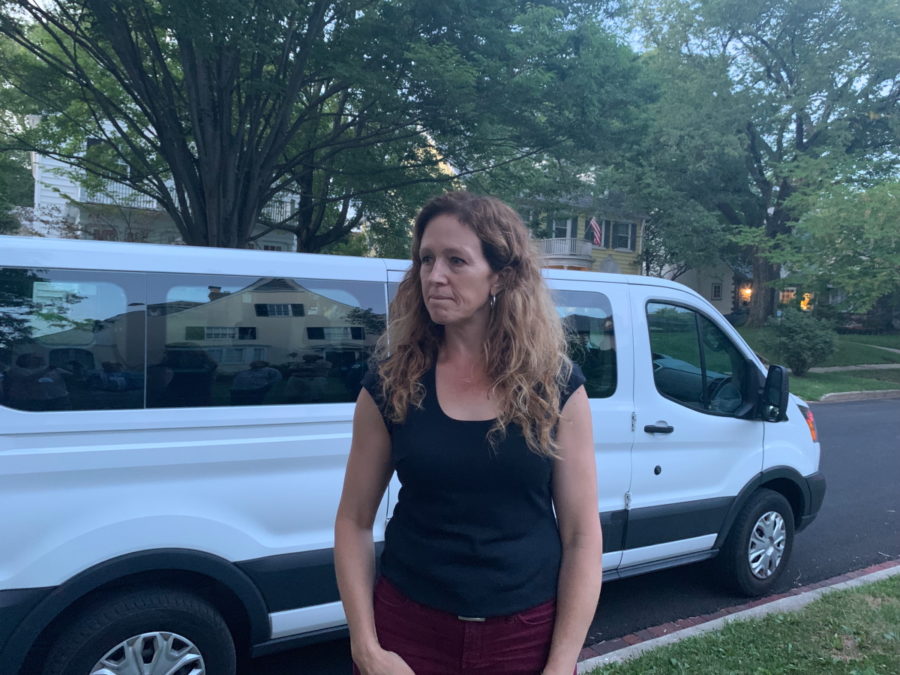
Let’s take a drive, as a group at Big Tent 2019 did one evening during a Justice Tour. That’s is not enough for a true, deep, lived understanding of a city – but a way to grab on to a thread of comprehension, of starting to unravel and think about the kind of inequities that scar so many towns, all across the country.
Pay attention. Look for the disparities and the boundaries – the places where things change, Foster Connors said.
The differences from neighborhood to neighborhood “are the result of policy, the result of decisions made by people in power,” she said. The neighborhoods that look like they’re hurting are places where The Center’s partners in ministry and social justice advocacy are active, “and where creativity is flourishing and blossoming,” she said. “These are neighborhoods where our friends live.”
Here’s the Inner Harbor. This part of Baltimore is “very heavily invested in,” Foster Connors said, and packed with tourists. “Sometimes we call it the Disneyland part,” because to many locals “it’s not really Baltimore.”
What do we see in the downtown business district? High rises, pedestrians, people waiting for buses. A lot of people who live in the city don’t own cars, so they either walk or rely on public transportation, Foster Connors said. Many students attending Baltimore City Public Schools ride city buses, not school buses, to get to class.
The light rail mostly runs north and south, “right down the middle of the city which is where the affluent whites live,” Foster Connors said. A free bus, the Charm City Circulator, runs from Johns Hopkins University to downtown.
From east to west – neighborhoods that are predominantly African American and low-income – there’s only one light rail line, “and you have to pay to take a bus,” Foster Connors said.
Look for the grocery stores. For the most part: corner bodegas or discount stores, but that’s all. “Has anyone seen any white people in the last eight blocks?” Foster Connors asked.
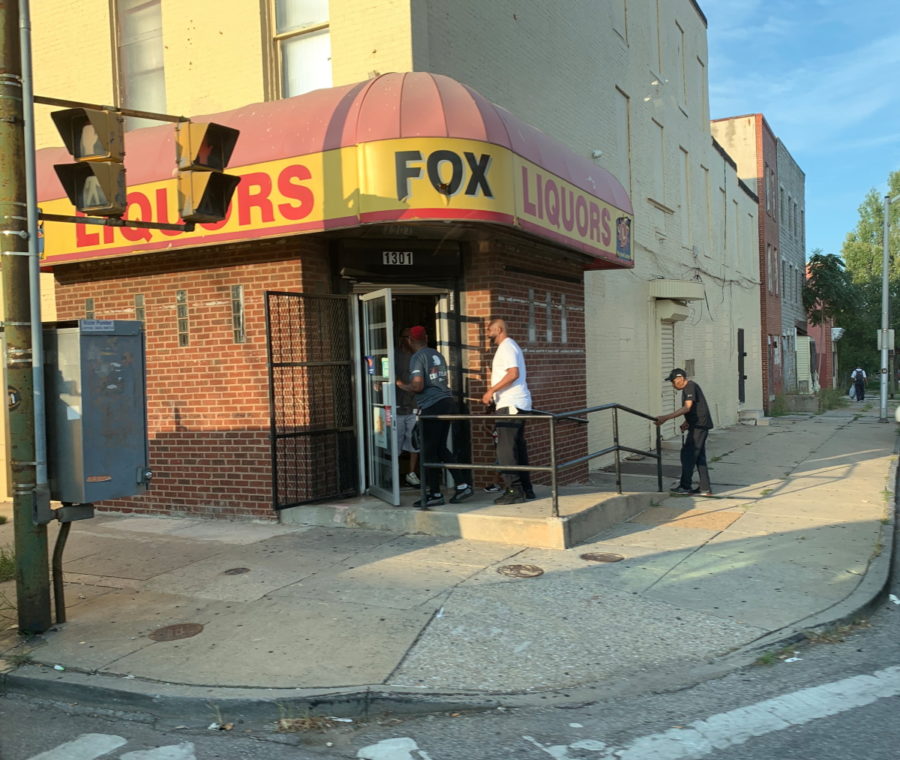
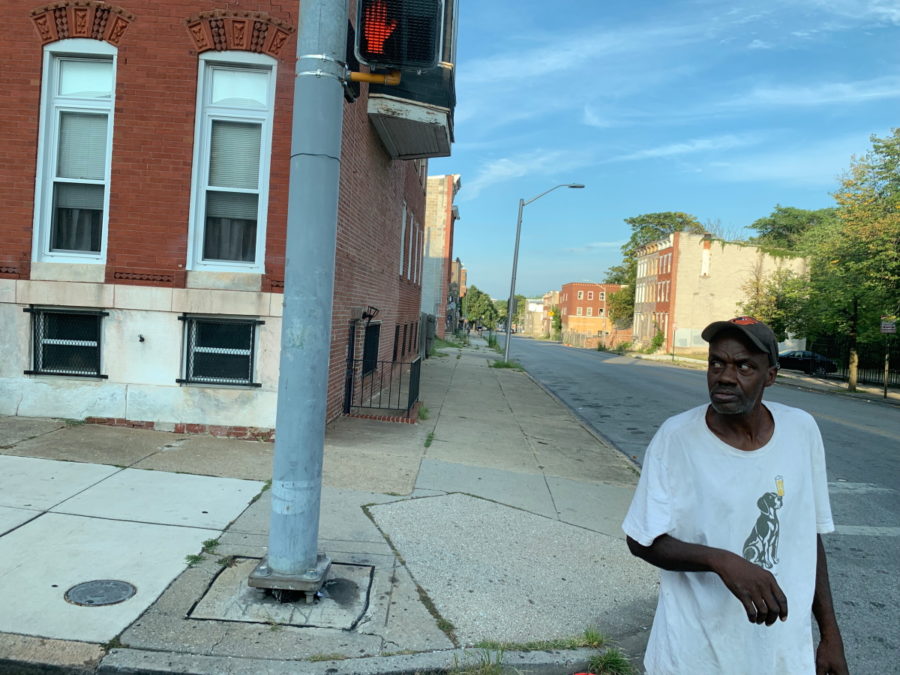
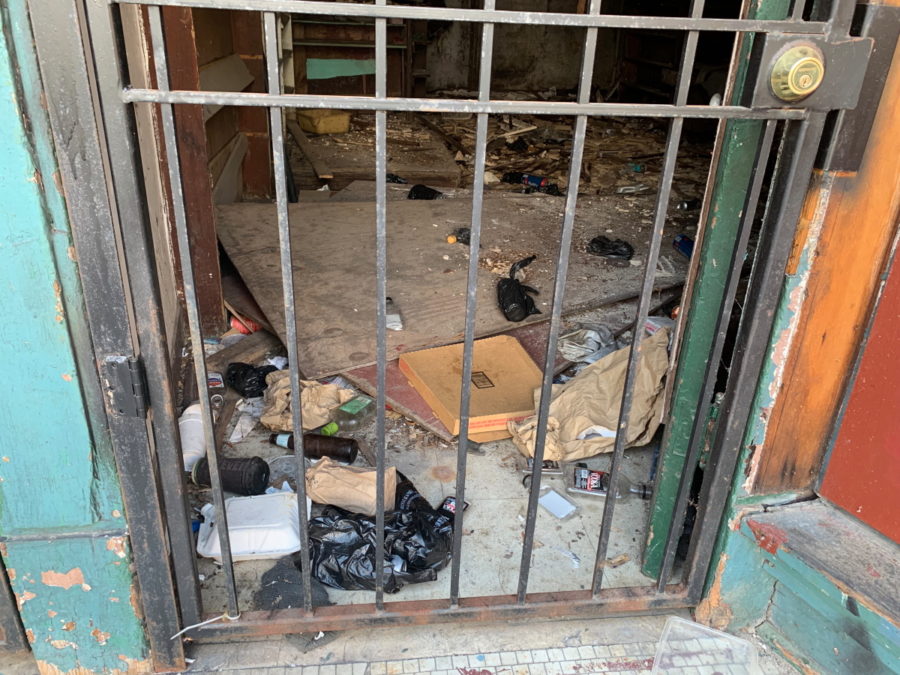
The van turned a corner, now driving though blocks dotted with boarded-up row houses, graffiti and trash. Also notice: people sitting on stoops, there an urban farm, a man giving haircuts on the side of the street. We were turning into the Harlem Park neighborhood, one of the most distressed neighborhoods in West Baltimore, Foster Connors said. These places are struggling, “but there are also these beautiful signs of hope like that garden, people sitting out on their steps and hanging out,” she said. “There’s a real sense of community.”
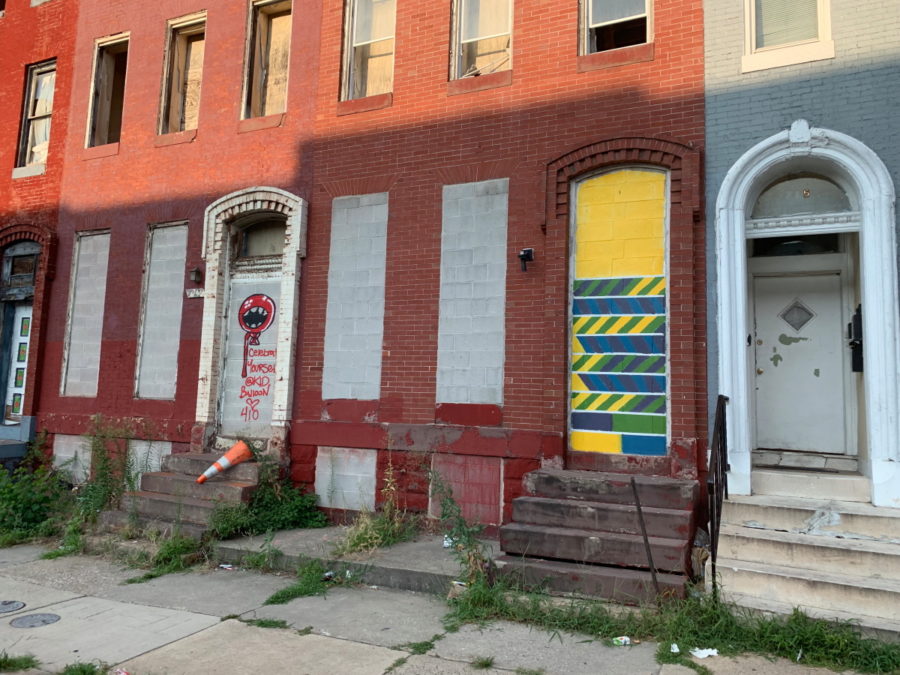
We turned into the Sandtown-Winchester neighborhood, where Freddie Gray lived and was arrested in the Gilmor Homes housing project – and where riots erupted after he died in 2015, the 25-year-old man’s spinal cord severed at the hands of the police. Even just driving through, the economic suffering is evident. And public efforts to make real change in the four years since Gray died have suffered too. Today, murals mark the spot where Gray was arrested, and commemorate the pain, anger and also hope for change that his killing has carried.
Pennsylvania Avenue – known to many simply as “The Avenue” – was the cultural center for black Baltimore from roughly the 1920s to the 1950s, an entertainment strip lined with clubs and shops, where people “got dressed to the nines” to go out to the jazz and blues clubs, Foster Connors said. So many of the greats, from Louis Armstrong to Aretha Franklin, performed in the Royal Theatre and other clubs here.
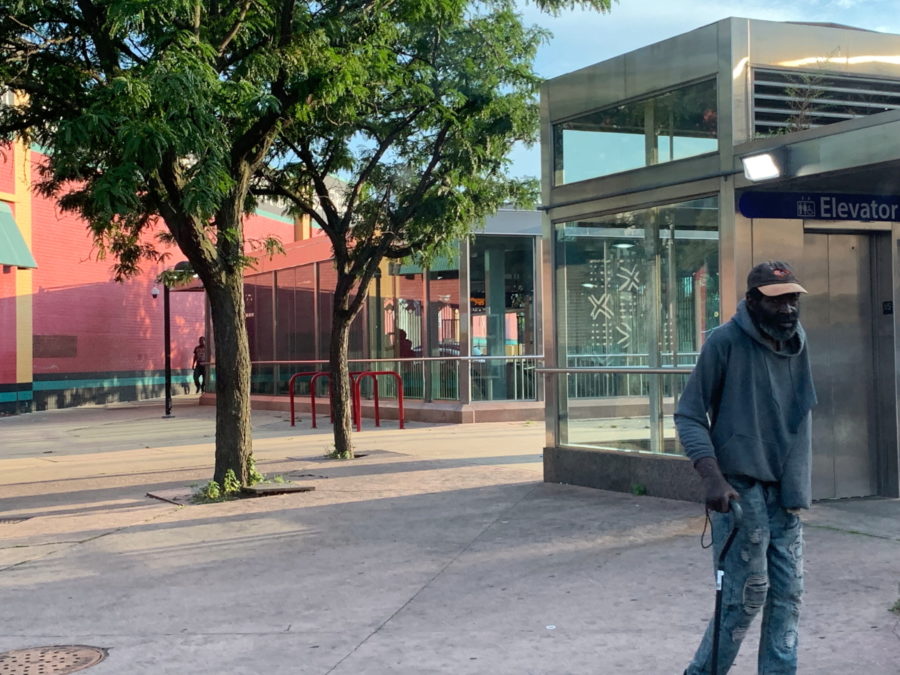
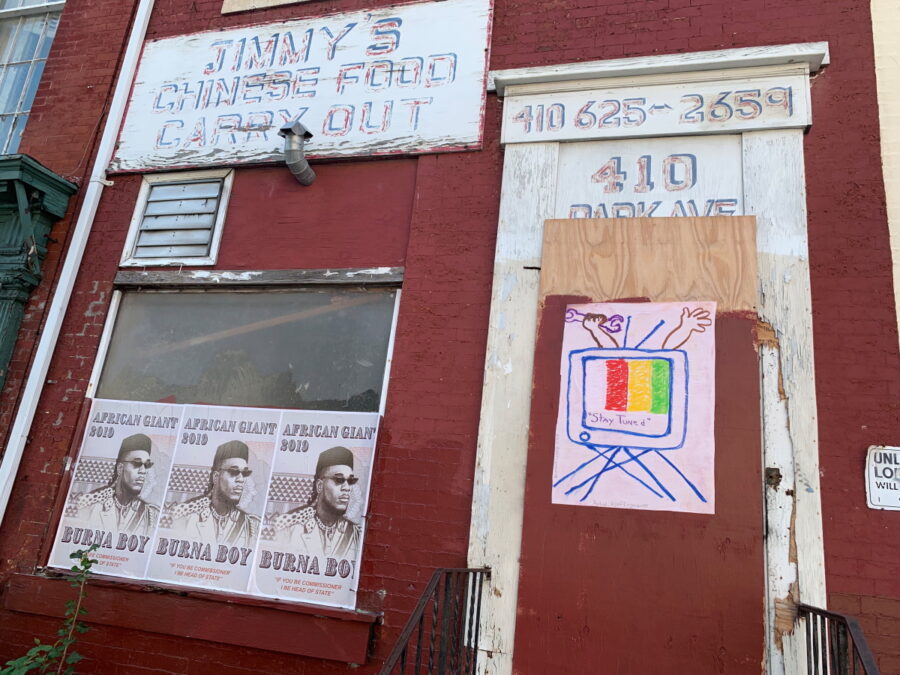
Now it’s a different world. It was on the corner of Pennsylvania and West North that a CVS store went up in flames during the 2015 riots. Some of the boarded-up buildings are tagged with graffiti – some of it political, some of it art. There’s talk of a revival – of putting together the funding to bring the strip back.
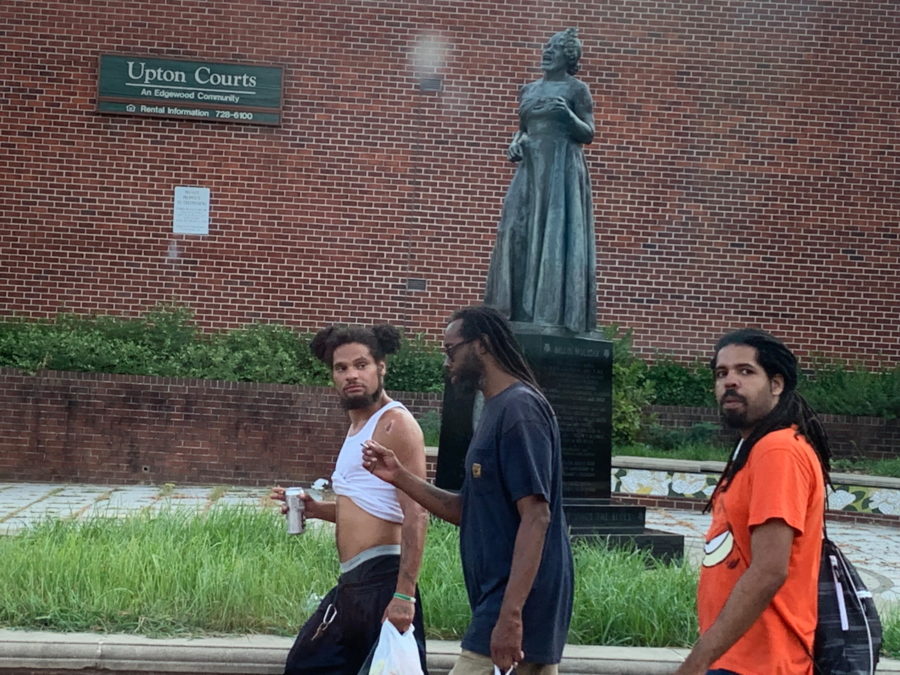
Until then, it’s decay and guys walking without a glance past the statue of Billie Holiday. This is not a neighborhood without life; it’s a place many people call home – groups of women sit outside on plastic chairs on this warm summer night, talking and laughing, the children playing nearby.
Foster Connors points to the shortage of parks and recreation centers, places for kids to play ball and swim. “What’s happening there?” she wondered as the van rounded one corner, where several large brick buildings were collapsing. “Nothing good.”
Now the neighborhood shifts again, becoming a bit more affluent – with more flower boxes, better-kept homes, fewer people outside.
We drive on, in a few minutes passing by the Baltimore City Detention Center (now closed and scheduled for demolition), right next to the Latrobe Homes housing project. Foster Connors said a friend who’s a community organizer told of a child pointing to the windows of the jails and the housing project, saying, “My dad lives there, my mom lives there, my aunt lives there.” Her friend asked, “What kind of hope are you going to have if that’s your back yard?”
Now we’re in Harbor East – an upscale new neighborhood that literally did not exist when Foster Connors moved to Baltimore in 2004. “It was warehouses and subsidized housing,” land that developers took through eminent domain, working with the city and relying on 15-year tax breaks despite some opposition from faith leaders because low-income residents were being displaced. The crowd this night seems young and upscale. The grocery store here is a Whole Foods. We pass a Hawaiian fusion restaurant and a J. Crew store.
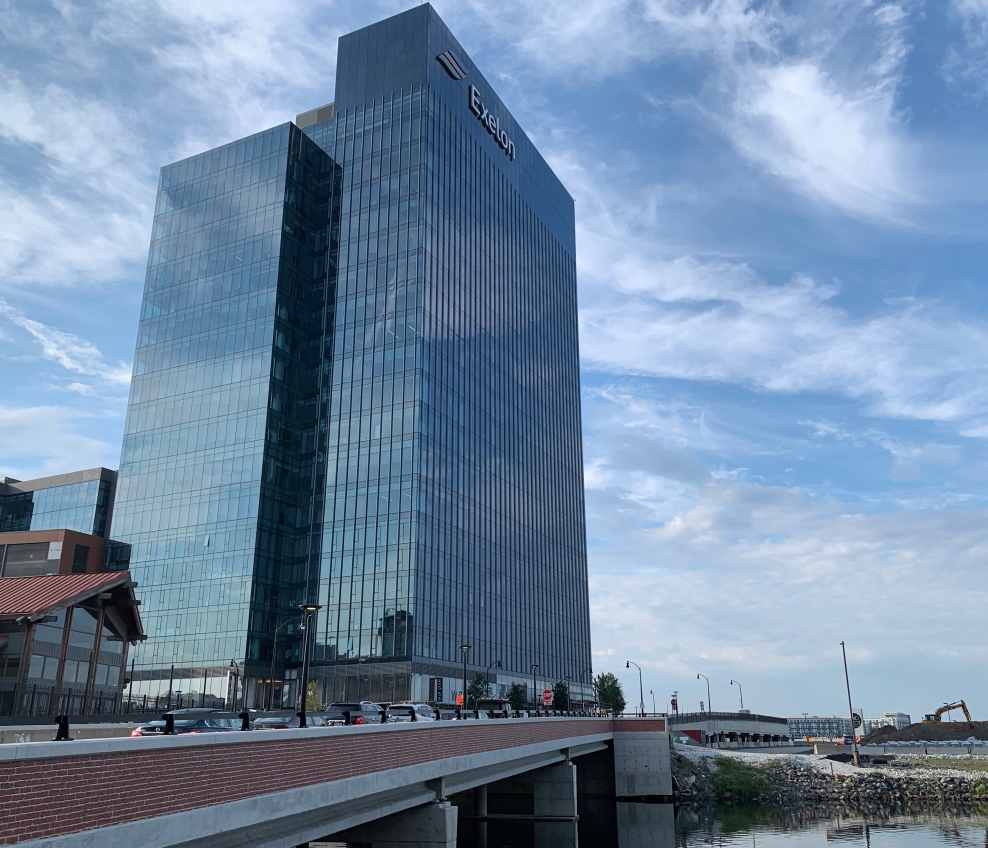
Here’s a Superfund site – where a former industrial factory dumped chromium on the land. It was capped with cement, and topped with a new 21-story office tower, the $270 million Exelon Energy building, which opened in 2016.
“This is what investment looks like,” Foster Connors said.
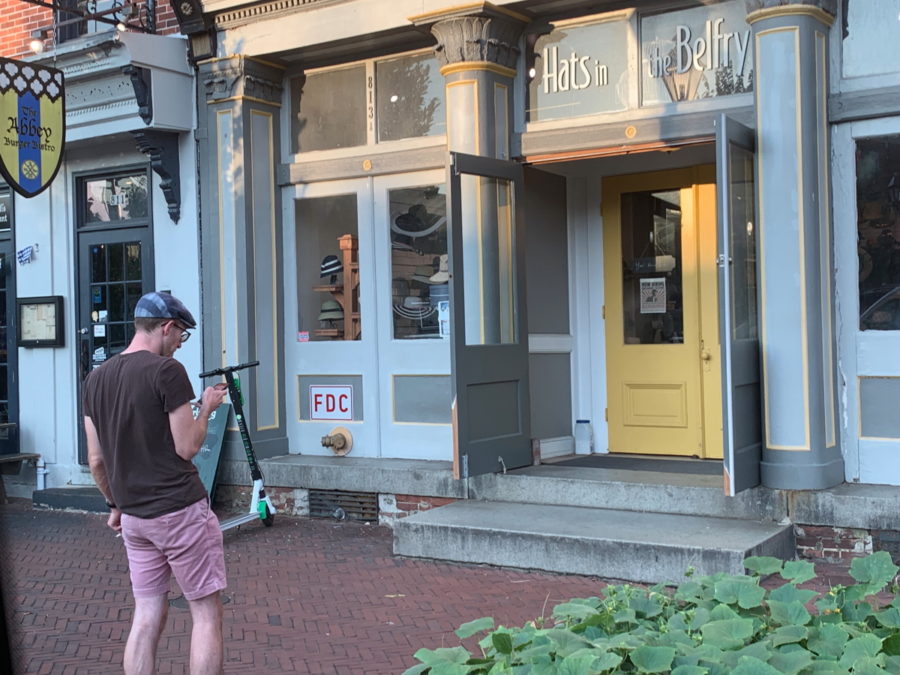
Next, trendy Fells Point. This used to be an area of slave trading, also a place where immigrants lived, including Eastern Europeans, Germans and Irish, many of whom worked at the harbor. We pass the Polish Home Club, a social club founded in 1918.
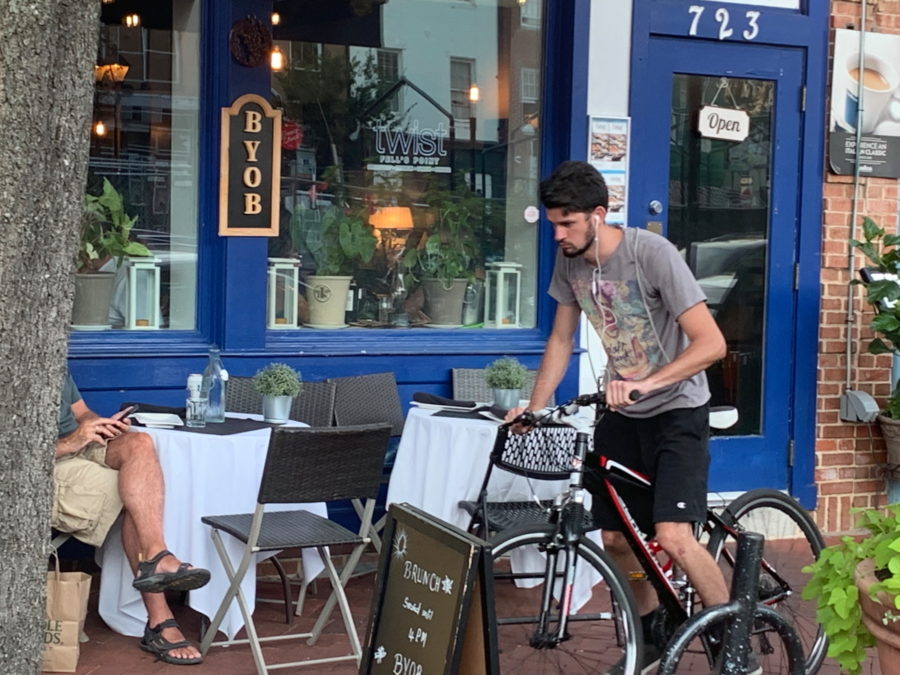
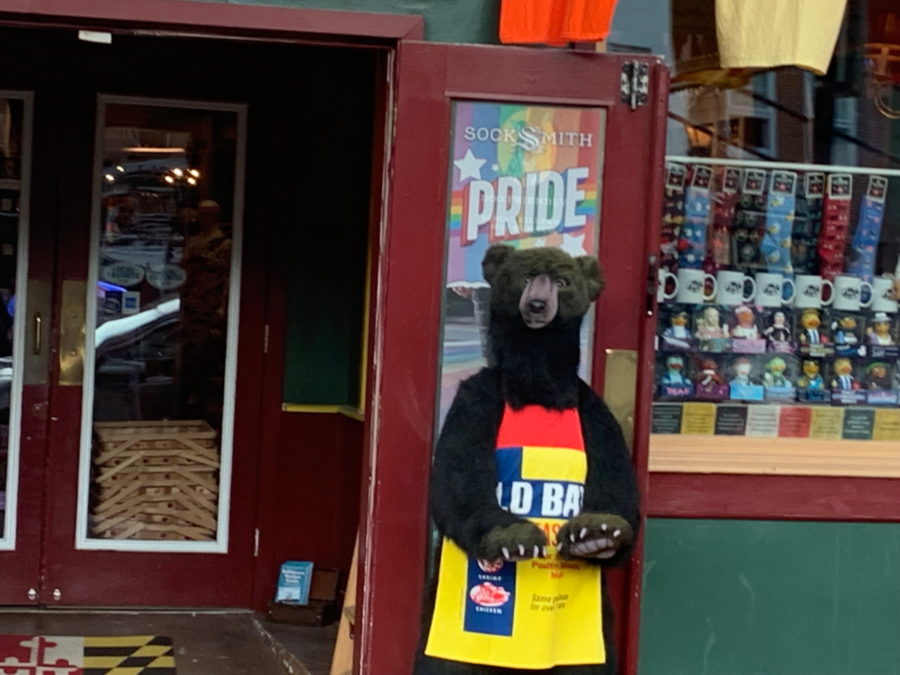
Moving out of Fells Point, heading north to Butchers Hill, the neighborhood changes again. There’s a boarded-up church with a “No Trespassing” sign, a discount store, a Cash Depot, a halal market, a man selling watermelons out of the back of his truck. Quite a few signs are in Spanish.
“This area is very heavily Salvadoran and Mexican now,” with some Middle Eastern immigrants too, Foster Connors said. On one corner, a sign warns that from now it’s forbidden for day laborers to be picked up on that spot; the police will enforce the rule.
Now we’re at the edge of the Johns Hopkins medical campus – right across the street from the Douglas Homes housing project, close to Perkins Homes.
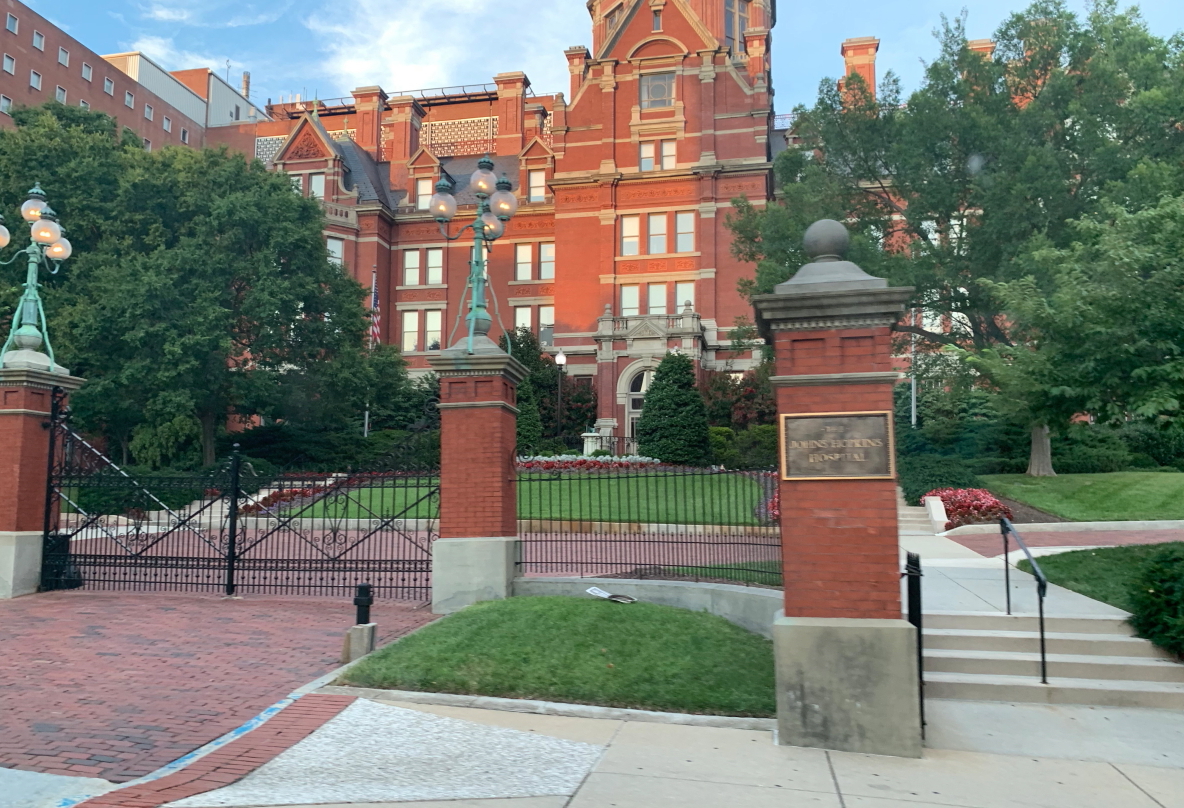
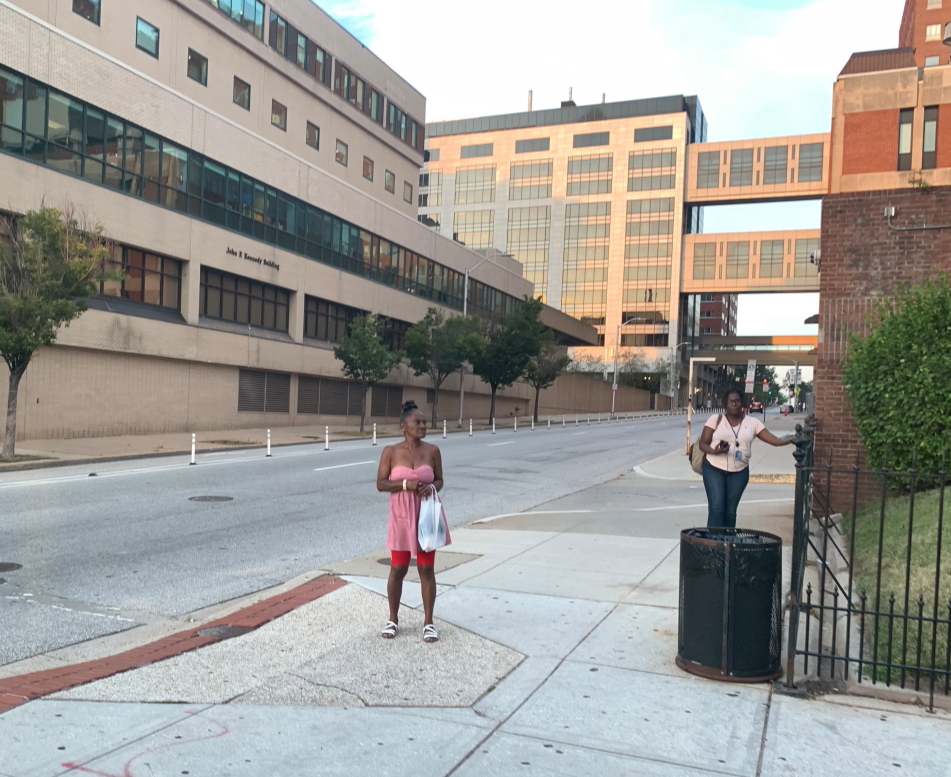
This part of east Baltimore is in the midst of an ambitious and somewhat controversial redevelopment plan being driven by Johns Hopkins and the city of Baltimore – the 88-acre East Baltimore Development Initiative (EBDI), with housing and shops and a new public school and gentrification, and the new Eager Park. “There are upsides to that redevelopment,” Foster Connors said. “There are tensions for the people being displaced.”
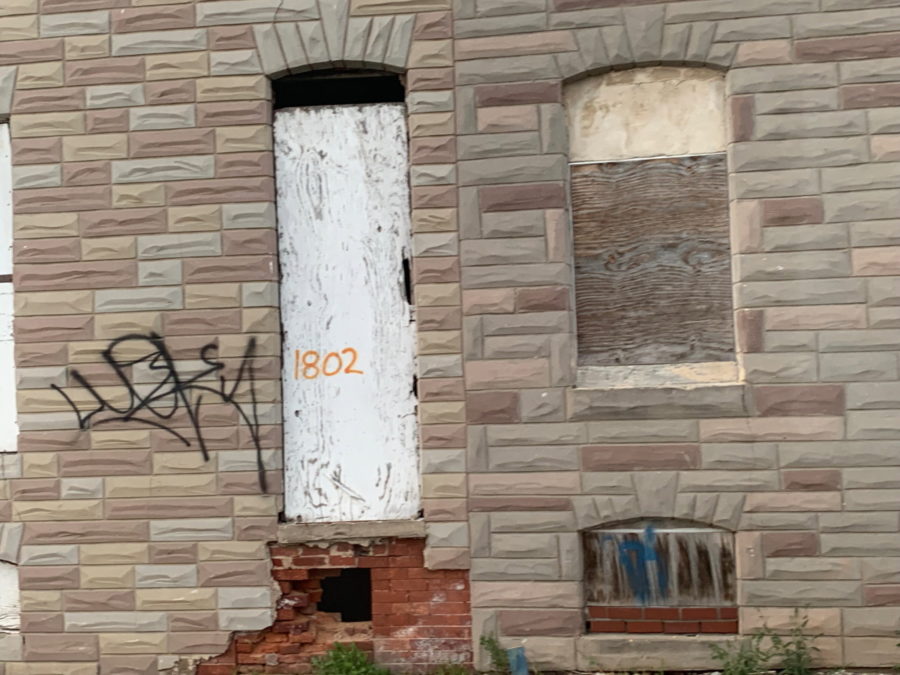
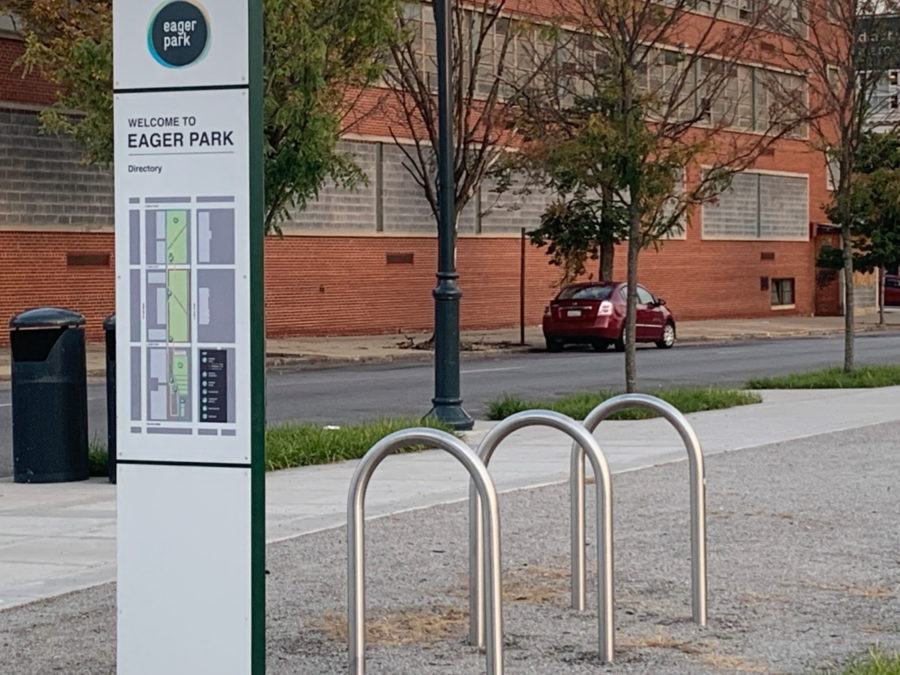
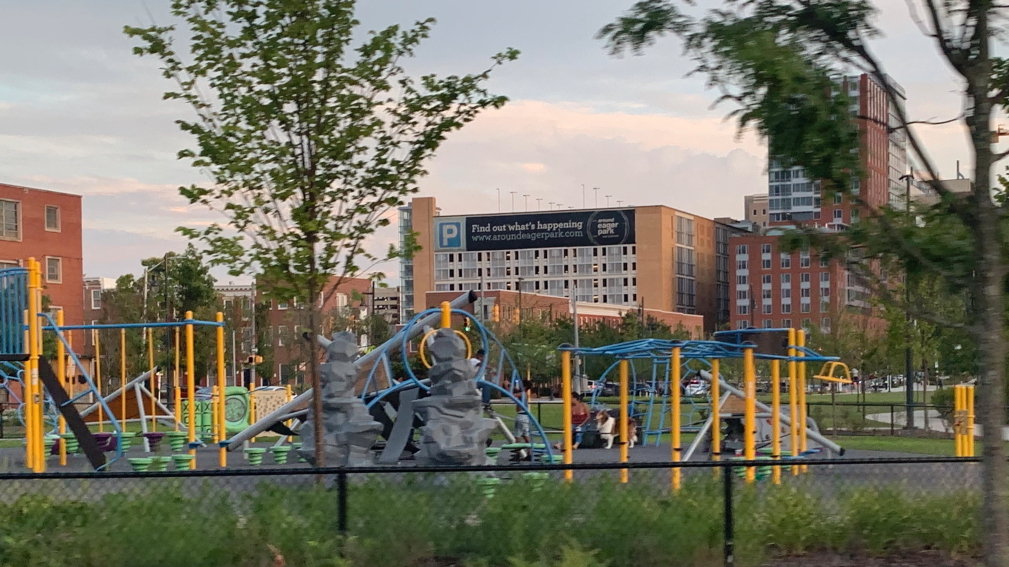
Heading north, past Clifton Park. There’s Baltimore City College, one of the best public high schools in the city, admission by application only.
We’re getting close to Johns Hopkins University, and now there’s an actual supermarket, a Giant Food store. Here’s a big Barnes and Noble bookstore. In a nearby parking lot, a campus security guard in a neon vest keeps watch – there’s been disagreement this year over the university’s proposal to create its own private, armed police force.
Now we drive past the campus, into a neighborhood with trees, well-trimmed lawns, big houses set back from the street. “This is still Baltimore City,” Foster Connors said. “Is anyone having their head spin yet? This is the same city” – just a few miles from the rows of boarded-up rowhouses.
We stop along Northway, a street of large, fine homes in the Guilford neighborhood, and pile out of the van. We stand for a minute, listening to the birds, smelling the fresh-cut grass. “Would you feel comfortable closing your eyes and standing here?” Conner Fosters asks – and most of the whites say yes.
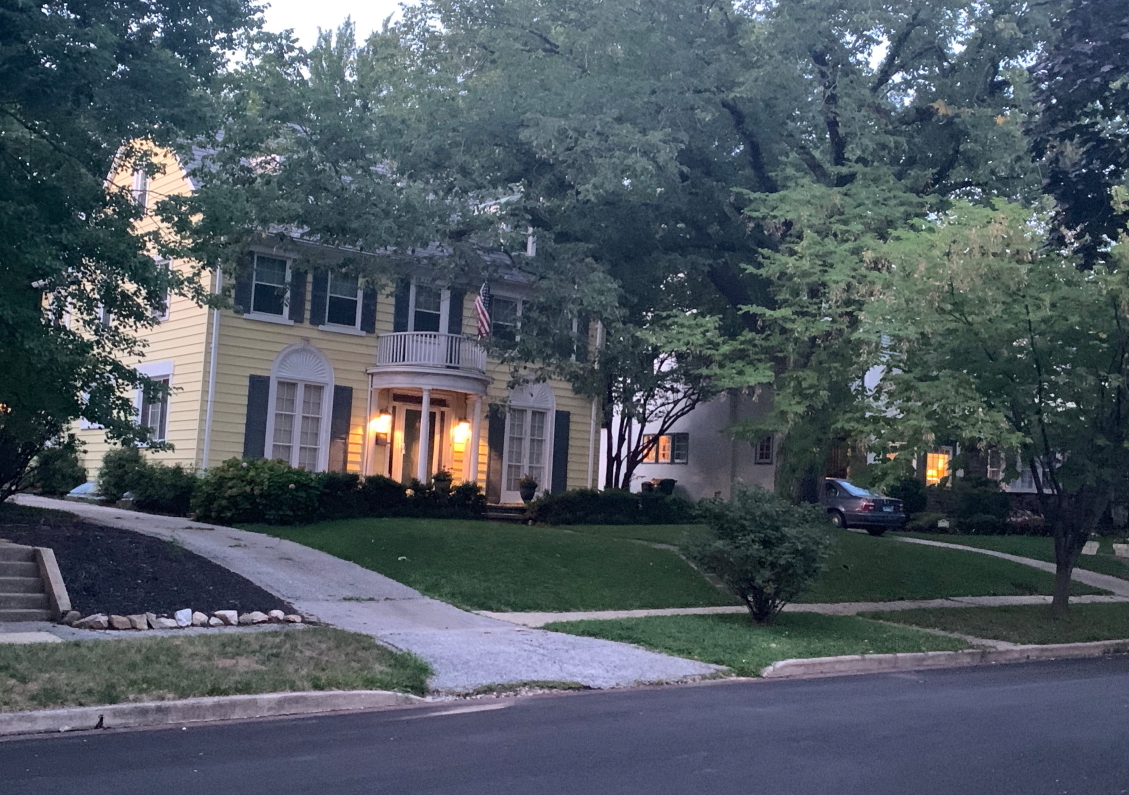
We walk to the end of the block, turning at the corner “it’s like we stepped into a different universe,” one man says. There’s traffic on this cross street, and across the way a used tire shop, fast food places, a lottery ticket store.
Liv Thomas, a Hands and Feet Fellow with The Center, said through her work she’s fallen in love with the nearby Woodbourne-McCabe neighborhood, a much less prosperous neighborhood still feeling the consequences of redlining and generations of accumulated inequity. “It feels like Baltimore,” Thomas said.
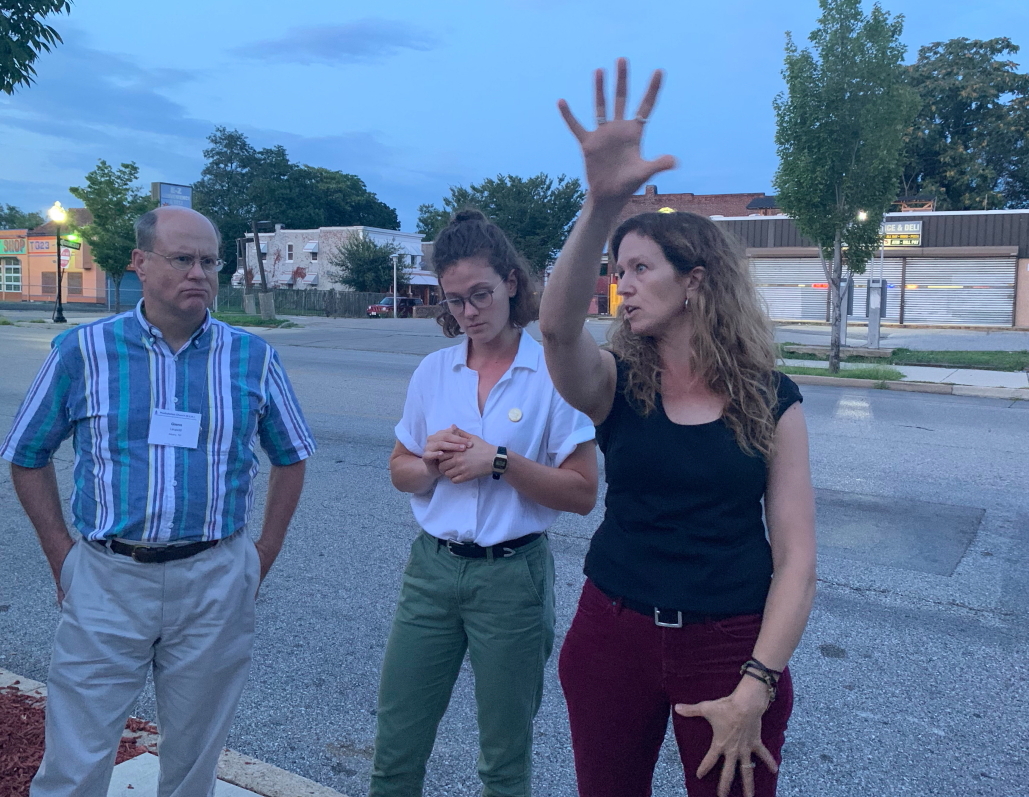
In redlining days, the Guilford neighborhood with its big houses was “definitely green,” marked as the most desirable, Foster Connors said. And knowing that history, “when we’re standing in there, people of color usually don’t feel relaxed.”
Northway, the street we’d walked down, dead ends at Greenmount Avenue, a connecting street to the less affluent neighborhoods. Northway is a one-way street, with a big “Do Not Enter” sign right where we stand and a brick archway through which pedestrians pass to get to the other side. It is, Foster Connors said, an early form of gated community.
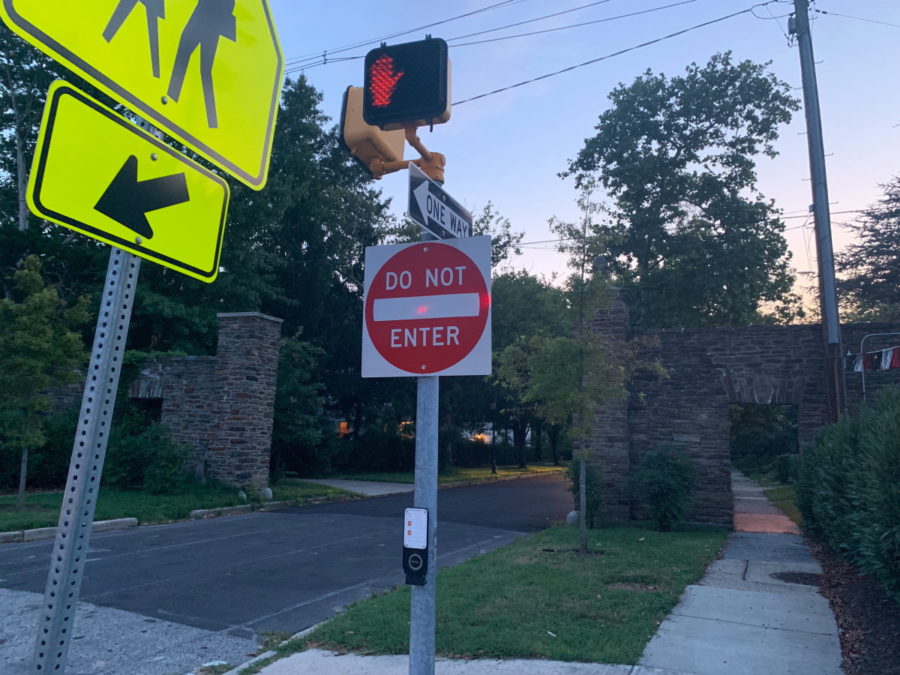
One man said he felt angry, at the visible continued legacy of discrimination. “If there’s a way to mistreat people, we do it,” he said.
Pay attention. What do you see?
“If we are honest with ourselves, could we do this same tour in the towns where we live?” one woman asked.
“We sure could in mine.”
More resources
- “Baltimore and Beyond”: In this video from Brookings Creative Lab, black high school students talk about economic and racial divisions in their communities – describing the challenges they see, and what it’s like to call those places home.
- “A Tale of Two Cities”: This Baltimore Magazine article explores the history, pain and prospects of West Baltimore, following the protests after the death of Freddie Gray. It concludes: “In Baltimore, beauty and chaos live side by side.”