LITTLE ROCK, Ark. — Worship and workshops. Education and evangelism. Mission and ministry. New friends and old friends. From Jan. 29-Feb. 1, the annual event of the Association of Presbyterian Church Educators (APCE) offered all this and more.
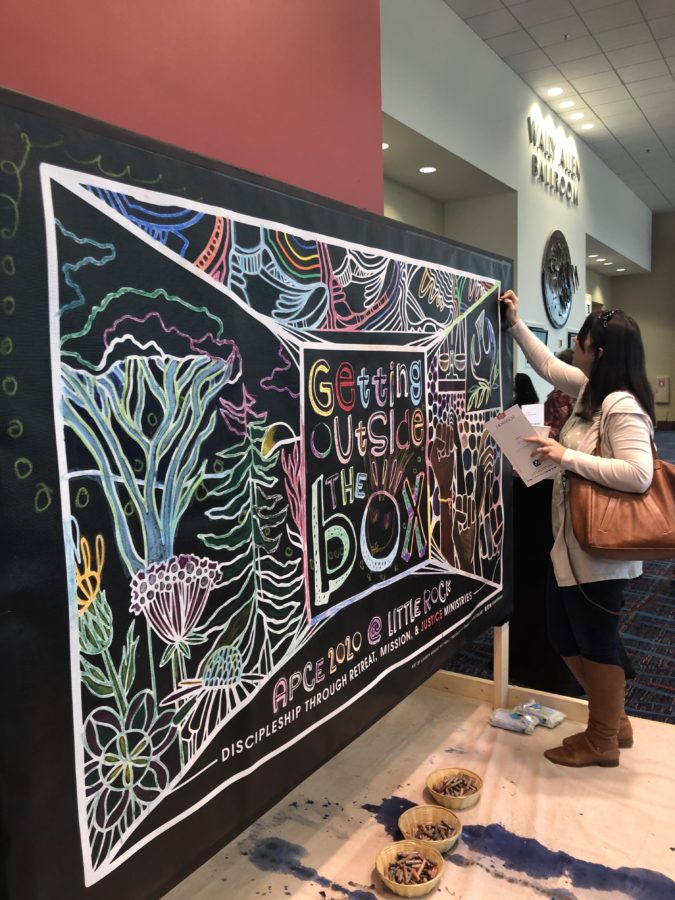
The theme of the 2020 conference was “getting outside the box,” explained as: “Escape the cramped boxes of conventional church programs and explore discipleship through retreat, mission, and justice ministries.”
CONFERENCE HIGHLIGHTS
Education. The conference offered more than 70 workshops on topics including mental health in youth ministry; spiritual practices for children; planning intergenerational retreats; disaster response; and older adult ministry.
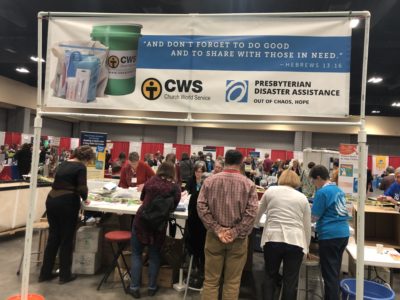 Mission project and offering. Space in the exhibit hall was designated for Presbyterian Disaster Assistance hygiene kit inspection and packing. Hygiene kits – zip-close bags containing a comb, washcloth, bandages and more – were shipped to the Disaster Assistance Center at Ferncliff Camp and Conference Center near Little Rock. In partnership with PDA and Church World Service, the Disaster Assistance Center is one of two centers in the U.S. to receive these kits and ship them to disaster sites in the U.S. and abroad. APCE attendees were invited to help with quality inspection of the kits and preparing them for shipment. Over the course of the conference, they completed work on 1,620 kits.
The Val Murphy Offering, taken at each APCE annual event, helps fund scholarships and local ministry. This year, a portion of the offering collected during worship supported Mercy Community Church of Little Rock, a multidenominational worshipping community that welcomes all – especially those living on the streets. Offerings collected totaled more than $8,600.
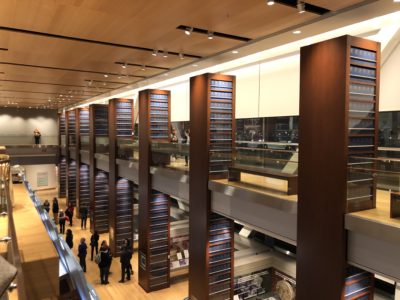
Little Rock, Arkansas. Conference attendees were welcomed to a private reception and open house at the Clinton Presidential Library. Other optional off-campus activities included an opportunity to learn more about the Little Rock Nine at the Little Rock Central High School National Historical Site; a visit to Heifer International Headquarters; and a tour of Ferncliff Camp and Conference Center to learn about its Nature Preschool Immersion program.
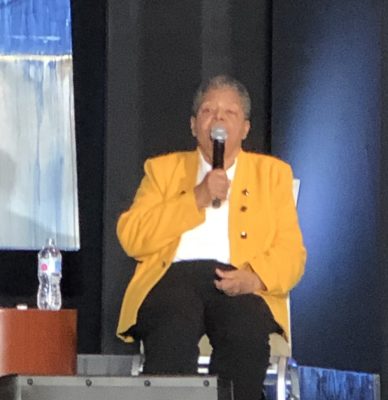
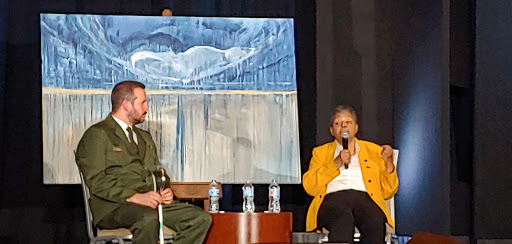
Special lecture. The University of Arkansas Clinton School of Public Service supported a guest lecture with Elizabeth Ann Eckford, one of the Little Rock Nine — the first black students to enroll at all-white Central High School in 1957.
At age 78, Eckford quickly said that this would likely be the last speech she would give to a large group. She joked, “My sister and I say we are standing on banana peels at the edge of the grave.”
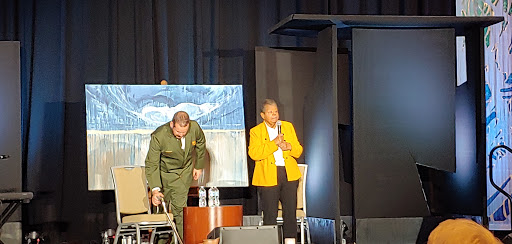
Using no manuscript or written notes, Eckford spent the hour sharing her memories of the events that led to her becoming one of the Little Rock Nine and stories of her time at Central High School. “I had a hard time getting my parents’ permission,” she remembered. “I asked my mom the spring before if I could go to Central.” And her mother, who she called “the queen of no,” surprised her by saying, “We’ll see.”
Seventeen black students originally planned to enroll, she said, and their names were printed in the local newspaper — publicity that led to retaliation for their families, and caused some to change their minds about enrolling.
 Eckford said she and her parents had an interview with the school superintendent, and recalls that the school district was for “limited, token desegregation. … Integration didn’t come to Little Rock schools for a long, long, long, long time.”
Before she left for Central High School the first morning, “Mother gathered us to have a word of prayer.” Eckford could not remember exactly which psalm it was, but recalled that it was a psalm asking for protection.
When she got near the school, she could “hear the murmur of the crowd. … As I approached the corner of 14th and Park,” there were soldiers all around. “I approached the soldiers three times,” and each time was turned away. She recalled seeing the angry demonstrators and realized “they were there to keep me out of school, not to protect me.” There were photographers and reporters asking questions. But she said she didn’t say anything, “because I was afraid if I opened my mouth I would cry. I was hearing really hateful language.”
People yelled, “Bring her over to the tree, get a rope!”
One woman spat on her.
“A lot of people think the worst things that happened, happened outside, but inside it was hell every single day,” she said. “From the first day that we were in school for the full day, until the end of the school year, we were knocked about daily. … We were in a very, very difficult position. … We had been reporting to the vice principals, but we stopped in January because we learned that nothing was going to change.”
At some point, she learned that the bullying the black students received from the white students was “directed by an adult.” She said that she learned that white students went to an adult’s house each night to plan for the next day, and at times these plans were printed out. Eckford wondered if the papers were printed at Central High School, but said she never found out.
One day when she was body slammed, she looked and saw the guard assigned to her was across the hall. He said he didn’t see what she said she saw.
So, she said, “I carried my notebook very close to my chest.” She said that she and her sisters liked to sew, so they bent straight pins into her notebook in a way that was not obvious. She said that she never hit or struck back, but it only took one person to body slam her from the front – and it never happened again.
She recalled that a minister taught the Little Rock Nine nonviolent tactics to protect the core of their bodies. But that didn’t always work. One time when kids were beaten, the guards pulled the attackers off them and she saw the principal grinning.
Remembering those who turned their backs, she believed they thought “I was getting what I deserved. … When you are silent, other people are speaking for you.”
“There were two people in my speech class who talked to me every day,” she said. Eckford looked forward to that kindness with fellow students with whom she could share an ordinary conversation.
Her message to APCE attendees: If adults support someone being bullied, if they “reach out and acknowledge their humanity … that can be very powerful. … You’re helping someone live another day. That’s not an exaggeration. No, that’s not an exaggeration.”
Her reflection on her own involvement in history: “I don’t think of it as courage; I just had no other choice.”
WORSHIP AND EDUCATION
Plenary teaching. Lisa Sharon Harper (author of “The Very Good Gospel” and founder and president of FreedomRoad.us, a consulting group that convenes forums that bring common understanding and action toward a just world) and Theresa Cho (pastor of St. John’s Presbyterian Church in San Francisco) both spoke on the mandate to care for others in Matthew 25.
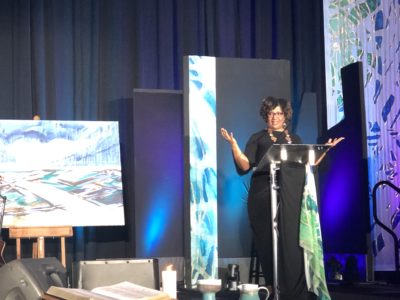
Cho spoke of the reality of compassion fatigue for church educators, who are often “compassion first responders” in their ministry settings. Harper interpreted the text as a mandate for Christians to take action against inequity in their communities.
Worship. In worship, Harper and Cho used Luke 10:1-11, the story of Jesus sending out the 70 disciples, as their primary text.
Harper recalled a civil rights pilgrimage that she had taken years before during which they travelled through Little Rock and met the daughter of one of the Little Rock Nine. She recalled that in that encounter, as she heard the tragic stories the students had faced at Central High School, the good news of the gospel didn’t feel good enough. Harper reflected that the charge to have dominion given in Genesis meant to “serve and protect,” and referred to the relationship between all things. “To be human is to be made in the image of God. If you are made in the image of God, then you have been given a divine call to steward the world. And you have been created with the capacity to do it.”
Harper said that part of Jesus’ charge in sending out the 70 was to protect the least of these, and in so doing, to “protect the image of God.” In his resurrection, she said, Jesus beat death, race, gender oppression and environmental injustice. “Jesus beat all ways that the image of God is crushed on this earth.” In closing, she invited to worshippers to look at their neighbors. She asked, “What color are their eyes?” Then she invited them to “look for the image of God beyond their eyes. Look for the call of God to exercise dominion in the world — to exercise stewardship.”
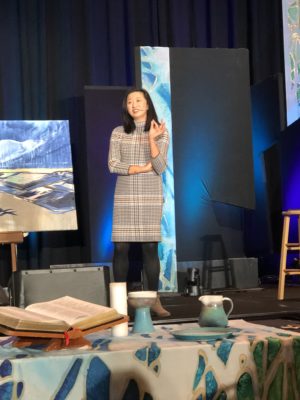
Cho, in her sermon, drew on the significance of communion and baptism. “With these two sacraments, we are called to remember … who Jesus is, what Jesus did and what Jesus continues to do through us” — a reminder that also is important when sent out into the world to do God’s work. The 70 disciples were given the task of sharing the news that the kingdom of God has come near. “The kingdom of God is near, and while we may not fully understand what the kingdom of God encompasses,” it is peaceful like no other, and it is where creation in reordered in profound ways, Cho said.
The 70 eventually returned and Jesus rejoiced. Cho said to the educators at the conference: “Go. We are being sent, like lambs in the midst of wolves. Not alone, but with each other… . We are being sent, to then return, so we can share our stories and witness how they have changed us,” she concluded.
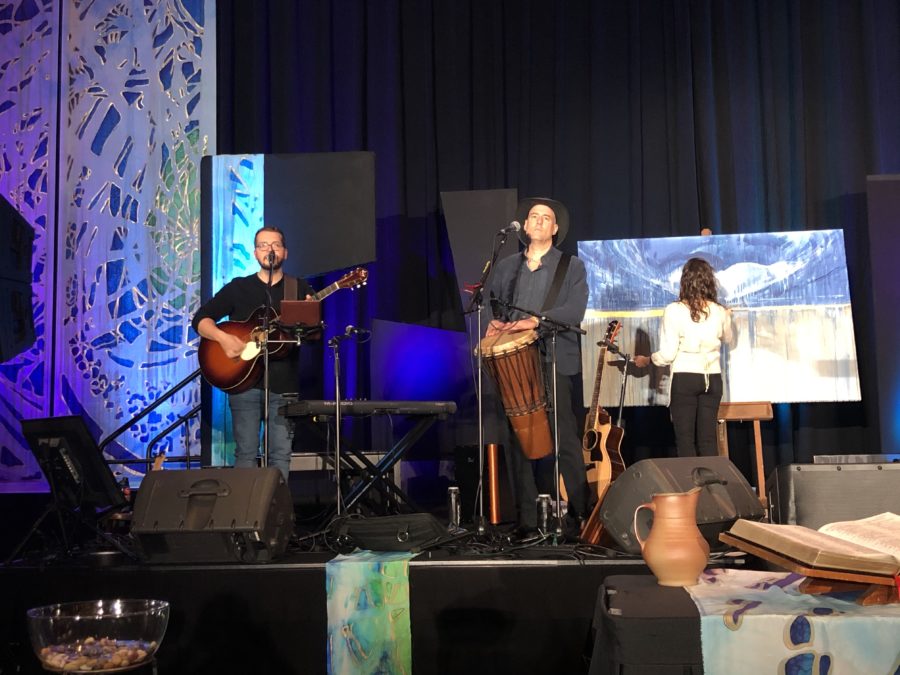
Music and art. David LaMotte and Zach Light-Wells provided worship music and led congregational singing each day. APCE welcomed children with a “prayground” area available during worship and plenary sessions.
A Sanctified Art, a team of artists, served as conference artists in residence. In addition to worship liturgy, Lisle Gwynn Garrity created a liturgical painting as worship unfolded each day.
The 2021 APCE annual event, which will also celebrate the organization’s 50th anniversary, will take place Feb. 3-6 in Chicago. The theme will be “Circle of faith: 50 years and beyond.”