BALTIMORE –The Presbyterian Mission Agency Board voted Feb. 14 to support the recommendations on fossil fuel divestment from the Committee on Mission Responsibility Through Investment (MRTI) – sending those recommendations on to the General Assembly in June. The vote came with no discussion.
MRTI is recommending that the Presbyterian Church (U.S.A.) divest from three companies – Exxon Mobil, Marathon Petroleum and Valero Energy – that it says are not making enough progress on responding to climate change issues. The 2018 General Assembly approved a set of metrics that MRTI is using to measure the progress of nine companies it’s been tracking since that assembly, and those three companies fell into the “red” zone – the worst – using those metrics.
Some Presbyterians want the church to do more. The Presbytery of Monmouth is sending an overture calling for the PC(USA) to divest fully from fossil fuel companies, and to invest instead in renewable energy, and already 11 other presbyteries have concurred.
Here’s more from the whirlwind of action from the board’s Feb. 12-14 in Baltimore.
Puerto Rico. Raul Felipe Santiago-Riviera, a board member from Puerto Rico, thanked Presbyterian Disaster Assistance for the support it has provided since a major earthquake shook the island Dec. 28 – and in the difficult days since.
A series of smaller quakes and aftershocks have left the ground there “constantly moving,” and not knowing when the next one will hit “is the worst part,” Santiago-Riviera said. The island can see a hurricane coming, but “we never know when the earth is going to shake,” he said.
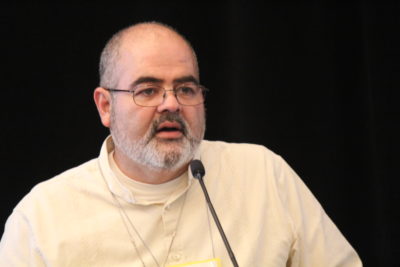
His daughter, a senior in high school, started school this semester a month and a half late. Some people sleep outside on a highway because they think that’s safer than being in a building. “PTSD is a real thing” in Puerto Rico, he said, asking Presbyterians for continued relief support and prayers.
Mental health ministry. The board approved a report (E.102 Response to Referral On Furthering Mental Health Ministry in the Presbyterian Church USA) to the assembly with a series of recommendations involving mental health ministry – including the need for Presbyterians to develop skills in suicide prevention and mental health first aid; to learn skills to better walk with people living with mental illness and their family members; and to develop resilience and strategies for avoiding compassion fatigue.
The recommendations commend the work of the new Churchwide Presbyterian Mental Health Network and ask the assembly to extend funding for both staffing of Mental Health Ministry in the PC(USA) and mental health ministry grants for another two years.
The report cites statistics: that 1 in 5 people in the U.S. has a diagnosable mental health condition during any year. And while the PC(USA) has made progress in this work, “this work is still nascent and in need of support,” the report states.

New Worshipping Communities grants. The board made some revisions to the mission program grants that are part of the 1001 New Worshipping Communities program (F.111 Modifications to the Mission Program Grant Policies)– increasing the maximum amounts of several types of grants that can awarded. The board voted to:
- Increase the maximum amounts for a seed grant (the first grant available at the start of a new community) from $7,500 to $10,000.
- Increase maximum amount for both investment grants and growth grants (after the first year of ministry) from $25,000 to $30,000.
- Broaden the scope of the health insurance grants, to include reimbursement for some out-of-pocket healthcare expenses for leaders of those communities, and to increase the maximum amount of those health care grants from $1,500 to $3,000 a year per leader.
Special offerings. The board approved the report (SORTF Report to 2020 February PMAB) to the 2020 General Assembly from the Special Offerings Review Task Force, which has been considering the track record and future of the PC(USA)’s four special offerings (Christmas Joy, One Great Hour of Sharing, Pentecost and Peace and Global Witness).
A key recommendation: The task force is recommending that the assembly suspend the goal of raising $20 million through special offerings by 2025 – basically concluding that the offerings won’t raise that much money.
The idea: Replace the goal of raising a set amount of money with an emphasis on achieving a 10% increase in the number of congregations that participate in all four special offerings by 2025 – a level of participation the task force is calling “Four for Four.”
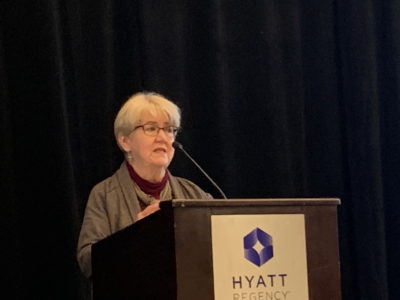
The Special Offerings are “not just fundraisers that we do quarterly,” but are deeply theologically based, said Linda Badger Becker, a ruling elder who led the task force.
Becker also told the board’s Nurture The Body committee that a number of factors contributed to the difficulty of reaching the $20 million by 2025 fundraising goal. Among them: “There was no infrastructure” to support the work, because changes within PMA in recent years “meant that ownership was not as broad as it could have been.”
Part of that history: criticisms of racism in a 2015 marketing campaign – a campaign for One Great Hour of Sharing that later was revised, but cost support.
Currently, around 1,500 PC(USA) congregations collect for all four special offerings – so an increase of 10% would mean adding another 150 to that, said Bryce Wiebe, director of the Office of Special Offerings.
Disparities for black women and girls. Samantha Davis, a member of the Disparities Experienced by Black Women and Girls Task Force, presented findings from the report (P.201 Disparities Experienced by Black Women and Girls from GA Task Force Report) the task force will present to the General Assembly in June.
The report addresses concerns in five main areas:
- The adultification of black girls – for example, seeing them as hyper-sexualized or perceiving ordinary adolescent behavior as criminal, which Davis described a part of “the over-policing of black bodies.”
- Toxic theology and gender equality in ministry.
- Reproductive justice.
- The intersection of race, gender identity and sexual identity.
- Cash bail relief.
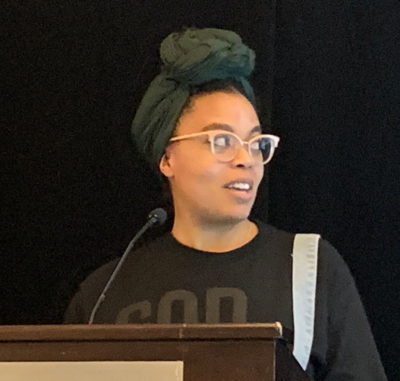
The report contains 11 recommendations – among them, directing the Presbyterian Mission Agency to develop resources for congregations and directing Research Services to conduct a survey of black women in the denomination, including ministers, about their experiences.
Rhashell Hunter, director of Racial Equity and Women’s Intercultural Ministries, said Davis was presenting the draft report in part so that board members could suggest any revisions they thought could improve the report before it goes to the assembly.
College scholarships. The board voted to consolidate a number of college scholarship programs available to Presbyterians – hoping to reduce confusion about how to apply and who is eligible, and increase the number of applicants. (F.106 Financial Aid for Service_Proposed Changes for Scholarship Programs_Feb 2020 Mtg) The change also extends eligibility to students attending one of the PC(USA)’s 1001 New Worshipping Communities, if they are recommended by a leader of one of those communities.
And the board voted to expand eligibility for the Presbyterian Study Grant to all full-time master of divinity students who are under care of a presbytery and attending an accredited seminary that’s acceptable to the presbytery of care. Previously, the grants were only available to students attending Presbyterian-related seminaries – and the change is an effort to increase applications by students of color.
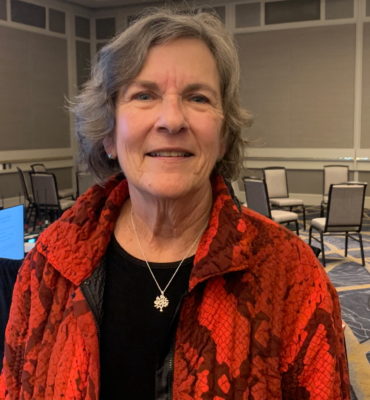
Rules of Discipline Task Force. The board heard from Paige McRight, moderator of the Rules of Discipline Task Force, about a revision to the Rules of Discipline the task force – which was appointed in 2017 – is proposing. The intent, she said, is to make the Rules of Discipline more accessible to the church; to expand the role of mediation and alternative dispute resolution; and to preserve and enhance accountability.
One proposed recommendation: to remove the time limits in bringing any case. Some task force members thought not to do that “is to ignore the breach of trust” that occurs when someone violates the rules and a congregation or someone in the church pays a price, McRight said – for example, in a case of embezzlement. Others thought “whoa” – that’s too much, she said. “That’s the thing about which there was the most division.”
Leadership. The board also elected new leadership for its committees, as follows:
- Resource Allocation and Stewardship: Kathy Maurer.
- Personnel and Nominating: Nicholas Yoda.
- Property/Legal: Kenneth Godshall.
- Mid Councils: Judith Wellington.
- Nurture the Body: Brenton Thompson.
- Outreach to the World: James Park.