 A decision will be made by April 15 whether the 2020 General Assembly of the Presbyterian Church (U.S.A.) will proceed as scheduled June 20-27 in Baltimore — or whether some other arrangements will be made, as COVID-19 is reorganizing almost everything.
Kerry Rice, deputy stated clerk for the Presbyterian Church (U.S.A.), gave that update to the Committee on the Office of the General Assembly (COGA), meeting March 19 via video conference call. COGA later went into closed session to discuss particulars of the options being considered.
Rick Jones, communications director for the Office of the General Assembly, has said staff groups are trying to evaluate options. “There has to be a General Assembly this year, during the calendar year,” Jones said earlier this week. “What shape it will take —that’s being discussed right now.”
The United Methodist Church announced March 18 that it was postponing its 2020 General Conference, which had been scheduled for May 5-15 in Minneapolis, because of concerns about the spread of the coronavirus.
During the conference call, COGA members shared about what they’re seeing regarding COVID-19 infections in their own areas — with their responses demonstrating a growing sense of urgency, some pockets of denial and a glimpse into how Presbyterians across the nation are beginning to grapple with the epidemic.
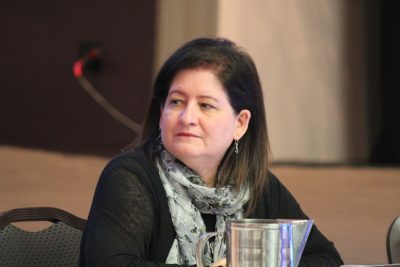
COGA member Eliana Maxim, co-executive of Seattle Presbytery, asked for a time for committee members to check in with one another regarding the epidemic — making it clear that COGA couldn’t proceed with “business as usual” regarding the assembly without talking about COVID-19 first. “For me, it is absolutely surreal that we are having this conversation without checking into see how people are doing in various parts of the country,” Maxim said.
Within the United States, COVID-19 hit Seattle early — the presbytery was the first to advise PC(USA) congregations to cease in-person worship. What Seattle is experiencing now may be what’s coming to other parts of the country very soon. “Pay attention — it’s coming your way, like a tsunami,” Maxim told COGA.
Already, Seattle Presbytery has two of its minister members “who are gravely ill with this thing,” Maxim said. “We have had several deaths” of Presbyterians, but can’t hold funerals. Two field hospitals are being built on soccer fields, “because our hospitals cannot accommodate all the patients who are coming in. We are mobilizing ecumenically and with our interfaith partners to address needs of the community.”
One concern is food insecurity, particularly among the homeless population, Maxim said. COVID-19 hasn’t hit that group hard yet, because “they tend to self-segregate. But it will.”
Maxim encouraged mid council leaders to check in with pastors and chaplains particularly — saying the stress is immense. “We’ve got burned-out pastors who are dealing with their own grief. Our chaplains are right on the forefront. They’re showing up to work every day to deal with end-of-life issues,” and with families who can’t be with loved ones “because there are no visitors allowed. We are entering the grief phase. The novelty has worn off,” of simply trying to figure out how to conduct worship virtually.
There’s now “the realization that several of our churches, at least in our presbytery, are not going to survive this virus. This was the last shove they needed to die.”
As Maxim finished, COGA moderator Barbara Gaddis, a retired minister from Iowa, said: “We are looking at you, and knowing that is coming our way.”
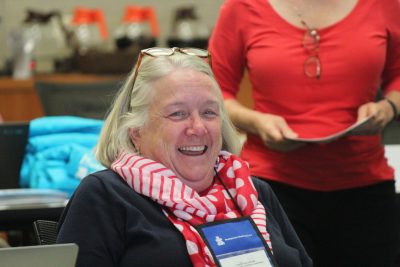
Gaddis said she herself has been ill with a cold for the last two weeks, although she’s feeling better. “I have to tell you, I found myself absolutely livid that I could not be tested for this disease, not knowing whether I had it or not, not knowing what I had,” she said. And I live with a physician” — her husband is a doctor. “I’ve always been privileged to have whatever I need. … I don’t have that. None of us have that.”
She’s also experiencing the kind of worry and fear experienced by the families of medical professionals across the nation: doctors, nurses and others who work in hospitals and clinics are on the front lines, some of them without adequate protective equipment. Other workers risk infection too and have to keep working — including those who stock and staff grocery stores; those responsible for cleaning businesses that have to stay open; law enforcement officials; and more.
In North Carolina, the sense of urgency has been slower to arrive, said COGA member Margaret Elliott. The governor has closed bars and restaurants to in-person service, but “we’re just beginning to imagine what it’s been like for you,” she told Maxim.
In Texas, the mayor of San Antonio has ordered the closing of bars and restaurants, said Sallie Watson, general presbyter of Mission Presbytery. Two PC(USA) pastors have placed themselves in self-isolation after exposure to the virus, and one is likely infected, she said. “That’s in a small community,” not a big urban area, she said.
The presbytery staff is working from home. “Thank God for Zoom,” Watson said —which could be a national mantra.
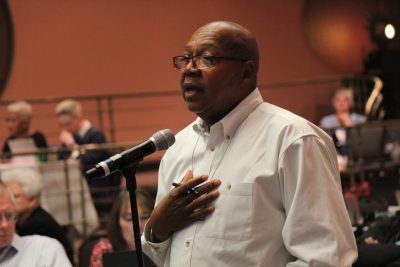
Warren Lesane, executive and stated clerk of the Synod of the Mid-Atlantic, said: “Pastors are clearly stressed to the max. I’ve never seen this kind of thing.” He encouraged mid council leaders to “be the pastor to the pastors.”
But Cindy Kohlmann, co-moderator with Vilmarie Cintrón-Olivieri of the 2018 General Assembly, said some presbyteries and synods don’t have adequate staff to do that. Some mid councils don’t have professional staff, or the staff is “part-time and swamped,” she said.
Kohlmann lives in Boston — a city that’s “just one or two weeks behind Seattle” in the COVID-19 impact. “They are preparing the dorms at all the major universities to become hospital rooms,” she said.
She serves as resource presbyter for the presbyteries of Boston and Northern New England. They sent out a message to congregational leaders saying, “We urgently urge you to close the (church) building” to slow the spread of the virus. “Who’s going to say that in a presbytery or mid council that has very minimal functioning?”
Presbyterians in some parts of the country where the virus has been slower to spread are just starting to figure out what this might all mean.
In Florida, congregations – including his own – have begun to hold worship via online technology, said Leon Lovell-Martin, a pastor. People from the church are working to help older adults who may not be fluent in technology to access the services, including by phone if they don’t have computer access.
The Presbytery of Tropical Florida has scheduled weekly calls for pastors and congregational leaders, Cintrón-Olivieri said. Closing a church building and holding worship remotely “has nothing to do with lack of faith,” she said. “It has to do with us being prepared and being good neighbors.”
Lynn Hargrove, general presbyter and stated clerk for administrative process of the Presbytery of New Covenant in Texas, said her presbytery will hold its first virtual meeting on March 21 – trying to achieve by Zoom “things we couldn’t put off.”
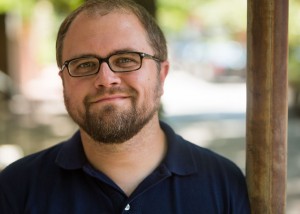
Andy James, associate for small church ministries and technology for the Presbytery of New Hope in North Carolina, said the presbytery held a Zoom call earlier in the day with 23 pastors, who shared their experiences and spoke about finding community and connection in these difficult times.
COGA member Wilson Kennedy asked for prayers for seminary students — some of whom are trying to prepare for ordination exams or search for calls while finishing their classes online. “My breath prayer for the last two days has just been simplicity and grace,” Kennedy said.
In Nebraska, the governor took his lead from the medical center at the University of Omaha, which has treated Ebola patients and where COVID-19 patients from cruise ships were taken for care, said COGA member Leanne Masters.
But while Gov. Pete Ricketts has taken the epidemic seriously, limiting the size of community gatherings, some others have not, she said. “A lot of churches in Nebraska — they think it’s not going to come to them,” Masters said. They think: “They’re in a small community. They’re in a rural community. They don’t have to worry. … They’re continuing on with life as normal.”
The messages are mixed. “People are terrified. They are also uncertain,” Masters said. “We still have a lot of folks — they’ve been hearing from certain sources over the past two weeks that this is no big deal,” with “false messaging that this is fine, it’s a cold, it’s the flu, it’s no big deal,” she said. “Now those sources have changed their tune” in some cases, but “it’s hard to change once it’s gotten into people’s heads.”
Masters, pastor of Southern Heights Presbyterian Church in Lincoln, also is feeling the economic pressure from the epidemic that so many families are encountering. Her children are out of school. Her husband is a construction worker, and “we are facing the reality that if he doesn’t work, he doesn’t get paid.”
After all this unburdening, there was a pause — a need to get on with business, but not quite yet. Watson asked for a moment of prayer, which she then led. The COGA members and staff on the call bowed their head, and – like Presbyterians are doing all over the country – prayed for God’s hand to guide and comfort the nation and the world.