CINCINNATI – For years, Broadway United Methodist Church in Indianapolis ran a tutoring program – and pastor Mike Mather worked hard to recruit volunteers from congregations and organizations all over town.
“You know who I never asked for volunteers from?” Mather asked. “Our neighbors.”
Why didn’t he ask? “These people are poor” – so he assumed they needed help, not that they could help. He saw brokenness and scarcity, not abundance and gifts.
What he didn’t know is what De’Amon Harges learned from walking around the neighborhood on the northwest side of Indianapolis, talking to people who live there.
A few blocks away, a woman named Maya was doing tutoring out of her house – working at night and then helping children during the day. “I cover everything from phonics to Sophocles,” she told Mather when he finally bothered to ask. Every Friday, she’d throw a barbecue, and invite the parents to come over and see what the children were learning. Here’s what Mather learned to ask Maya: “How can we be a part of what you are doing?”
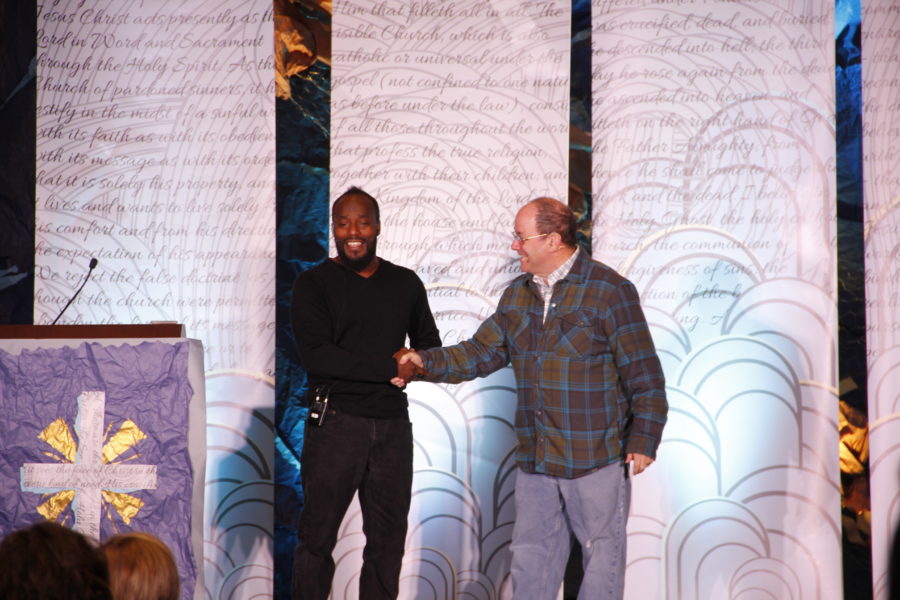
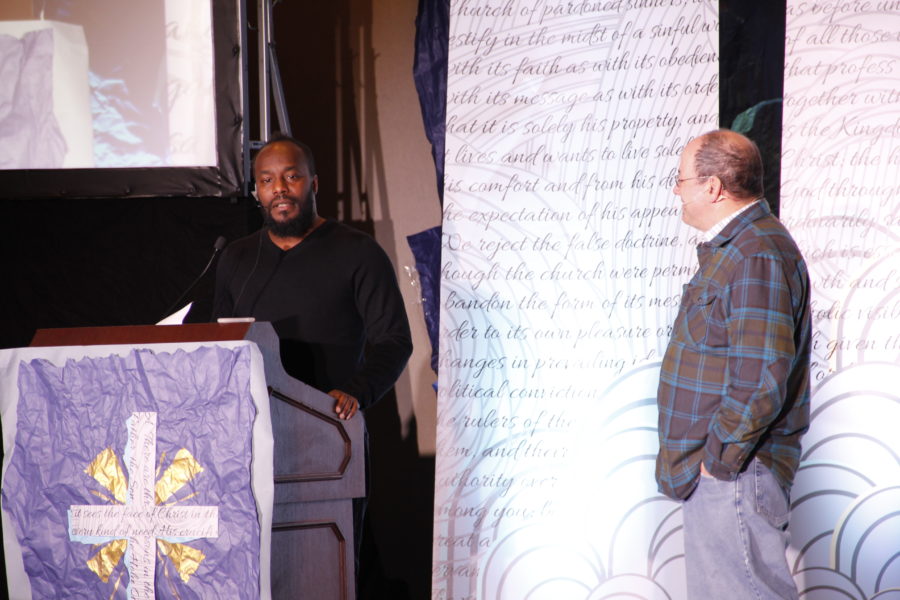
Harges and Mather have been friends and collaborators for close to 20 years – both serve on the faculty of the Asset Based Community Development Institute at DePaul University. During a plenary presentation at the NEXT Church national gathering in Cincinnati March 4, they described how looking at the world with an appreciation of God’s abundance and the way that’s evidenced “in the most unexpected of places,” as Mather put it, can make all the difference.
Harges takes guidance on life from the poet Mary Oliver, from her poem “Sometimes”:
“Instructions for living a life:
Pay attention.
Be astonished.
Tell about it.”
Walking the neighborhood, Harges met an elderly man who sat on his front porch, teaching young people about chess and life. He talked to the Buddah Boyz, who some describe as a gang, but whose group includes a poet, a musician, a mechanic. Paying attention, he found the abundance.
“Why do I not trust the miraculous that’s in our hands all the time?” asked Mather. “Around me in my community are gifted, talented, wise, creative, genius people, and I’m all of the time trusting the church” as the place from which ministry begins and ends.
Harges is a member of the Broadway congregation and a “roving listener” with The Learning Tree – a nonprofit where neighbors organize community development work, in part by identifying the gifts and talents that people living there have to offer. The impact of that work totals more than $5 million over a 10-block radius, Mather said – much greater than what the church has contributed.
An example: He’s had people offer to teach a class on budgeting at the church. But who knows how to stretch a dollar better than a parent from the neighborhood trying to raise a family with little money?
One neighbor, a woman named Carmen, “has been evicted from every block on our neighborhood,” Mather said. “If I got evicted, I wouldn’t know what to do.” So he asked her what she does when the eviction notice comes. The first step: They gather family and friends together and figure out “who has room.”
In “Heavy: An American Memoir,” author and college professor Kiese Laymon describes a childhood friendship where he and a buddy, one of few blacks in a predominantly white school, would choose words to sprinkle in their conversations every day – words like exuberance and abundance, Mather said. “It’s the black abundance, all day every day,” the friends would say. “And they don’t even know it” – the teachers and students couldn’t see it.
Their mantra: Pay attention, and you will see the abundance. For example, Harges told of a healer named January who gathered together a group of black males, ages 17 to 55, all of whom have experienced mental illness. (Harges himself is bipolar and struggles with depression.) January cooked an extravagant meal for the group, creating space where they could talk and share stories.
“She helped us see ourselves,” Harges said. “January – there are thousands of them in our communities. They are like the stones we walk past every day, but they’re shouting. Be astonished by the things we miss.”
Growing up in South Bend, Indiana, Harges said his own family was seen as “broken and empty” – living with little money, and from the outside “no one saw us as sacred.” In the family, “we knew we were abundant, because we had to be.”
Just before Harges’ mother was born, her father planted a tree in her honor in a plot of grass near a housing project. As that tree grew, people gathered in its shade to share celebration and stories – Harges’ grandfather called it “the learning tree,” which became the name for the community development project Harges helped to create. His grandfather’s watchword: power.
Mather, author of “Having Nothing, Possessing Everything: Finding Abundant Communities in Unexpected Places,” said his church “had to make room for us to see” – to stop thinking of the church as the institution that would help others and fix things. “We wanted all the attention and glory,” he said. “I loved it. I broke my arm patting myself on the back” for all the good work his church was doing.
“The hard thing is not doing the new thing. The hard thing is grieving the things we don’t do any more” – letting things go, which his congregation does by actually holding a ceremony during worship to “bury the dead,” to celebrate a ministry that’s ending, to give thanks and then to let it go and move on.
“All of the language in the church is about us, about us being the witness to God’s power and love, about us being God’s hands and feet,” Mather said. “It’s not about us. It’s about what God is doing in the lives of people around us.”
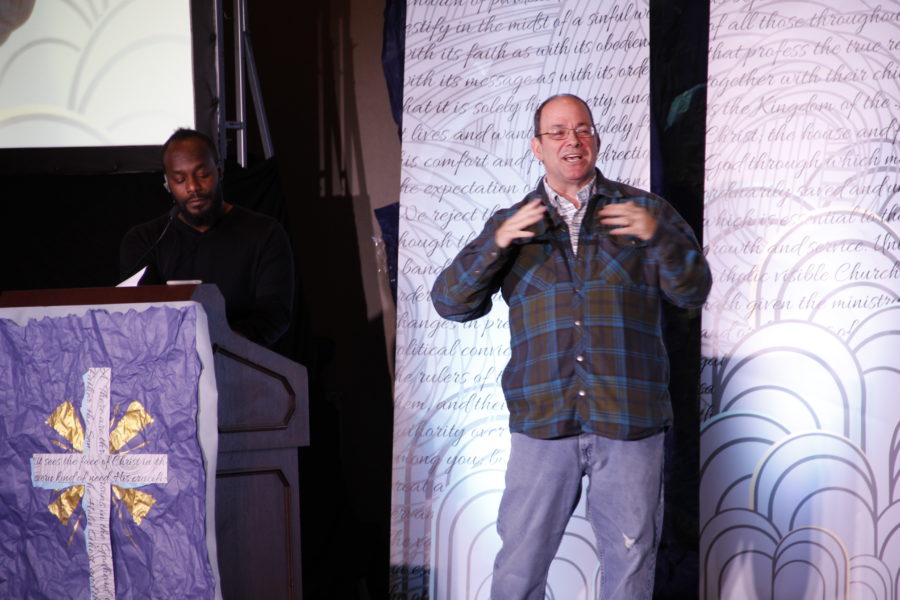
Some of the best teachers are “the people most of us wouldn’t hang out with,” Harges said. “We can learn from someone who doesn’t have a high school diploma, who suffers from depression. We can learn from someone who is struggling with addiction.”
How can others learn to do this – to become roving listeners in their own communities?
Find a program that feeds the hungry. Go back every day for a month and sit with people and listen to their stories. What gifts did you notice?
Walk the streets and talk to people.
“Go to parties,” Harges said. Eat the good food. Hang out. Dance.
Listen. Pay attention. Let the stones speak.
Editor’s note: Read the Outlook’s review of Mather’s book “Having Nothing, Possessing Everything.”