Day by day, First Presbyterian Church of Snohomish, in Washington state, is figuring out what it means to live with COVID-19 – and how to build community.
Snohomish is some 30 miles north of Seattle — a region in the United States hit hard early by the coronavirus, so people there have had a bit more time to take in what’s happening and begin to react, perhaps providing some guidance for others not far behind.
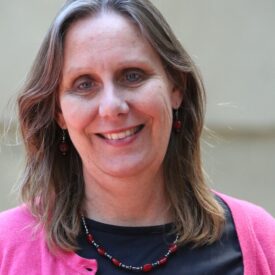
Snohomish is close enough to Seattle for a long commute, but with a separate small-town identity as well, surrounded by farms and houses on acreage. This congregation of about 250 is filled with people who are mostly well-educated and generally affluent, said Ann Lewis, who is co-pastor of the congregation along with her husband, Charlie.

Initially, “it just seemed very limited,” Ann said — with one person falling ill, a man who had traveled to China and who was hospitalized in Everett, about four miles from her home. “He was in his 30s, he responded to the treatment, he’s fully recovered and released,” she said.
It wasn’t until the beginning of March “that we recognized that it had started to spread by community contact, not just people who had traveled and brought it back.” And only in mid-March “were we starting to hear stories of people directly impacted by it.”
Ann got an email from a mother in the congregation, saying she was sick, thought she had COVID-19 and had been tested, but didn’t have the results back yet.
Another woman sent an email saying, “I have the flu. I feel terrible.” The woman called a few days later, saying, “I have shortness of breath and I just feel terrible” – maybe it wasn’t the flu after all. The woman’s doctor told her to go the emergency room. That’s an indication “there are a lot of cases that are not being reported,” people who might have COVID-19 but don’t know it for sure, Ann said.
Here are some learnings from a congregation on the front edge of the curve.
Medical task force
Early on, congregational leaders put together a COVID-19 task force of doctors and nurses from the church — a task force of medical professionals to which the session gave power to make decisions on matters such as when to suspend in-person worship and when to close the building, all of which the task force moved on March 13 to do.
“That took the responsibility off of our shoulders as pastors to make the decisions,” Ann said. As medical professionals, “they’re the experts,” Charlie Lewis said.
After the task force action, the Lewises sent an email to the congregation explaining the changes; providing answers to a list of “frequently asked questions;” and saying that by phone, email and virtual communication, “WE WILL STILL BE THE CHURCH serving our community and our world.”
Deacons care team
The leaders put together a care team of deacons and other volunteers to call everyone from the congregation to tell them how to access worship via livestream, and to focus particularly on people from the congregation who are older or in high-risk groups; who live alone or are homebound, who may have been ill or who for whatever reason might need some extra support. The deacons were to ask “How are you coping?” and “How might we support you?” – and to be open to any particular needs or prayer concerns, such as someone needing help to get groceries or being worried about a family member they weren’t able to visit or help.
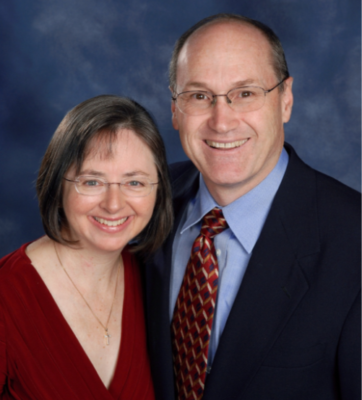
The Lewises, for example, have neighbors who are church members — one of whom is recovering from surgery. By the time they were able to go shopping, some things had been sold out. So “I poured half of the bleach I had into another empty container,” Ann said. “I brought these items over to them, rang the doorbell, backed off” a safe distance away.
The neighbors thanked her — then stood in the doorway a while, wanting to talk. The couple has two adult daughters, but both live far away. “Aside from friends, they don’t have anybody close by,” Ann said. “We spoke for five or seven minutes,” a bit of human connection in a hard time.
The care team also is reaching out to community groups that have used the church’s facilities as well, she said.
Overwhelmed and stressed
Many of those on the frontlines of COVID-19 care – nurses, doctors, ambulance workers and other medical professionals – are exhausted, Charlie said. A nurse on a COVID unit of an area hospital, which has a whole floor dedicated to coronavirus care, said she expects hospitals all over the country “to be overwhelmed in the next few weeks.”
He has written emails to medical professionals from the congregation, whether they’re involved in frontline care or not, to express support and appreciation. One nurse from the congregation “said it’s crazy, crazy, crazy.”
A nurse at a hospital in Everett, working long hours in COVID-19 care, feels the pressure of trying to support patients whose loved ones aren’t allowed to visit. “She’s having to be family in a way to these people,” because their own families aren’t there, Charlie said. She told him: “You have to be the calm, reassuring presence to convey a sense of peace to these patients. At the same time, I have my own internal fears.”
He also is looking for ways to support grocery store employees and others have to go to work, small business owners and those who have lost their jobs or fear they might soon. “Honestly, everybody’s going to be feeling this to some degree or another, economically if not health-wise,” he said. “Mental health-wise, we’re all going to feel it.”
Pastors under pressure
In response to COVID-19, many pastors have been working long hours — being a pastoral presence, figuring out online worship and ways of being church.
“For Ann and me, it’s been a lot more work, and certainly a level of stress because of the uncertainty,” Charlie said. “We’re trying to figure out how to maneuver and master the next steps. … What gives me hope is that people tend to rally” – people from the congregation really want to help.
“I’m pretty sure the challenges ahead are that more and more people are going to be impacted in ways that we can’t anticipate,” Ann Lewis said. “I guess worst-case scenario is we are going to have deaths, and have to minister and care for people remotely. I know we would not be able to have any memorial services,” at least not in-person.
As much as possible, she’s encouraging those for whom this is this slowed-down time – including herself – to see it as a sort of “extended Sabbath — as long as I have my basic needs met, and am able to care for others in my role as a pastor. I’m finding spaces to enjoy being outside, walking, to get out in the garden. And maybe to get some things accomplished that I wouldn’t ordinarily get done. …We’re seeing panic and hoarding and people thinking ‘this is the end of time.’ Our faith gives us reason and comfort in this time of crisis.”
In the future
While some changes were made out of necessity – to flatten the curve – the Lewises think they could provide important learnings and effective ministry for the church down the road.
For example, many churches are leaning heavily on Zoom technology for holding session and committee meetings, Bible study and even congregational coffee hours. As people get used to it, “that will help solve the problem that elderly people don’t want to drive at night so they want to meet during the day, and people who work can’t meet during the day,” Ann Lewis said. “If we can meet from our homes in the evening, so much the better.”
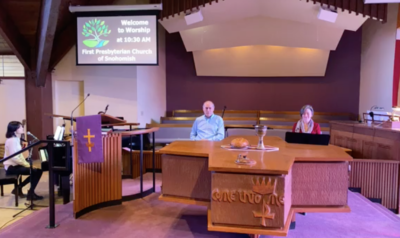
The Snohomish co-pastors suspect that livestreaming worship may continue too.
One longtime church member had a stroke more than a year ago, and has not been able to attend worship since. Now, he and his wife are watching the livestream, and feeling a part of the church again. His wife wrote on Facebook, “this has been the answer to my prayers for the last 14 months,” Ann said. “Thank you for making this possible.”
So even after livestreaming isn’t needed anymore – once the congregation can once again fill the pews — it may continue. “Once we’ve opened this up, we can’t go back,” Charlie said.