The Committee on the Office of the General Assembly (COGA) is thinking about – but has not yet voted on – the possibility of holding a virtual, scaled-back General Assembly with two days of plenary in late June, and that would consider only critical, essential business.
That paring back would also include online Bible study and worship, and would give the Presbyterian Church (U.S.A.) a chance to acknowledge the world’s need in this precarious time for both lament and for hope, said J. Herbert Nelson, the PC(USA)’s stated clerk.
“How we witness to the world is going to be vitally important in this assembly,” Nelson said – as the church considers what business is urgent and “what can wait? … What does say we love you, we are standing with you,” that the PC(USA) will work for justice and will “not forget those who are in mourning” because of the losses suffered during the coronavirus pandemic.
“The world is mourning,” said COGA member Luis Jose Ocasio Torres. “That should be the tone of our General Assembly. “I bet no one will forget this General Assembly if we set a tone that goes along with what the country and the world are feeling.”
In making those changes – to meet virtually and with much less business – “we’re not just talking about this assembly,” Nelson said. “We are talking about a major transformation in assemblies going forward, and it’s not just about technology.”
The COVID-19 pandemic is changing the world – the way that people work and connect with one another, how organizations and institutions do business, what people think is important.
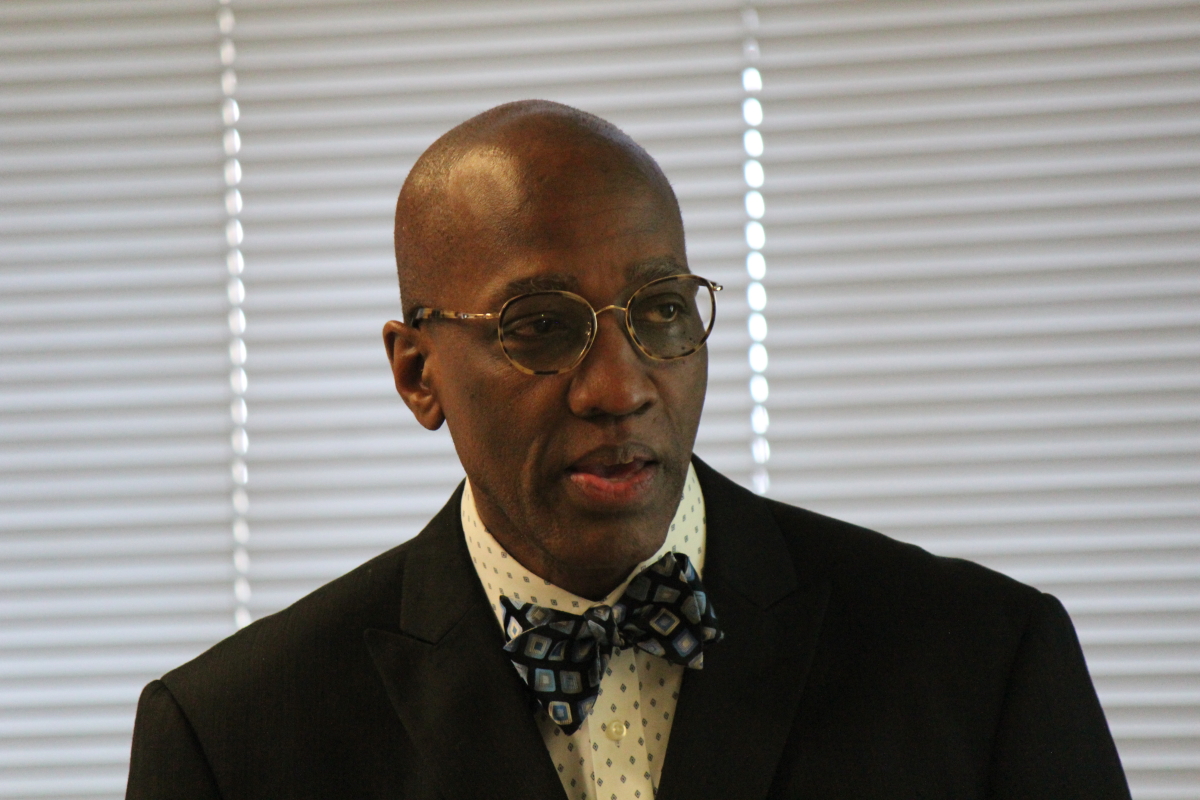
Nelson said that “having to make adjustments in this period is in a sense technically a godsend” – because the PC(USA) needs to, in part for financial reasons, be willing to change its traditions and rules and come up with a less expensive way of conducting business. “Financially, these assemblies we’ve been having in these arenas, spending all this money and having a good time will have to be narrowed down,” he said during the COGA meeting held via Zoom April 9.
“This is not just an assembly of transition and change. It will also be an assembly of recognition that, no matter what we do in this assembly, we’re going to be changed forever.”
COGA decided to hold off making any final determination until its online meeting April 15-17. It also has not formally cancelled the in-person General Assembly scheduled for June 20-27 at the Baltimore Convention Center, even though the convention center is being turned into a COVID-19 field hospital.
Deborah Davies, manager of meeting services for the Office of the General Assembly, said she has been in conversation with officials in Baltimore regarding contracts signed with the convention center and hotels for the assembly, and has determined that waiting instead of canceling now will put the PC(USA) in a better position to be let out of those contracts with the least financial impact.
But the “contingency plan” COGA is discussing calls for holding a virtual assembly as follows.
- June 26 and 27: Two full days of plenary sessions, running from 11 a.m. Eastern to 6 p.m. (June 26) or 6:30 p.m. (June 27). The June 26 plenary would begin with an hour of worship; both days would include two one-hour blocks of break time.
- June 24: Bible study at 7 p.m. Eastern.
- June 19: A “meet the moderator candidates” town hall, with commissioners able to submit questions to ask (either in writing or video clips).
- Participant training: For commissioners and others with assembly roles, with time slots available on five dates: June 9, 11, 13, 15 and 17. Commissioners would be required to attend one of the trainings in order to be able to vote.
- Essential business only. The assembly would consider 37 items of business – 14 individually, and 23 on consent agendas, many of them related to budgets, confirmation of agency executives or standing rule changes. There would be no committee meetings for the purposes of discussing business.
Still under discussion:
- Whether and how to participate in the Poor People’s Campaign virtual event June 20.
- Whether to hold a fund raising concert for the Hands and Feet project during the assembly.
- Whether to have some kind of exhibit hall or additional assembly events, such as the lunches and dinners sponsored by Presbyterian groups or seminaries that traditionally have been part of a General Assembly week.
- When to hold the election of a moderator or co-moderators. One possibility: the co-moderators of the 2018 General Assembly, Vilmarie Cintrón-Olivieri and Cindy Kohlmann, would moderate during the 2020 Assembly. The election of a new moderatorial team would take place near the end of the June 27 final plenary, and the new moderator or co-moderators would preside over the assembly in 2022.
The proposal discussed during the April 9 meeting was considerably different from an option presented a week earlier – when COGA discussed the possibility of holding a full virtual General Assembly over the course of a month, from June 19 to July 18. COGA members responded that that idea seemed overwhelming – too much time devoted to a church assembly, in a world grieving the losses of lives and jobs and normalcy to COVID-19.
Tricia Dykers Koenig, associate director for mid council relations, said mid council leaders are working to help pastoral leaders sort out the implications of the pandemic for their congregations – for example, to connect them to possibilities for loans through the CARES act and grants from Presbyterian Disaster Assistance.
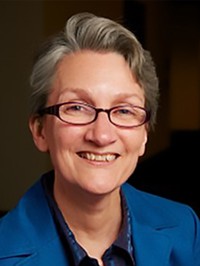
“Mid council leaders are amazing, working really hard and being very creative in helping folks,” Dykers Koenig said. Among pastoral leaders, “there is anxiety over revenue loss,” with some churches experiencing a drop in giving as congregants lose jobs and there’s no in-person passing of the plate. “I’ve been incredibly impressed with the ministry that’s going on from mid councils. It’s been terrific the way people are stepping up.”
Even with this scaled-down new proposal, some COGA members said they want to keep it deliberately simple – plenary sessions and Bible study, and that’s about it.
The idea was to have an assembly “that handled critical business only,” COGA member Eliana Maxim said. “I don’t see how exhibit halls are critical. I don’t see how a concert is critical.” Some want to build in as much General Assembly tradition as possible, to have “a virtual General Assembly experience reminiscent of what it would be like if we met in Baltimore without COVID-19.”
But everywhere in the world, “things are not the way they were.”
The question of when to hold the election of a moderator or co-moderators is tricky – in part because of the technological infrastructure that COGA would need to provide to anyone moderating the meeting.
Julia Henderson, interim director of assembly operations, said two teams already have announced they intend to stand to serve as co-moderators – Moon Lee and Sandra Hendrick, and Gregory Bentley and Elona Street Stewart – and another person intends to stand for moderator, as part of a team with a vice-moderator.
That means the Office of the General Assembly would have to train all three teams on the technology being used for the assembly – and to make sure they have the right equipment. Having to do that for all three teams “would raise the stress level for all of the people involved,” Henderson told COGA. “That said, this is new, and we’re hoping grace abounds,” so it could be done. “It may not be as smooth as it could be.”

Cintrón-Olivieri said that while it would feel strange for the co-moderators of the 2018 General Assembly to moderate again at this assembly, instead of the new leadership, “Cindy and I are willing to help in any way we can to serve God and to serve the church.”
Kohlmann said that conversations about moving the election of a moderator or co-moderator to the end of an assembly have been making the rounds for years – but there’s also a technological piece at play, particularly if each team needs to be supplied with multiple monitors and a hard-wired internet connection.
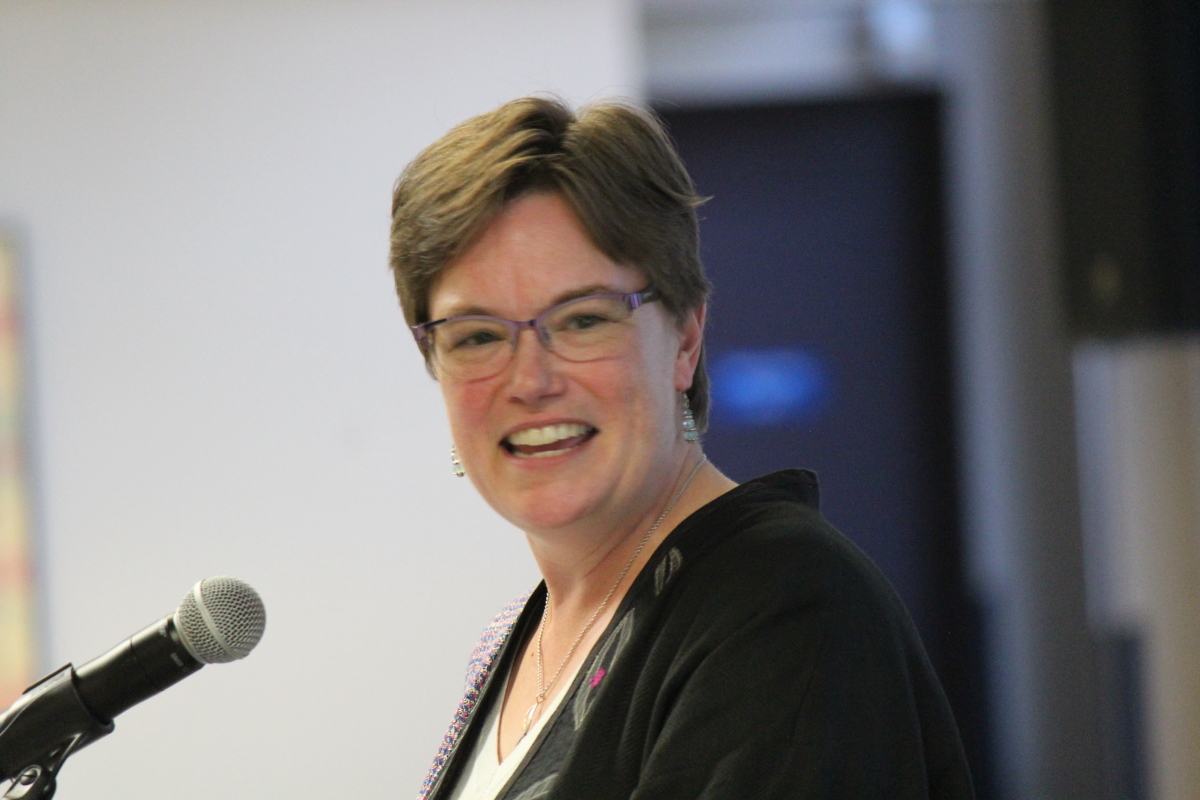
At home, “I have a MacBook Air,” and it would be daunting to think of moderating a General Assembly using only that, Kohlmann said. “I know there are people who don’t have great internet connections,” and that would need to be addressed “so that whoever is elected doesn’t have the frustration of freezing (on the screen) in the middle of moderating a plenary.”
Also, “whoever is elected will not have a ‘normal’ term,” Kohlmann said. “The models around the novel coronavirus say it’s going to circle back,” to have a second surge. “We may be looking at another period of shutdowns and shelter-in-place orders, starting in the late fall and through the winter. “No matter what, it’s not going to be a normal term of service.”
The COVID-19 pandemic presents a challenge to the church – “to deal with an evolving world that won’t be the same,” Nelson said. “We are going to have to live into something very different.”
And while the 2020 General Assembly needs to acknowledge the need for lament, the PC(USA) also needs to be a voice of hope and resurrection too, Nelson said. “We have people in our families who have died from coronavirus,” but Presbyterians also give thanks for those who have recovered. “Lament standing alone is painful and does not heal. Lament standing with hope gives some powerful witnesses.”