COVID-19 has upended life for so many, so now people are asking, “How can I help?”
At Fountain City Presbyterian Church in Knoxville, Tennessee, pastor Andy Morgan was concerned particularly about older people or those who live alone — people who might feel especially isolated. His congregation has a unicameral structure, meaning it has a session made up of elders, but it doesn’t have deacons, the ministry that some congregations might naturally ask to reach out.
So when Fountain City moved to virtual worship for the course of the pandemic, Morgan responded to the congregation’s necessary physical distancing by creating a new team called “The Helpers,” inspired by Presbyterian minister Fred Rogers’ advice from his mother to, in scary times, “look for the helpers.”
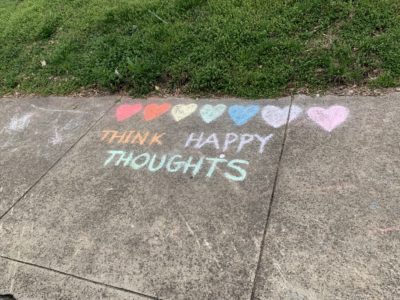
It’s the same motivation to help that is prompting children to draw chalk messages of inspiration on the sidewalks, or people to hang messages of hope on their front doors, deliver groceries to their medically fragile neighbors and foster pets that need a home in uncertain times.
In the Jackson Heights neighborhood in Queens, New York, not far from where Elmhurst Hospital is the “epicenter within the epicenter,” as New York Mayor Bill de Blasio has put it, Nuala O’Doherty Naranjo has created a neighborhood network called COVID Care, offering to call people who are shut in and making deliveries of groceries and thermometers, leaving everything outside the door.
Teddy Abrams, music director of the Louisville Orchestra, set up a keyboard and played a mini-concert in the courtyard of a senior citizens center, where residents opened their windows and leaned out to listen.
In St. Paul, Minnesota, the residents on one block of Palace Street – from children to senior citizens – step outside at 6:30 p.m. every evening for three minutes of rajio taisō, or Japanese radio calisthenics, a stretching routine led by neighbor Momo Hayakawa Koenigs.
How can I help?
Morgan said there were people from the church, “and I suspect this is true everywhere, who just want to do something about this. It’s so amorphous and terrifying they want to do something constructive — call and check on people” to see how they’re faring in this time of social distancing.
So The Helpers are calling people to ask, “How are you doing” — both physically and emotionally, giving plenty of time for conversation and to just listen. Do they need anything — food, medicine, shampoo or toothpaste? Do they have prayer concerns? How are they spending their time?
The volunteers report back the results so another team can follow up with deliveries if help is needed, and Morgan can call back with pastoral support for those who particularly need it.

Each of The Helpers makes just a few calls — giving them “ample time to talk,” Morgan said. No one is rushed. “It would be very difficult if I were making all those calls myself,” he said.
“It also gives people the opportunity to be the church. There’s so much that’s terrifying, with existential dread and really scary stuff” surrounding the pandemic.
By providing a simple way to build community, “folks see the value of church and also see themselves as capable ministry colleagues.”
So how have people responded to the calls? Some have said they’re fine — they may be older, but don’t think of themselves as particularly vulnerable. Others welcome the social connection.
What are they asking for prayers for?
Most are primarily concerned with others — often, they’re not “gravely concerned about their own health,” Morgan said. They are worried about the world — asking for prayer for those who are ill with COVID-19 or other illnesses, for family members far away, for health care professionals and first responders, for those working in stores that are still open, for people who’ve lost their jobs. Some are unable to visit family members in nursing homes, rehabilitation centers or the hospital.
Some with financial means have offered to buy gift cards so others can buy groceries.
Morgan has also heard prayer concerns for young adults and people who are single —particularly those who live alone, some far from their families and unable to see their friends in person. “The social isolation of our young adults — that is a concern,” he said. “People are grieving in ways they might not be able to identify,” grieving the disruption of their lives and the loss of in-person community. Some say it’s been weeks since they’ve had a hug.
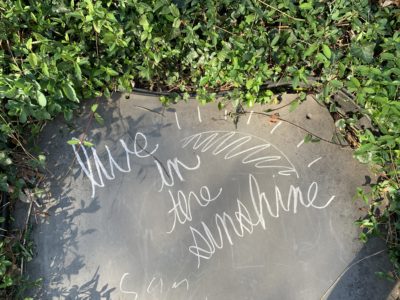
As The Helpers make the phone calls, they are meeting anxiety with compassion, Morgan said.
“For so many, they don’t have the space to do anything constructive right now,” he said. Yet, “there is something so disruptively hopeful about seeing people respond to crisis with compassion. If all we see are news reports and statistics that we don’t really know how to understand,” if people are worried about losing their jobs and their economic future, “it can be crushing to our spirits.
“People need to see the church visibly helping. It can be a great gift to the world. And it can be a great gift to people who feel empowered and equipped to be that presence in the world right now.”