

This issue is the third in a series of four exploring basic theological questions in ways designed to engender further discussion in your context. To that end, here are discussion questions that can be used with each of the feature articles. We hope these provide a catalyst for robust conversations that help us live our faith in the world.
 God is with us — read the article
- David Johnson writes, “God is close, but God remains Other.” He goes on to say, “God is utterly near, yet utterly transcendent.” Why are these tensions important in understanding who we are, who God is and what God has to do with us? How have you experienced both God’s nearness and God’s transcendence? Did you experience these divine characteristics simultaneously? Do you struggle with believing that God is close or that God is Other?
- Johnson argues that creation is on purpose, good and ongoing. Which of these descriptors is most meaningful or important to you and why? How do you see God’s creation ongoing in your life? Congregation? Community? The world?
- How has the Spirit helped you in your weakness?
- Johnson concludes his article stating, “One of the fundamental disciplines of the Christian life is this very simple thing: remembering that there is a God.” Do you agree with this statement? How do you remember that there is a God? Why, do you think, is it so easy to forget this truth?
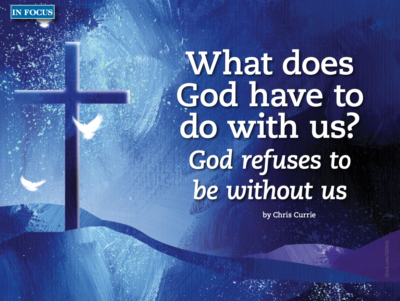
God refuses to be without us — read the article
- Chris Currie writes, “God never chooses to live without us.” Do you ever think about God’s “divine decision to never be separated from humanity”? How does this truth shape your understanding of God? Yourself? Others?
- When you recite the Apostles’ Creed, do you consider what it means that Jesus “descended into hell”? Some congregations leave out this phrase of the creed. What is lost when it is removed? What does Jesus’ descent into hell reveal to you about God’s relationship with us?
- Currie notes: “What we believe about God is not important for its own sake or so we can adhere to a certain set of principles or beliefs. What we believe shapes how we live.” What do you believe God has to do with us? How does this belief or set of beliefs shape how you live?
- How does God become small for our sake and why does this matter, not in the abstract, but in your daily living?
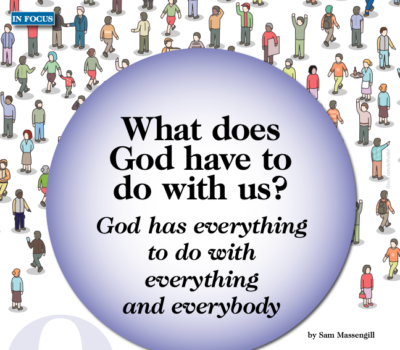 God has everything to do with everything and everybody — read the article
- Sam Massengill notes that God “judges our propensity for idol making” and idol worship. Given this reality, what idols do you think God may be calling out in your life? In our churches? Our culture? Once we know of this judgment, how do we address it?
- When has grace abounded for you? When have you known the depth of your need for God’s copious grace? How did God’s grace impact your subsequent actions?
- If God has everything to do with everything and everybody, how do we recognize God? How do we perceive God’s presence and how then do we respond to the divine in our midst?
 Won’t Jesus miss us? — read the article
- Ron Byars argues that “it is unfortunately too common that we go to worship as though we were going to a classroom.” How do you come to worship? What do you expect? What do you hope to experience? What do you long to experience? How ought we go to worship?
- Byars points out that we come to know much before we become verbal or understand language. How do you believe we come to know God? There is a phrase that faith is “caught” and not “taught.” What does this mean and do you agree with it?
- How are we appropriately vulnerable in our congregations? If, as Byars writes, “letting down one’s defensiveness, one’s guardedness, whether intellectual or emotional, is an essential component in the formation of our deepest relationships, certainly including the one with the holy God,” how do we create space and trust for this kind of letting down?
- What is worship to you? Is it a place of presence? A meeting place?
You have permission to copy this guide for adult education classes, study groups and discussion sessions.