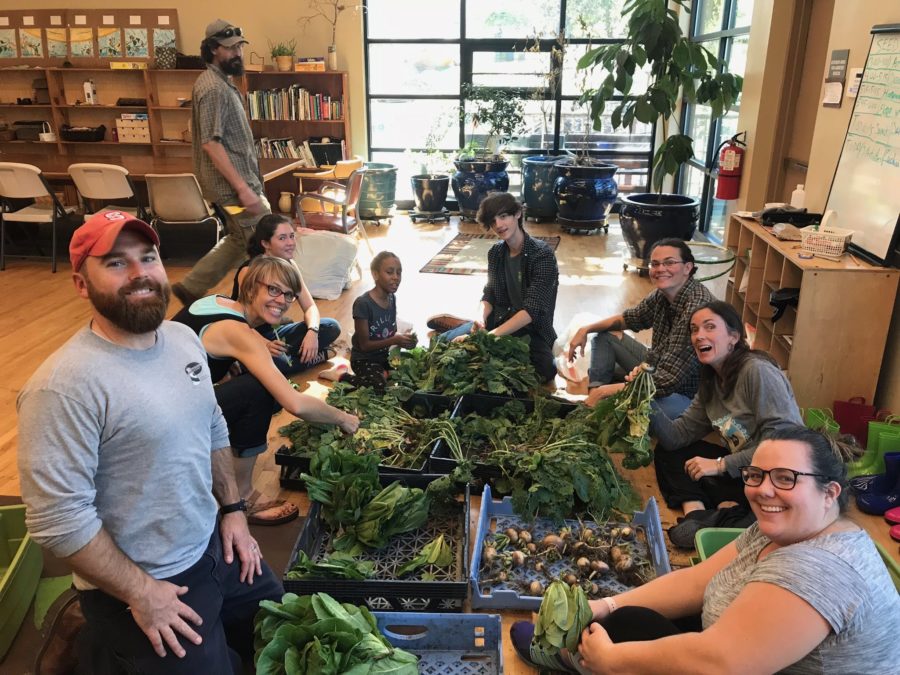
Farm Church in Durham, North Carolina, is all about getting fresh produce to those who are hungry.
“It’s a congregation that meets on a farm and leverages the resources of the farm for people with food insecurity, people who live in food deserts and can’t get to produce sections or can’t afford produce,” said Allen Brimer, pastor of this new worshipping community.
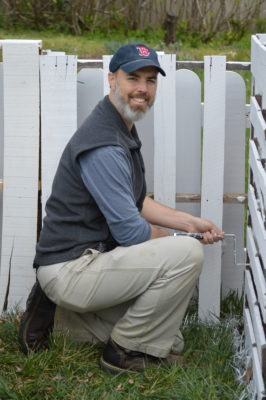
In regular times, Brimer uses an app to see which of the 80 food pantries in the Durham area is open. Then “we can just harvest, bundle it up, take it straight to them. … Folks have it in their hands probably within two hours of it coming out of the ground. That works really well for us. And in this moment of COVID-19, there are still pantries that are open and functioning.”
At Farm Church, the lettuce, kale and greens are coming along — plants that are nutrient-dense and have a shorter growing time.
The local food pantries are still figuring out how to operate safely, how to manage volunteers — there’s an abundance of volunteers, “because people are anxious, they want to do something,” Brimer said. So volunteers are packing up food parcels while keeping a social distance, wearing gloves and masks and carrying the food boxes right out to people’s cars.
The food community in Durham recognizes “there are people out there who are taking the full brunt of this economically, and that translates into food insecurity,” Brimer said. “People who were restaurant workers, people who were bartenders, people who are really dependent on that nightly income and those tips — they burned right through those savings in two weeks.”
The pandemic has brought uncertainty: a desire to help, but also a recognition that the old ways of doing things won’t suffice. Some food banks are having trouble getting enough donations, as people stay out of the grocery stores or stock up their own shelves at home, and as supermarkets and farmers deliver less. Many of the volunteers in feeding programs and food pantries are senior citizens — many of whom are staying home for reasons of safety.
 New partnerships are forming with restaurants and aligning with the local school system to deliver meals to hungry children, but then “they’ve got to figure out the logistics of a delivery system,” Brimer said. “It’s, “Holy cat, you guys, how are we going to do this?’ They are trying to figure that out as fast as humanly possible.”
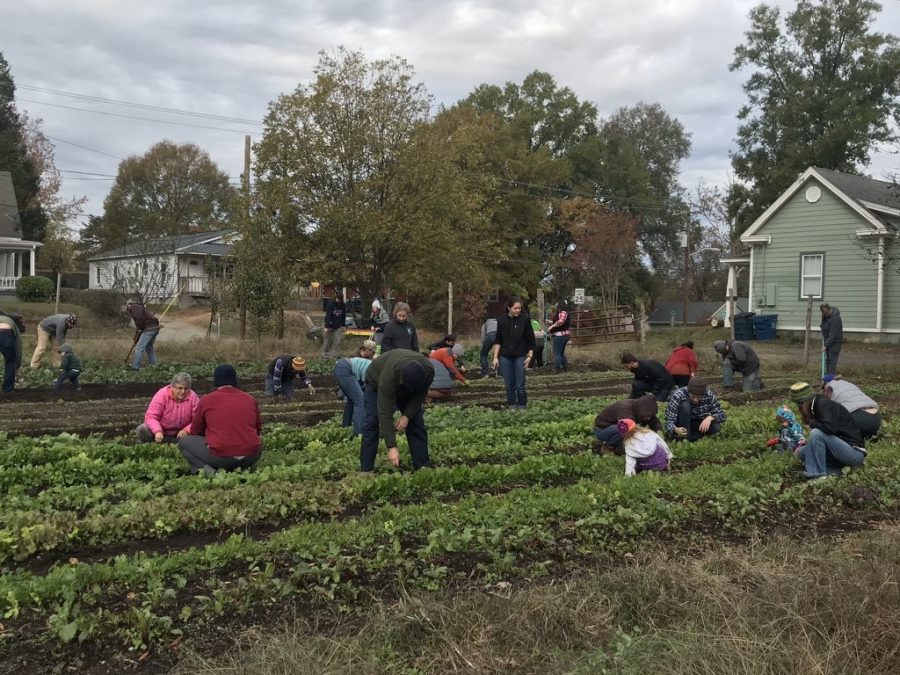
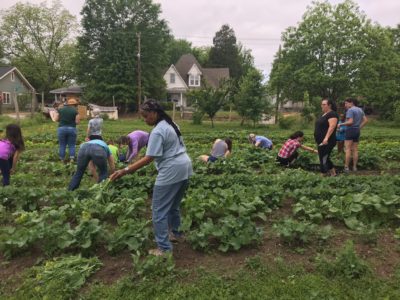
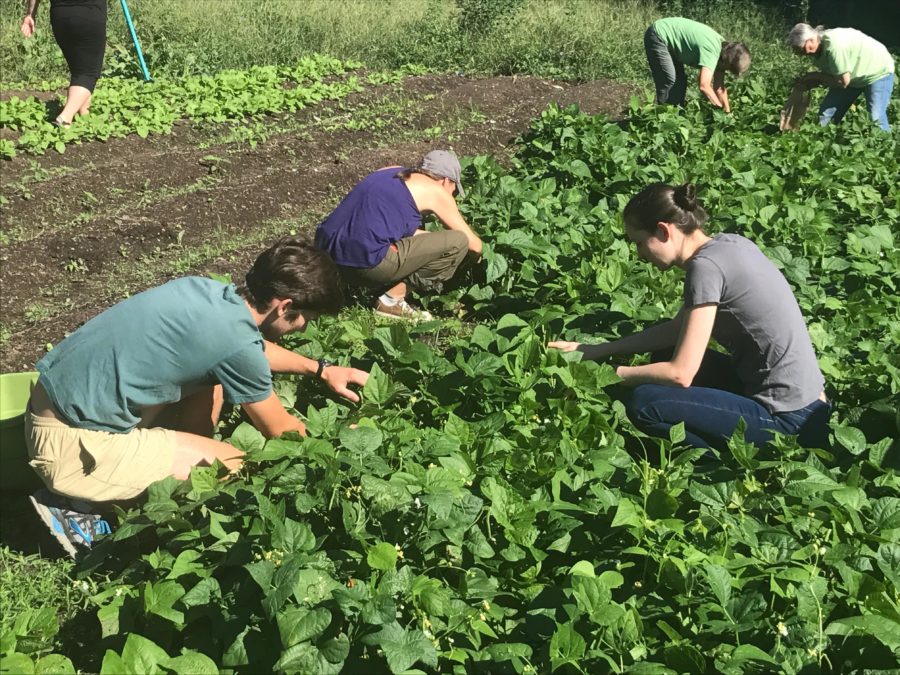
Farm continues to hold work days in the garden – as farms are considered essential for food production and distribution – but with different rules. No more than six people can be there at a time, and they work at least six feet apart, Brimer said. Everyone brings their own gloves and tools.
Another project – creating a garden on an empty lot on the east side of Durham, at a bus stop where people would be free to take whatever produce they need (“the most beautiful edible bus stop in Durham,” as Brimer put it) – has been put on hold.
In these times, the physical hunger is there; the spiritual hunger is there; the hunger for fresh produce and beauty and connection is there. The ground is fertile for new growth.
So much has been put on hold.