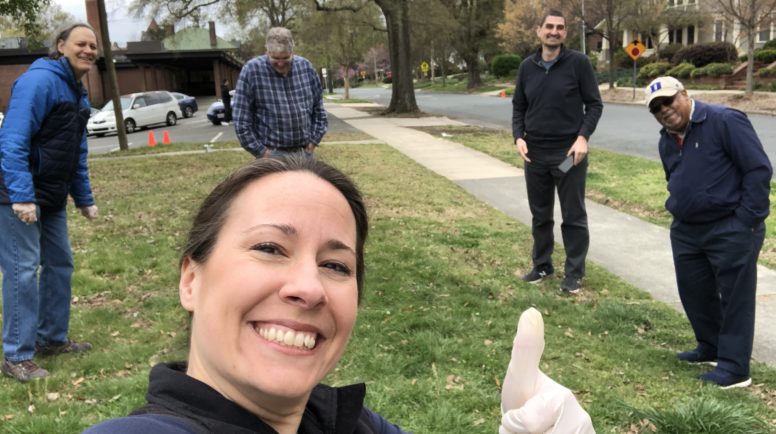
 Churches are trying to find ways to respond to rising levels of food insecurity brought on by the coronavirus pandemic. To do so safely has meant that people of faith are called to help in new, collaborative ways. And in some places, separation is becoming a force for bringing people together.
In many communities, the COVID-19 pandemic has accelerated the pain of food insecurity — with so many people losing their jobs, with some having to work even though they fear workplace exposure to the coronavirus will make them sick, with children home all day and needing to eat, with the pandemic laying clear economic inequalities laced through the American system.
In Durham, North Carolina, people of faith – who have worked together in food pantries and on justice issues for years – are trying to figure out how to respond in new configurations, learning as they go how to both keep social distance and to provide food for neighbors they know are hungry.
There are new collaborations — with restaurants, with people from other faith traditions, with government and nonprofit groups. And there is a new intensity to the work.
As states begin to loosen restrictions and reopen their economies, those working to feed the hungry are raising their voices about systemic issues that contribute to food insecurity. They have seen firsthand that one illness, one furlough, one lost paycheck can make all the difference between barely getting by and going under.
Durham is a city “where we have this explosive growth” – the revitalization of downtown after years of struggle with poverty and criminal activity – and, before COVID-19, “this boom of prosperity,” said Katie Crowe, senior pastor of Trinity Avenue Presbyterian Church. “People will often speak of a narrative of two cities, one that’s prosperous and one that’s being left behind.” In that context, even before the pandemic, “there is a steady narrative of food scarcity,” she said.

“For the Hispanic community, they don’t have the security,” said Julio Ramirez-Eve, pastor of Iglesia Presbiteriana Emanuel Church. Some have lost jobs, some are working fewer hours and many don’t have health insurance. For those in service jobs, “they don’t have the security to say I can’t work or I don’t want to work,” even if the conditions don’t seem safe. “They have to work whatever the situation. They are living day by day.”
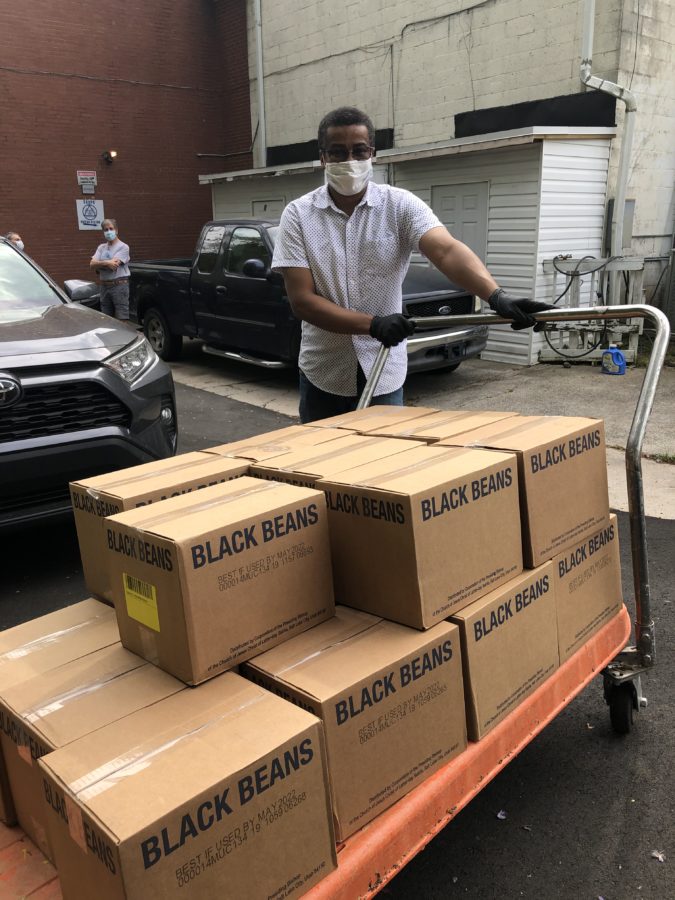
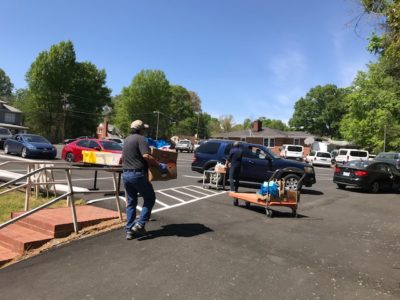
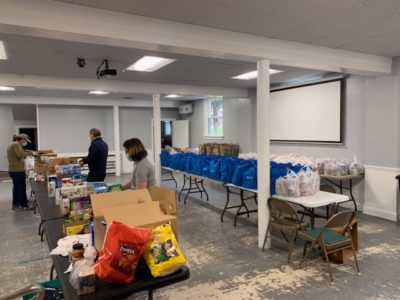
Every Wednesday, the Iglesia Emanuel congregation provides food to people from the neighborhood — with volunteers social distancing as they prepare the meals, and wearing masks and gloves as they bring food to people in their cars, many of them with children in the back seats. Typically, the church will serve 60 to 80 families on a Wednesday. This spring, it’s been 150.
Iglesia Emanuel also provides food to people in the nearby African American community – helping to feed, for example, a grandmother taking care of her grandchildren. Ramirez-Eve leans heavily on collaboration. Some staples, such as rice and beans, have been hard to come by. When they’re not available from the food bank, he negotiates with local restaurant owners and commercial distributors to find supplies.
Many in his community oscillate between feelings of fear and hope, Ramirez-Eve said. He often feels overwhelmed – “there are too many things I have to take care of” – but also prayerful, and grateful for the love, faith and dedication he sees in his congregation. “I’m glad that my church, even though we don’t have a lot of money, we are doing significant things in the community,” he said.
“Without our sister churches, we could not take care of our community in this time,” Ramirez-Eve said. “This is a story of how many things we can do together.”
The Trinity Avenue congregation also has a longstanding commitment to addressing food insecurity. Before the pandemic, Trinity had a food pantry and helped support a “Backpack Buddies” program to make sure that children from food-insecure homes had something to eat on the weekends. Trinity volunteers also help prepare meals for neighbors through a nearby urban ministry, Walltown Neighborhood Ministries, which serves about 120 families.
The neighborhood near Trinity reflects Durham’s economic disparities. It’s within a few blocks of Duke University’s East Campus, and also near the Walltown neighborhood, a historically African American, working class neighborhood.
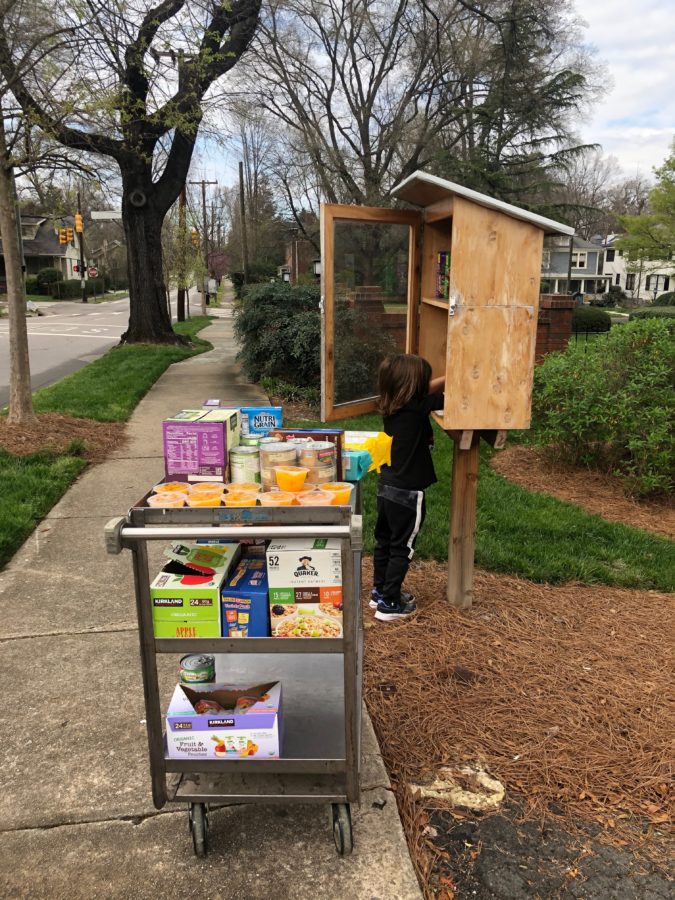
On the corner outside Trinity, there’s a tiny pantry with food free for the taking, the shelves stocked by the congregation. “It’s shocking to see the variety of people who utilize that pantry,” Crowe said — people who walk up or stop their cars, “people of all ages and stages.” People have told her “it’s the only food that might have hit their bellies all day.”
Over the past several years, “we’ve seen an increase in demand for basic food needs,” said Jonathan Wilson-Hartgrove, an author and president of Walltown Neighborhood Ministries. “There have been cuts to food stamps, people struggling to make ends meet as public services have been trimmed back.”
Many who are food insecure have jobs — sometimes more than one.
“There are families that might have two incomes coming in or who are working double shifts and who cannot make enough money to eat,” Crowe said. “You can work 40 hours a week and not have enough. … I had somebody call me in tears when they raised the prices of the bus passes by 25 cents.”
Working collectively, the community is responding.
End Hunger Durham is providing meals and “reassurance calls” to low-income senior citizens living in subsidized housing communities.
An initiative called Durham Feast – a new partnership between the Durham Public Schools, Durham County, the Durham Public Schools Foundation, nonprofits and restaurants – is providing free breakfasts and lunches to eligible school children, prepared by Durham restaurants, while their parents are given produce and shelf-stable foods or family-style casseroles. That initiative emerged after the Durham Public Schools stopped a program of delivering meals to students at community sites after one of the employees at an elementary school where meals were being prepared tested positive for COVID-19.
“The way that you respond to hunger in times of crisis is to build an infrastructure and relationships addressing hunger throughout the year,” Crowe said. For faith-based groups, it’s vital to “build collaborations that are interfaith, that are ecumenical, that can be brought to bear in times of distress.”
Here’s an example. In the summer of 2019, Crowe gave a presentation at a Jewish retreat center, and met a man at that event named William Calhoun, a regional communications coordinator for the Church of Jesus Christ of Latter-Day Saints. Some time later, Calhoun sent Crowe an email saying the Latter Day Saints were distributing excess food that the church had purchased intending to use it for hurricane relief, paid for by money Mormons donate from what they save on food costs by fasting one Sunday each month. There had been fewer storms than expected, so the Latter Day Saints had food left over.
Did Crowe want a truckload of food for use in food pantries in the Durham area?
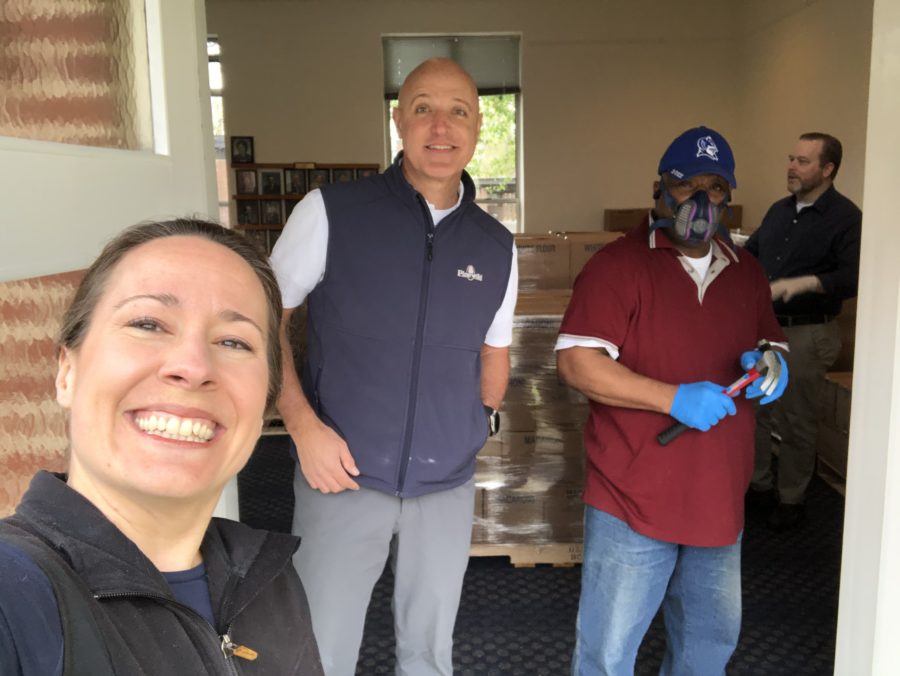
Crowe agreed to take half a tractor-trailer worth of food, all she had space to store — and it was delivered in late March, earlier than expected but exactly when needed to respond to the coronavirus pandemic. When the truck arrived, Presbyterians, Jews, Missionary Baptists, American Baptists and other volunteers kept social distance as they unloaded thousands of pounds of shelf-stable food – spaghetti, beef stew, flour and more – into space provided by Beth El Synagogue, truly an interfaith effort.
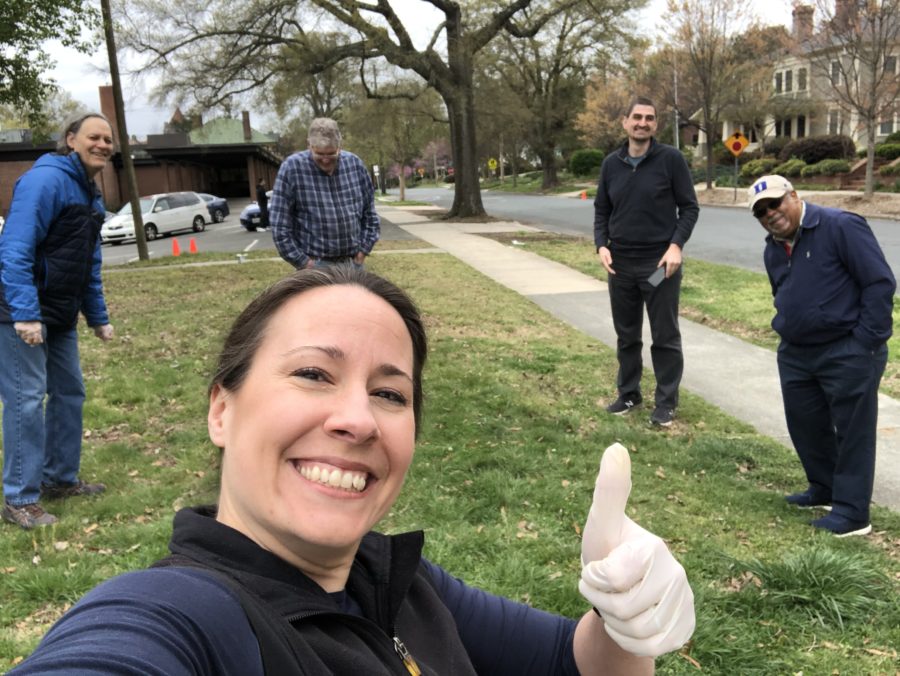
Walltown Neighborhood Ministries is distributing the plenty — with volunteer drivers dropping the groceries at the homes of people who need the food.
Trinity also hosted a drive-through distribution — with volunteers from the National Guard and Interfaith Food Shuttle handing bags of food to people in their cars.
It’s been a challenge “making sure stomachs and spirits are fed while doing so in the most responsible way possible,” Crowe said. “That’s where we have to be creative, and trust the spirit to multiply our effort. We have a responsibility to operate in the safest way possible for everyone.”
What lies ahead?
“The deep divides that something like this exposes are obviously exacerbated by the economic downturn that is inevitable” as the pandemic forces businesses to close, Wilson-Hartgrove said. “These are systemic issues. The church ought to take whatever action we can to relieve suffering. This is much bigger than anything any food bank can do. I hope it will increase the churches who are willing to work for systemic justice and for long-term programs that guarantee housing and health care and living wages for people.”
There are theological implications as well.
“When you lose the job that was providing your meager means of income, I think there is not only the disorientation and the very real material want associated with joblessness, that’s where the contagion of hopelessness can really take hold,” Crowe said.
The COVID-19 pandemic has built “an incredible awareness of the power of contagion. We see how fast a virus can be transmitted because of our interconnectedness as people. Well, hope can spread that fast too, and good news can spread that fast too. What we’re seeing of our interconnectedness as our worst can also be a way that interconnectedness can draw out the best that we can give in this time — the news of the gospel and God with us,” a call to work together to build a better world.
In many communities, COVID-19 has been the yeast for unlikely friendships and collaborations – and for congregations to find new ways of being church.
Although it’s been hard, in some ways “it’s a beautiful thing to behold,” Crowe said.
“I do love that it takes a global pandemic to get us to change.”