Cries, calls and challenges of the church
Lament was engraved across the 224th General Assembly of the Presbyterian Church (U.S.A.) as it met online due to the coronavirus pandemic — whether in worship, Bible study or during recess.
During the mid-day recesses, Presbyterians from around the globe, of various ages and languages, shared short video testimonies conveying the cries, calls and challenges of being the church during current changing times — times defined by virus and violence, racism and protests, fear and isolation. Times that are moving the church from lament to actions of hope.
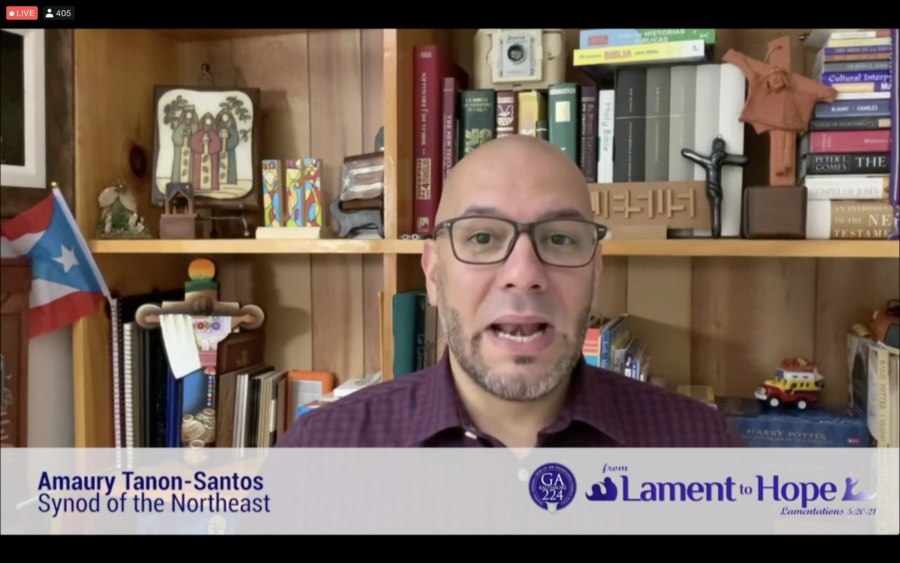
To lament is to be still, to be present in the moment, to sorrow and to be emptied, awaiting a fresh outpouring of the Holy Spirit, these contributors say.
In video, each contributor shared the new ways God is moving, reforming the church and its people. Each called the church to wake up and become emboldened witnesses for Christ — whether at a farmers market standing up for immigrant farmers or marching in peaceful protests across America’s major cities.
 As one young adult advisory delegate, Samuel Ortiz, from El Cordero Presbyterian Church says, this is a time of “spiritual trembling.” Corita Floyd, a ruling elder from Charlotte Presbytery, encouraged: “God is the God of our weary tears, who has brought us on our way. The Holy Spirit is here.”
Pastors, synod leaders, commissioners and elders used these videos to share how the church has expanded their ministries beyond its walls. Prayer shawls have been knitted and sent out to comfort the sick and the broken-hearted. New technologies brought church into the homes of those who could not attend worship, but who can now through livestreaming. New programs feed the multitudes who are hungry and find themselves unable to provide for their families as they were able to do only months earlier.
All of this is building a more cohesive, stronger community well beyond the neighborhoods churches reside in and serve. Ministry grows through disruption, as churches find new ways to connect. The number of worshippers, many report, is growing. Nurturing body and soul, the church reaps a new vitality.
These men and women call out to all who will hear to turn lament into actions of hope. And in each action, to acknowledge God’s glory, knowing that this time of trial will pass.
Hope lost, hope found
In some submitted videos, Presbyterians from around the country voiced their losses during the last several months. Among those are postponed weddings, those who have died alone, funerals attended by only a few and even the business that couldn’t be conducted during the 224th General Assembly due to its abbreviated schedule.
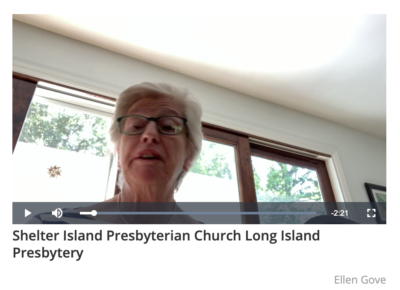 Universal among the participants is a sense of being disconnected and a longing to be together again as a faith community. For those who haven’t been able to livestream worship and church-led events, the ache goes even deeper.
Yet it is the fellowship and caring for one another during this time of quarantining with phone calls, meals delivered at her door, and online connecting that has kept loneliness at bay, says Ellen Gove, of Shelter Island Presbyterian Church in New York. Gove, who is in her 70s, lives alone.
She quotes Psalm 80:3: “Restore us, O God; make your face shine on us, that we may be saved.”
 Again, as hope is lost, there is hope found as gratitude for new ways of being the church without walls.
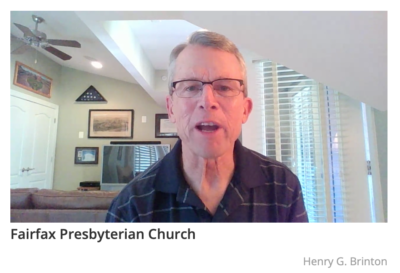
Henry Brinton, pastor of Fairfax Presbyterian Church in Virginia, expressed such gratitude when he said that the congregation could now give less attention to the smaller issues that divide the congregation and pay greater attention to being a Matthew 25 church. “A church that truly does look for the face of Jesus in each other and in our vulnerable neighbors,” he says.
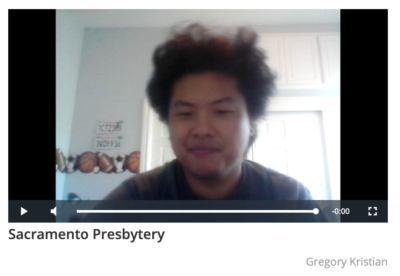 Gregory Kristian of Sacramento Presbytery asked the poignant questions: “What does it mean to have compassion toward our fellow human being?” And, “Are we doing enough?”
Throughout these testimonials is the hope and prayer for healing the nation, for justice, and for action as the church moves through these times “reformed and always reforming,” making visible the invisible presence of God.
Sherry Blackman, a journalist, poet and author, serves as the pastor of The Presbyterian Church of the Mountain in Delaware Water Gap, Pennsylvania, as well as a truck stop chaplain at the Travel Center of America in Columbia, New Jersey, a validated ministry of Newton Presbytery.