“What broke you over this last year?”
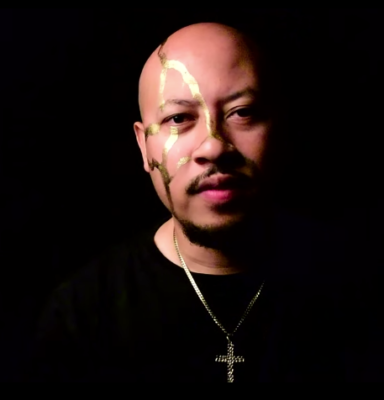
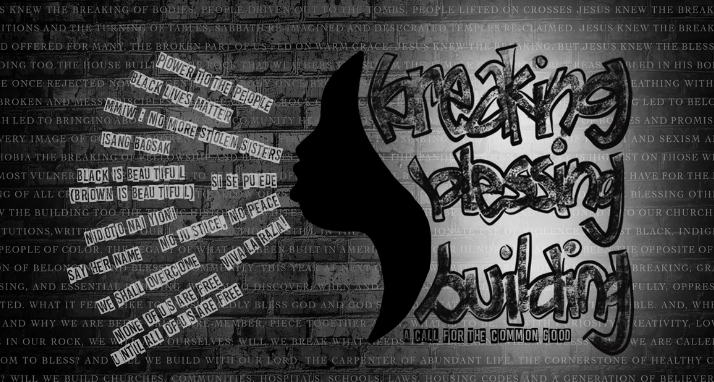
Spoken word artist Glenn McCray of Chop Suey Roots asked that question during opening worship of NEXT Church’s 2021 National Gathering – being held online March 5-7 (with a few technical bumps on the opening day), and built around the theme “Breaking, Blessing, Building.”
Some answers to his question from the opening presentations: don’t just think about the COVID-19 pandemic — add in white supremacy, Christian nationalism, climate change, the Trump presidency, the killing of George Floyd and so much more. “This alarm has been going off since 1619, and some of you have been hitting the snooze button,” McCray said.
During opening worship, Bertram Johnson, a member of the NEXT strategy team and currently serving as interfaith minister at Union Theological Seminary in New York, preached about “vanilla ISIS” and a white nationalism that threatens to destroy “anything that doesn’t align with its capitalist and colonial Jesus.”
For people of color who live in predominantly white spaces – and that includes the Presbyterian Church (U.S.A.) – that climate “is detrimental to our health, it is spiritually, emotionally and physically dangerous to us,” Johnson said.
“In its most virulent forms, it is literally killing us. … Our Black friends are tired. Our Latinx friends are tired. Our Asian and our Native friends — we are all tired, we need a break.”
And while the world needs courageous leadership, “too many in the church have chosen not to speak up.”
Lenny A. Duncan, a minister in the Evangelical Lutheran Church in America, is pastor of the Jubilee Collective in Vancouver, Washington, and author of the forthcoming book “United States of Grace.” His Twitter bio says: “Author. Witness. Agitator. Pastor.”
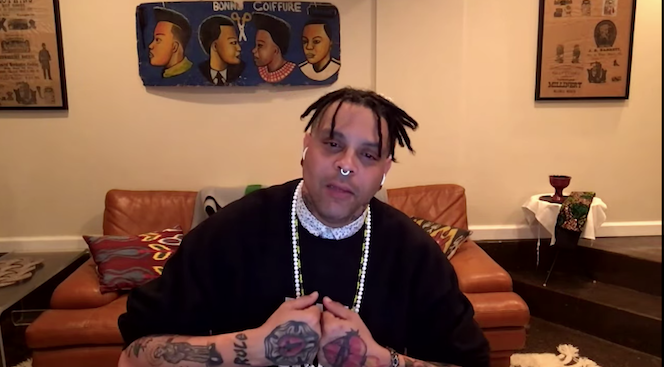
Fast-talking, tattooed and raw from a year of pandemic and demonstrations, he pulls no punches in criticizing the institutional church — starting the opening keynote by promising to be a heretic, someone willing to disturb the waters.
White Christians and mainline churches “don’t know who Jesus is” — don’t know the story of Christ, “a radical black man,” or the meaning of the incarnation or of evil, Duncan said. “They are the reason love was murdered.”
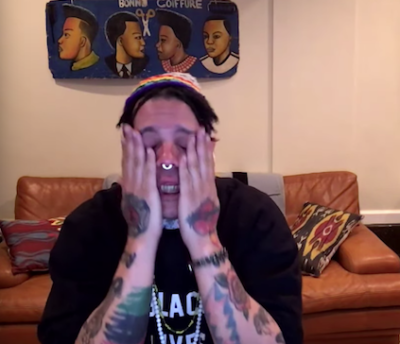 And he questioned whether the civil rights movement is too willing to accept the deaths of Black people as the price of progress. “I would rather have Emmett Till than the civil rights movement,” have Trayvon Martin and Sandra Bland alive, Duncan said. “I would rather know who Mike Brown is going to grow up to be than I would to know the words Black Lives Matter” – he said while swiping at his tears.
“Jesus didn’t have to die,” Duncan said. “Are you willing to let go of lifelong theological convictions to wonder, ‘Can the Black blood stop (flowing)? Can the indigenous blood stop? Can the queer blood stop?” What if Christians really acted like Jesus, stood with him at the cross, “rather than hammering the nails in every time? … Why is my sacrifice needed for you to wake up?”
His theology calls for action: “I don’t believe Christ had to die on the cross. I don’t believe Emmett Till had to die on the cross. … I don’t believe the blood was necessary.”
As the killings of people of color continue, “the heart of God is strained and the eyes of God are upon you in this time,” Duncan said. “I truly believe this is a critical juncture in salvation history and that what we do now will change the world for good for a very long time to come. We feel it in the air. All of our worlds are being rearranged” in this time of pandemic separation.
“We all know we’re not coming back to the same place,” to the same churches, the same relationships. “This pandemic thing — it’s not going to go away in March, it’s not going to go away in April.”
He challenges churches to rethink theology and Christians to work for an in-breaking of collective liberation. “George’s death and his cry to his mama was not the in-breaking, the in-breaking was when you rose up. The in-breaking was when you left your home,” put on your mask, joined or led the demonstration. “That was the breaking of the American psyche. That was the breaking of your hard heart.”
But some people of faith didn’t join in. That’s when Duncan, without breaking stride, grabs a smoke – “I need a little nicotine” – undoubtedly marking the first time a presenter has lit up during a NEXT keynote presentation.
“Don’t go telling you no lies” about your involvement, Duncan said – in his “Letter from a Birmingham Jail,” Martin Luther King Jr. already called out the lukewarm commitment of the white church. “Do not sell yourselves on false values. What you did last summer is who you would have been at the height of the civil rights movement.”
For some white churches, they started a book study – “Black people died; you read a book.” But that’s a start, Duncan said, adding that working for justice will come with a price. Congregations committed to racial justice will lose people and money, “your conservative folks, they have been brainwashed and they’re going to take their money with them,” so be strategic, he advised.
And don’t wait.
He knows “one of us is going to be murdered by the system of policing soon.” He is certain that in two weeks or two months, someone will catch on video the death of another person of color, and “it’s going to explode.”
If he were alive, Jesus would rob the church and give the money to the poor, Duncan said. Instead, the institutional church tries “to pretend we have to hold on to fundamental truths when the entire world is shifting. … I believe the institution believes the people are worth sacrificing for its survival.”
Duncan said he recognizes that flawed institutions are “full of good people” — but he’s not willing to give his energy to try to bring along a white church that’s not willing to change.
If you can say Police Lives Matter or All Lives Matter, “then it’s actually only one word you have a problem with. It’s Black. I’m sorry about your racism,” he said.
“At this point in the revolution, if you’re not awake, I’m not going to try to wake you up anymore” — because there’s so much justice work demanding attention, from the school-to-prison pipeline to refugees at the border. “We’ve got so much work to do — to try to convince a bunch of church people that Black Lives Matter? My God.”
Duncan said it might surprise some that he writes in his next book, that “I’m in love with this country” — not the flawed institutions, but the heart of the American people who dream of a better, more equitable world.
He also called on church leaders to be authentic ‚ revealing that the last year has been hard for him, that he has separated from his longtime partner, that last summer “the only time I left the house was to let the police shoot at me and teargas me,” and he had PTSD because it felt so much like what he’d experienced while incarcerated. “I feel better as a leader when my people know I am just as fallible, broken and confused as them sometimes,” Duncan said. And someday, when we get back together after the pandemic, “I am going to be more of who I am” – more real.
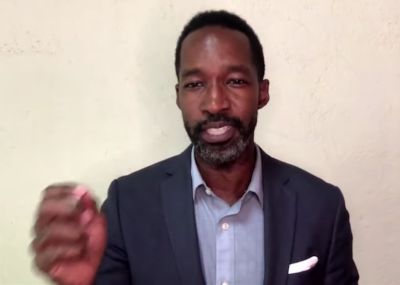
Johnson preached from Exodus — the story of Moses destroying the golden calf. NEXT intentionally holds its national gatherings during Lent, he said — a time to consider “what in our community needs to be broken? What are the idols we have created?”
Some answers Presbyterians gave in the Zoom chat:
- Convenience and comfort.
- Perfectionism.
- Fear of rejection.
- Being productive and busy.
- Security.
- “My stuff, including books.”
- “The illusion of control.”
Taking chances, finding church in the streets, marching, singing, breaking the silence: “Maybe there’s a blessing in the breaking,” McCray suggested in his spoken word poem.
“Maybe we’ve been taking this breaking too lightly. So we’ve been marching nightly.”
Attending the NEXT gathering is free this year, with registration.