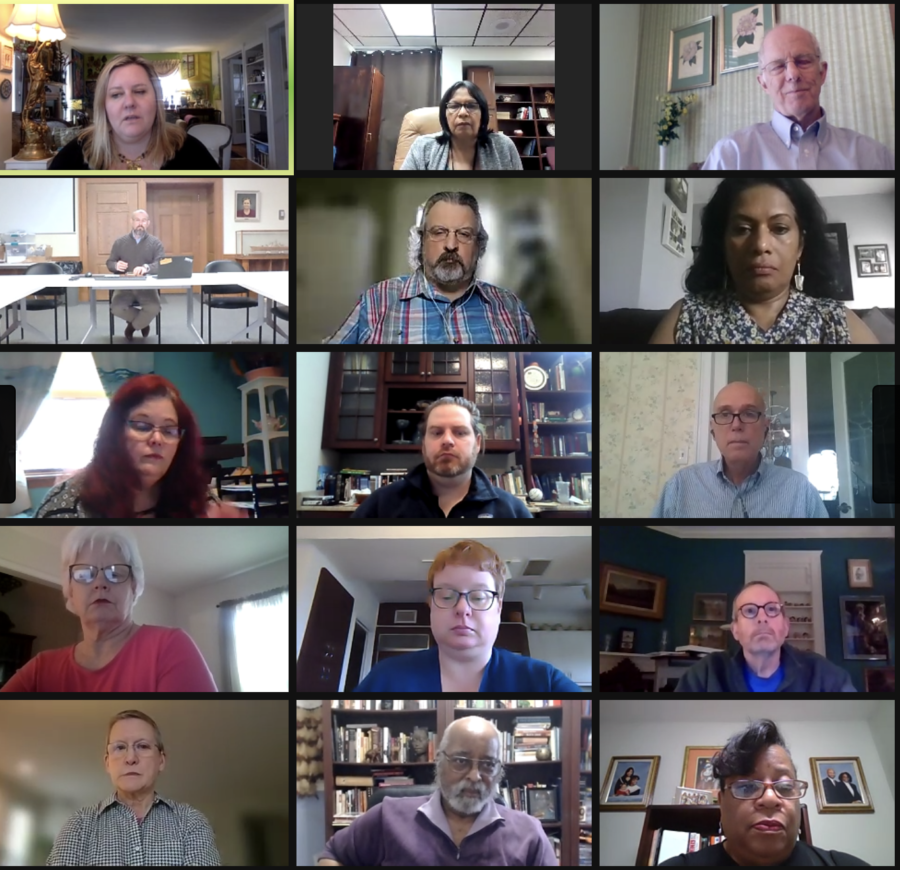
The Coordinating Committee of the Presbyterian Mission Agency Board is recommending that the board hire a consultant to do training at the board’s October meeting to help board members and the Presbyterian Mission Agency staff “address implicit biases and microaggressions.”
In part, that recommendation is coming out of concern over continuing violence against Asian American Pacific Islander (AAPI) people and other examples of racial injustice, and out of the findings that diversity and equity consultant Marian R. Vasser presented in 2020 about power and privilege dynamics in the board’s own gatherings.
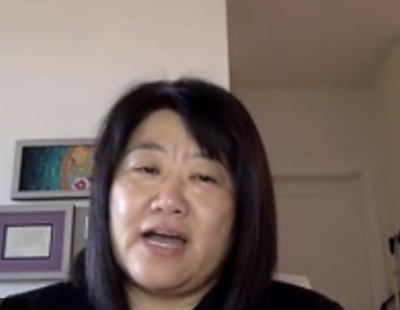
Michelle Hwang, representing the board’s Power and Privilege Task Force, presented the recommendation to the board’s Coordinating Committee in a Zoom meeting April 1 that the board contract with Rosetta Lee, a consultant and trainer from the Seattle Girl’s School, to provide training on unconscious bias and navigating microaggressions.
“Until we have the time to reflect on our own behavior,” board members will just be “repeating unhelpful patterns,” Hwang said — patterns Vasser noted in her report that included “people of Asian descent appear to be rendered invisible” and “there is visible discomfort during conversations around white supremacy and white privilege.”
The full board, when it meets via Zoom April 23-24, will consider the recommendation to contract with Lee to provide training in two two-hour sessions at the board’s Oct. 6-8 meeting (D.104 Action Item from Power Privilege).
With the escalation in recent months of violence against Asian Americans – including the killing of eight people March 16 at massage parlors in Atlanta, six of whom were women of Asian descent, and a March 29 incident in New York City in which a man repeatedly kicked a 65-year-old Filipino immigrant while others watched without intervening – has made such training “even more necessary and important and critical,” Hwang said.
Board member Nicholas Yoda raised a concern, saying “much of this is minority upon minority hate crime” against Asians — not violence from whites.
“I know that you’re wrong,” Hwang responded, saying the majority of hate crimes against Asian Americans are committed by whites. She also spoke of the need to examine the deeper structural forces that contribute to oppression.
“The misconception that the media as well as our culture continually has about AAPI communities, that we are this model minority” contributes to the violence, she said. Using that myth, “Asian American communities get used against African American communities, against Latino communities, so that oppression can continue” by giving a false sense that “the Asian community is somehow accepted by the white community. … We need a better understanding of what is happening with race relations in this country.”
Diane Moffett, president and executive director of the Presbyterian Mission Agency (PMA), said she hopes the training in October also will address Black-against-Asian violence. “It is all a part of how people deal with oppression,” Moffett said. “It is still a function of white supremacy and racism.”
Understanding that “doesn’t dismiss it, but it helps to explain how insidious racism is … how it mutates and gets on everyone.”Racism is evident in the church too, Hwang said. At a gathering of mid council leaders and the Presbyterian Mission Board in Baltimore in 2019 to discuss budget priorities, a Native American church leader started to sit down at one of the discussion tables and was greeted with the comment, “I hope that’s not alcohol in your cup” — a comment that was deeply hurtful, Hwang said. “We need to understand the nuances of white supremacy and how it prevents communities of color from forming solidarity with one another.”
Shannan Vance-Ocampo, the board’s vice chair, moderated the Coordinating Committee meeting as the chair, Warren Lesane, could not be present. She devoted the time reserved for her remarks to reading a recent statement from Asian American Pacific Islander former moderators and vice moderators of the PC(USA) General Assembly — a statement that said those leaders are “deeply grieving” the violence against Asian Americans and a history of discrimination.
The statement cites the work of Stop AAPI Hate and research that found that hate crimes against Asian Americans rose 149% in 2019-2020, in part because of public statements from the Trump administration describing the COVID-19 coronavirus as the “China virus” or “Kung flu.”
The coordinating committee also discussed other business that will come up at the board’s April 23-24 meeting.
Poverty. This meeting will focus on addressing systemic poverty — part of PMA’s Matthew 25 initiative. That work will include training from Liz Theoharis, a PC(USA) minister who is co-chair along with William Barber of the Poor People’s Campaign: A National Call for Moral Revival.
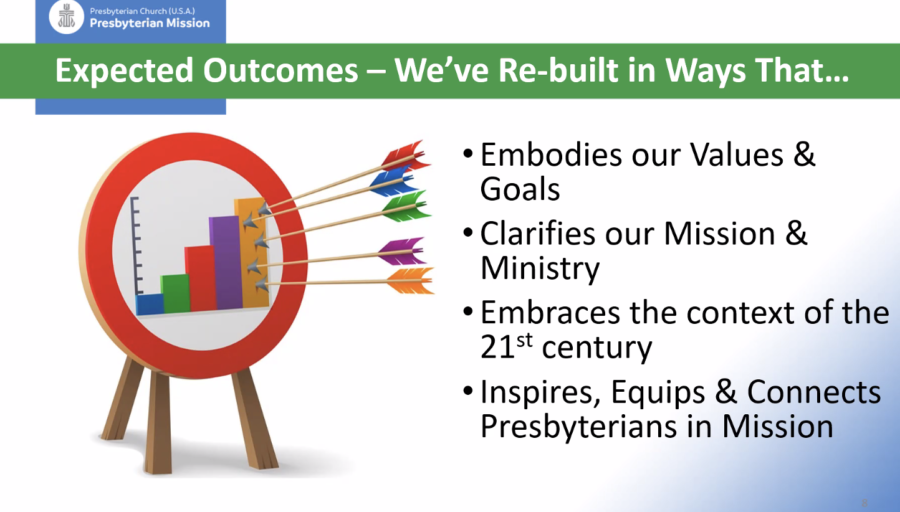
Vision implementation for PMA. Moffett said the agency is in the midst of a three-phase vision implementation process to determine the best structure and design for PMA as it tries to live into its Matthew 25 commitment. The first phase has involved Bible study and gathering information from across the church — everyone from young adults to ecumenical partners, Moffett said.
Starting in early May, PMA will move to Phase 2, in which a Leadership Innovation Team will construct a “narrative of a preferred future” for PMA that it will present to the board next fall, potentially involving in time both structural and staff changes. That Leadership Innovation Team, or LIT, will work for 10 intensive weeks and will involve about 35 people from across the church (including PMA board members and staff, as well as mid council leaders and others) — a group that will be diverse in terms of geography, race, age, experience and gender, Moffett said.
Having a 35-member work team “just sounds a little unwieldy,” said board member James Parks.
Normally, a work group such as this would be smaller, but the hope is to make this “as open and participatory as possible … so it’s not just an insider process,” Moffett said.
Shinnecock Nation. The board will consider a request from the Racial Equity Advocacy Committee (REAC) that PMA and the Office of the General Assembly join with the Shinnecock Nation, a Native American tribe from the eastern end of Long Island, in advocating for the right to retain two 61-foot digital billboards – which the tribe considers “monuments” – erected on tribal land along Sunrise Highway near the Hamptons.
Many in the Shinnecock Nation live in poverty; the tribe hopes the billboards will generate advertising revenue, but there’s been litigation and conflict with the New York State Department of Transportation and debate over tribal sovereignty. REAC is asking the PC(USA) to get involved, citing action from the 2020 General Assembly that approved the report of the Native American Coordinating Council, which includes a directive to “support Indigenous Nations’ full expression of their inherent legal sovereignty in civil and criminal spheres.”
PC(USA) policy on children and vulnerable adults. The board will receive for information – but not act on – proposed language for revising the denomination’s policy for protecting children, youth and vulnerable adults. The proposed revisions would add a code of conduct specifically regarding virtual meetings (D.200 Child-Youth-Vulnerable Adult Policy 2020 (GA 2020)). Mike Kirk, a lawyer for the PC(USA), said the denominational policy also is intended to be a model for policies that mid councils and congregations might use as well, and said “we welcome all suggestions and comments” as the proposed wording is being developed.