This article appears on Presbyterian Outlook with the permission of the Presbyterian News Service. The Outlook has a paywall to help fund our independent journalism. If our paywall prevents you from reading the full story, you can read it freely at pcusa.org/news.
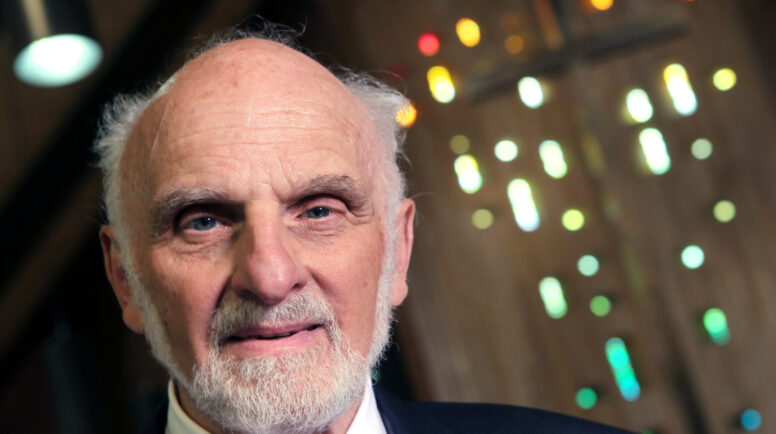
This week the Columbia Theological Seminary community remembered beloved Old Testament Professor Walter Brueggemann by convening a panel of his friends and admirers to talk about what made Brueggemann the celebrated teacher and author that he was. Watch the panel discussion here.
Brueggemann, who wrote more than 100 books and inspired generations of pastors and scholars, died June 5 in Traverse City, Michigan, at age 92. In 2003, he concluded his influential and prolific academic career at Columbia Theological Seminary in Decatur, Georgia, where he taught for 17 years.
Dr. Christine Roy Yoder, the seminary’s vice president and dean, moderated a panel that featured:
- Dr. Davis Hankins of Appalachian State University
- Dr. Robert Williamson of Hendrix College
- Dr. Brennan Breed of Princeton Theological Seminary
- Dr. Judy Fentress-Williams of Virginia Theological Seminary
- Dr. Kathleen M. O’Connor, professor emerita at Columbia Theological Seminary
- Dr. Bill Brown of Columbia Theological Seminary
“He would say things like, ‘the acids of modernity are dissolving your brain,” recalled Williamson, who was Brueggemann’s student and will publish a new book, “Reading the Bible with Brueggemann,” next month. “I had no idea what he meant, but it sounded great.”
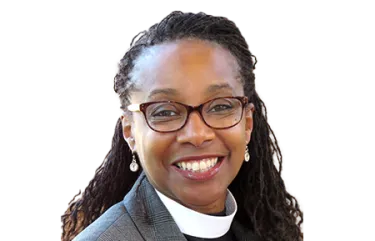
While attending seminary, “I couldn’t make sense of how what I was learning connected to where I came from,” Fentress-Williams said. Brueggemann’s “The Prophetic Imagination” “gave me a sense there would be room for me in the academy and as a biblical scholar,” she said. “Here was a guy with a beard and a German name” who “opened up some possibilities for me, for which I am grateful.”
When Brown was a graduate student, Brueggemann put on a Lenten series on the Psalms at a local PC(USA) church. “He came in and sucked the oxygen out of the room. He had this commanding presence,” Brown said. “I had never witnessed a Bible lecture as performance art before.”
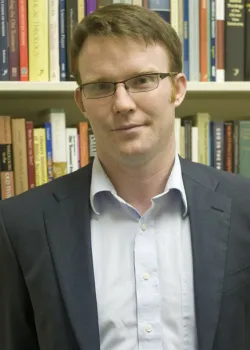
“He invited us to write a lament from the perspective of a Palestinian mother,” Brown recalled. “That was 40 years ago, and it always stuck with me.”
With his glasses fixed atop his head, Brueggemann would tell his students, “these glasses are not to correct my vision. These glasses are a pedagogical device,” Williamson said, smiling.
Although Brueggemann was an Old Testament professor, “he taught all the disciplines at the seminary,” Hankins said, including pastoral care, New Testament and theology, through the connections he would make during his lectures. Hankins pronounced Brueggemann “profoundly eloquent. He would take a topic with clear sides and rearrange things so that you decided both sides are wrong and here’s a third way to think about it.”
“He made us believe the Bible really matters.”
“It’s obvious this man had an incredible integrative intelligence,” O’Connor said. “What he had that the average bear doesn’t have is discipline and devotion.” Normally the first one in the office, Brueggemann would write for 90 minutes every morning, she said.
“I want to celebrate the way he delighted in scripture,” Fentress-Williams said. “Scripture is messy and challenging, and it can be a joyous experience. I appreciate the way he had a preacher’s ear.”

Brueggemann “treated me like we were peers — me and Brueggemann!” she said. “It is my prayer that all of us would find the space to be gracious.”
Breed marveled at how Brueggemann took “very seriously the historic nature of the text” and noticed where “there are dissonances in the text.”
“He would say, ‘I trust this is speaking to our faith,’” Breed said. “God wants us to be bold enough to speak our mind.”
Many years ago, Brueggemann said he aspired to be “an agile exegete,” Brown noted. “Walter’s canonical breadth is staggering.”
“He was always pushing familiar themes in new directions,” Brown said.
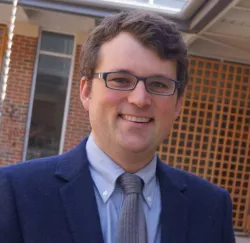
“Walter always knew who he was writing to and why he was writing to them,” Williamson said. “He would tell pastors they have the hardest job in the world.”
Brueggemann said “everything about everything in the Bible,” Brown said, adding that most Old Testament scholarship in recent decades “has consisted of footnotes to Walter’s work.”
“His words are poetic. There’s a passion behind them that makes them persuasive and compelling,” Brown said. “Walter’s work has made it impossible to do biblical studies without a compassionate concern for people in pain.”
Brueggemann did more than put the “so what?” in biblical studies, Brown said. “He put the prophetic ‘therefore’ in biblical studies. He championed imagination when it comes to exegesis, and he was doing public theology before it was a thing.”
Audience members asked questions and voiced their own Brueggemann memories once panelists had their say. One question was, how would you want to thank Brueggemann?
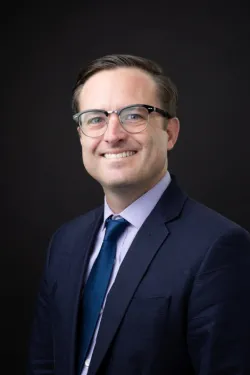
“For his love,” Hankins said, love “for the Bible, the Earth and for human beings.”
“For his contributions to Columbia Seminary. He put it on the world map,” O’Connor said. “His spirit inspires me to think about hope for the future.”
“For his courage to say things that were pretty unpopular — to put them in print and to take the hit for them,” Breed said.
“I would thank Walter for his discipline,” Fentress-Williams said. “We have this treasure [of his publications] that continues today.”
Williamson’s upcoming book “took a long time for me to write,” he said. “I went to Walter to write the foreword. He read it and said to me, ‘you understand me so well.’ It was such a gift to me.”
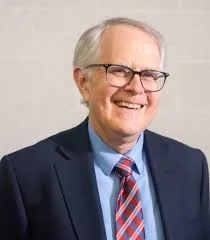
Williamson wrote the acknowledgement on March 11, Brueggemann’s 92nd birthday. “My whole life was a gift from Walter,” he said. “I never would have lived this life” without Brueggemann’s encouragement to pursue a doctoral degree.
Brown thanked Brueggemann for his “grace and hospitality” during Brown’s first two years at Columbia Seminary. “I promise you the same,” Brown said, “when we welcome two new colleagues at Columbia Seminary next year.”
By Mike Ferguson, Presbyterian News Service