This article appears on Presbyterian Outlook with the permission of the Presbyterian News Service. The Outlook has a paywall to help fund our independent journalism. If our paywall prevents you from reading the full story, you can read it freely at pcusa.org/news.
A federal judge on Monday blocked the Trump administration from terminating temporary protective status for Haitians. The decision came a day before this program, a safe haven from deportation, was expected to end.
A spokesperson for the Department of Homeland Security said on social media that the government would appeal the decision to the U.S. Supreme Court.
In Springfield, Ohio, where 15,000 Haitian people depend on the program, the worst news was that later in the week, they expected that federal detention officers would come to town to begin deportations.
Even in the midst of this fear, clergy and worshipers of many faiths from Springfield to Spokane, Washington, surrounded neighbors in love and advocacy.
St. John Missionary Baptist Church in Springfield, Ohio, was filled to standing-room-only on Monday morning. With hundreds in the pews, clergy of many faiths stood near the front. Others were scattered among the crowd.
They prayed. They sang. Beyond the worship, advocacy endures.
Temporary protective status offers immigrants legal standing, worker permits and protection from deportation. It was offered to Haitian immigrants living in the U.S. after the 2010 catastrophic earthquake that destroyed much of the capital city, Port-au-Prince, and other cities.
The Rev. Jody Noble, pastor of Covenant Presbyterian Church in Springfield, was among the many clergy present Monday morning.
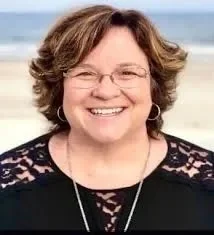
“I am so grateful for the court’s extension of TPS and this opportunity for our Haitian brothers and sisters to live safely here in our country,” she said on Monday evening.
“I also recognize that TPS was still in force when ICE actions in major cities occurred and ask for the continued prayers for God’s peace to reign in our communities,” she added.
The scope of the community’s outreach for their Haitian neighbors was vast, Noble said.
“We also had a two-hour prayer time [Sunday] evening where we thought 50 people from our canopy churches would come,” Noble said. “And we had more than 150 people from a wide variety of churches in Springfield and Clark County.”
View a brief clip from the prayer time here.
Across the country in Spokane, Washington, there was a similar vigil supporting the people of Haiti on Sunday afternoon.

The Rev. Catherine Tobey of Bethany Presbyterian Church participates with Spokane Alliance, which advocates for immigration justice.
Several immigrants told their stories of working hard for an education and a decent living. They said they cannot self-deport because gangs have destroyed their homes, neighborhoods and communities.
An estimated 350,000 Haitians are living legally in the U.S. under the TPS designation. About 15,000 live in Springfield, population 58,000.
Like they have in years past, the community of Springfield is standing up for their neighbors.
Not that long ago, this former manufacturing municipality faced enormous economic issues. As companies left, so did the jobs. With too few jobs available, workers had to leave. Local leaders revitalized downtown and attracted more companies. By then, they had jobs, but no workers. So, the city invited immigrants to fill the positions, and the immigrants from Haiti were happy to oblige.
They did more than just fill the jobs. They opened businesses, spent money locally, and bought homes. Springfield thrived.
As many as 20,000 people from Haiti, many of them on TPS, settled in Springfield and surrounding communities. Since then, they have opened at least 10 new businesses, including seven markets, restaurants, and a food truck. A number of them worship in two area Presbyterian churches as well as several other places of worship.
The Federal Reserve Bank of Cleveland reported that the Springfield economy saw the second-largest growth in Ohio since the pandemic. The city’s economy grew 2.3% from February 2020 through March 2024.
But life in Springfield has not been easy for immigrants from Haiti.
In September 2024, then-candidate for President Donald Trump amplified a now-defunct claim by then-candidate for Vice President JD Vance that Haitians in Springfield were stealing and eating pets.
Vance has since admitted this was a lie, but the damage was immediate. Schools in Springfield were closed; death threats were made and the Haitian community lived in fear.
Should they be subject to ICE arrest, that fear is multiplied for all Haitians threatened with loss of TPS.
The Spokane community includes about 500 people from Haiti. During Sunday’s vigil there, several immigrants told stories of finally being able to work hard for an education and a decent living. In Haiti, such conditions were rare, even in better times.
They said they cannot self-deport because gangs have destroyed their homes, neighborhoods and communities.
With their protection from deportation evaporating, thousands of Haitian families will face detention and expulsion to a home country ripped apart by violence and government collapse.
On the back of the vigil bulletin, participants found opportunities to advocate for their neighbors — from training in response and reporting of detention officers, accompaniment of neighbors to immigration appointments to financial donations to local organizations.
Hearing news that the program would be extended, Sandi Thompson-Royer, a member of Bethany Presbyterian Church, said she was brought to tears, just as she was when she attended the vigil on Sunday.
“I am so grateful that the faith community is stepping up across the country and following what Jesus asks of us — to love our neighbor,” she said.
Community advocacy is essential, according to Catherine Gordon, representative for international issues with the Presbyterian Office of Public Witness.
“Local, public advocacy matters profoundly in moments like this,” she said, “when people are being taken off the streets, families being torn apart.
“Visible, collective action — showing up together, praying publicly, and standing alongside Haitian neighbors — is how communities refuse to normalize fear, abuse of power, and the violation of basic rights.”
By Cindy Corell, Global Ecumenical Liaison, Presbyterian News Service