The life-changing work of church camp is not done up on the mountaintop or in the euphoria of a shared experience. It’s after the drive home, in the months following, as those shared epiphanies collide with the grind of daily life.
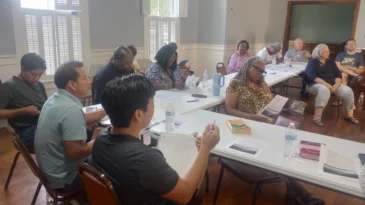
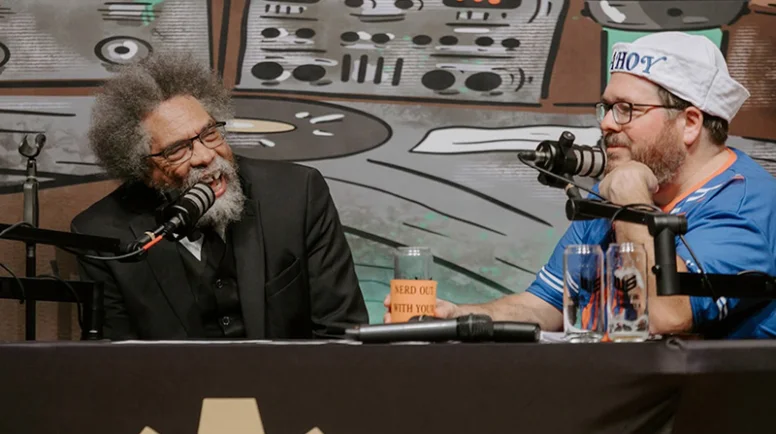
Theology Beer Camp, hosted this year at Pine Ridge Presbyterian Church in Kansas City, Missouri, brought 800 theologians, podcasters, pastors, volunteers and curious Christians together for three days of thought, discussion, and, of course, craft beer. Speakers including Cornel West, Diana Butler Bass, Presbyterian Grace Ji-Sun Kim, Kristen Du Mez, Jemar Tisby, and 63 other leaders joined live conversations organized by Homebrewed Christianity podcaster Tripp Fuller.
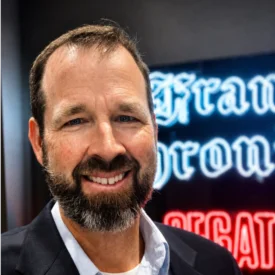
“Many of the people who come to Theology Beer Camp have been hurt, alienated or abandoned by the church,” said Pine Ridge pastor Chris Miller. “We got to play a small part in showing them it doesn’t have to be that way.”
But Miller believes the true test is over time.
“Camp was a moment,” said Miller. “Our strategic plan names the deeper work: a steady, visible presence in our community, so the welcome someone found that weekend is the same welcome they’ll find on an ordinary Sunday.”
Theology Beer Camp sounds odd, and it is. But this convocation of 32 podcasters — the God Pods — is also deeply intentional. It sought to create a blueprint for discussing faith, including all God’s children at the table, and to model a radically welcoming environment for people traumatized by harmful teachings who still love Jesus. For Pine Ridge, a Presbyterian Church (U.S.A.) congregation, the commitment to host was also highly intentional.
“When we wrote our five-year plan, we said hosting camp was a statement: that Pine Ridge isn’t afraid of hard questions, that we welcome the spiritually restless as well as the spiritually settled, and that the table we set has room for everyone, including people who aren’t yet sure they want to sit down,” Miller said. “The weekend bore that out. We love because God first loved us. Camp gave us a big, joyful chance to practice it.”
I wanted to be around people of faith who were thinking outside the confines of the institutions we so readily pledge fidelity to.
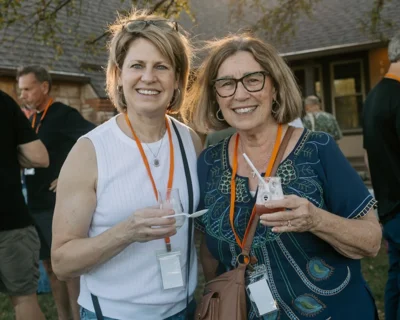
Jessica Commeret, pastor at First Presbyterian Church in Findlay, Ohio, came to connect. “I wanted to be around people of faith who were thinking outside the confines of the institutions we so readily pledge fidelity to,” she said.
“I’m a PC(USA) pastor, yes, but there is something happening in the Christian tradition as Christendom ends,” she reflected. “The liminal space is real, and we need to be paying attention to the small whispers and faint thread of God’s movement, calling us to openness and relationship.”
Fuller created the Theology Beer Camp concept a decade ago, bringing theologians to breweries for talks before realizing people would come to the theologians. It expanded from 15 to 150 people in the first year, and this year grew to 700 ticketholders plus volunteers and staff. In his opening remarks, Fuller did a deep dive on data from all the cohosts’ podcasts, finding the most repeated phrase — at over 10,000 times — was “I don’t know.” He couldn’t have been more delighted that so many people want to come to hear leaders say they don’t have all the answers.
“We’re a tradition that calls itself reformed and always being reformed. Questions aren’t a threat to that. They’re how it works. What many of us have taken for granted in the Presbyterian Church is a gift a lot of people have never been given,” said Miller.
The discussions in the sessions, hallways, and around the beer taps, made clear how challenging it is to share that gift widely, when louder voices use the name of Christ to preach an excluding and restrictive theology.
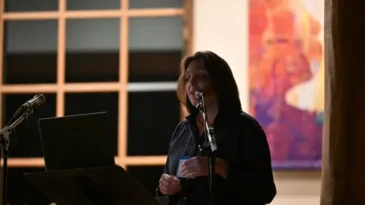
“The work of religion today is to keep us in the presence of what we cannot explain, to keep the question open when every instinct of the age is to close it,” Ilia Delio, a Catholic theologian and Franciscan sister, said from the stage.
Commeret said she found inspiration to push back against harmful theology in “the energy, the creativity, the lack of fear. The sense of God’s presence that knows not the boundary or constraint of human imagination.”
While the first night kicked off with Cornel West, Tripp Fuller, and 800 others singing “Billie Jean” as collective karaoke, the three-day event closed with a worship service including communion. The first song’s lyrics captured the moment: “For as long as I shall live, I will testify to love, be a witness in the silences when words are not enough.”
Being a witness is what led the Heartland Presbytery to encourage Pine Ridge to host. Theology Beer Camp is only held at queer-affirming churches that support inclusion, free thought and spiritual examination.
“I hope more presbyteries do what Heartland did,” said Miller. “They saw an opportunity, asked a congregation to step into it, and stood with us while we did.”
He added that hosting was not an easy task. “I chose to be present for the whole event, which meant several 18-hour days.”
“Beer on our campus alone could have been a dealbreaker,” he said. “Instead of looking for all the reasons it wouldn’t work, our session asked a better question: how can we do this faithfully and safely?”
While beer served as a conversation starter and side quest, the convention also included regular AA meetings and easily identified counselors available to talk with anyone who needed support with drinking or with the emotional trauma such as fearing their parents were taken in the rapture or being told they would burn in hell because they danced with friends. Volunteers with orange bandanas were always available, with quiet rooms set aside for conversations.
In his YouTube debrief, Fuller called Pine Ridge’s work “peak hosting,” and a model for all future venues. Podcaster Bo Sanders added, “They took their hosting, not just seriously, but personally. They were invested in us being there.”
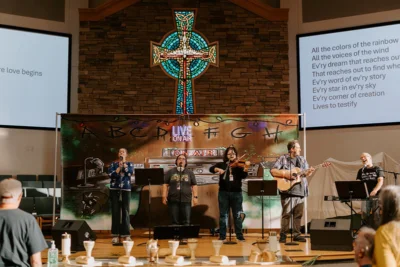
Miller recommends churches go further. “Don’t only host. Invite your people to volunteer, and to sit in on sessions when things are running smoothly. Camp is a gift to the host congregation too,” he said.
Besides long days, months of coordination and an all-out takeover of every space, there were challenges from outside the conference. On opening day, protesters from Westboro Baptist Church — an anti-gay, antisemitic hate group — showed up with signs targeting progressive Christians.
“That isn’t the welcome we want anyone to find at Pine Ridge, and I spent hours on the phone that day with concerned community members,” Miller said, adding, “It was also a reminder. This work matters. Being a voice against that kind of hatred matters. That evening, hundreds of people walked through those same doors to talk honestly about faith.”
After walking through those doors, Commeret said she now has “new theological teachers, resources and ideas that will help me lead and journey within my own tradition and congregation.”
She’s already sharing podcasts and planning community conversations that offer “nonjudgmental spaces for God to be bigger than we imagine.”
While factions struggle with how to identify as Christian at this cultural moment, Miller reminds us that connecting in person, at camp, can be galvanizing.
“Knowing something intellectually isn’t the same as having hundreds of people in your building, many still carrying hurt and trauma from their church experiences,” he said. “It isn’t the same as having someone cry on your shoulder, thanking you for showing them there are churches out there trying, even imperfectly, to do this work.”