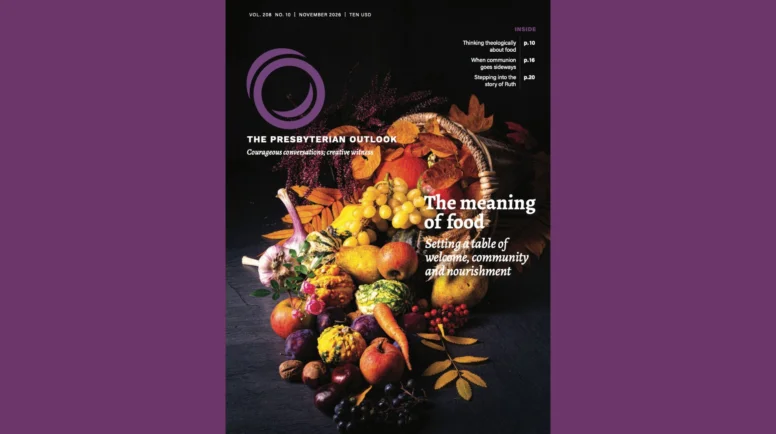
Thinking theologically about food by Norman Wirzba
Questions:
- What is a memorable experience of a friend sharing food with you? What was the occasion? What emotions were evoked? How did you respond?
- When have you shared food with a friend or neighbor? What was the occasion? What was the food you shared? How did the person who received the food respond?
- Reread the paragraph that begins, “Given the profound role that food plays in healthy cultures …” The paragraph ends with a thoughtful question. What are some thoughts you have for answering that question?
- The author offers many profound thoughts. What one or more sentences caused you to smile or say “Amen?”
Breaking, Disintegrating, Scattering by Larissa Kwong Abazia
Questions:
- The author writes of an unexpected occurrence during a conference closing communion service. What would you have done if you were an officiant of such a service? What thoughts might you have had if you were among the gathered worshipers?
- What is a communion service where you were the officiant that is most memorable for you? And/or what is a memorable communion service where you were one of the worshipers?
- Share some of what you understand to be the liturgical and theological meaning of a service of Holy Communion?
- Which part of the Communion liturgy is most meaningful to you? Explain your answer.
Communing without bread by Rachel Sutphin
Questions:
- How might our understanding of the Lord’s Supper change if we emphasize God’s grace before we participate physically?
- What could be some ways that congregations can accommodate eating disorders without unintentionally reinforcing avoidance?
- How might pastors and congregations better recognize hidden struggles people bring to the communion table? Are there ways to do this that preserve privacy?
- Beyond an invitation, what does an “open table” actually require of us?
Stepping into the Story of Ruth: Presbyterians discover the ancient practice of gleaning by Harriet Riley
Note to leader: It will be helpful to visit the website of The Society of Saint Andrew before discussing this article; you may also want to recommend that your group members check it out: endhunger.org.
Questions:
- Before reading this article, what was your understanding of gleaning? Were you aware of the Leviticus 19:9-10 law related to the practice of gleaning? How relevant do you think the Levitical law is to today’s culture?
- If you have checked out the Society of Saint Andrew website, what are some of your impressions?
- Take some time to read Ruth 2. What impresses you most about this narrative? What have you learned about gleaning?
- If you live in an area where there are farms, vineyards, or orchards, how might your church partner with one or more of them to form a gleaning program?
Come anytime. We have Tupperware. Bring some corn. by Dartinia Hull
Questions:
- What memories of meals with your family or other special persons are called forth by reading this article?
- What do you think the author means by the statement, “I make sure everybody knows how I feel about the colonizer rhetoric that fuels this day (Thanksgiving)?”
- What traditions shape how your family celebrates with meals on special occasions: Thanksgiving, Christmas, birthdays, or anniversaries?
- What are some ways your church can encourage or help facilitate neighborhood gatherings like those the author shared?