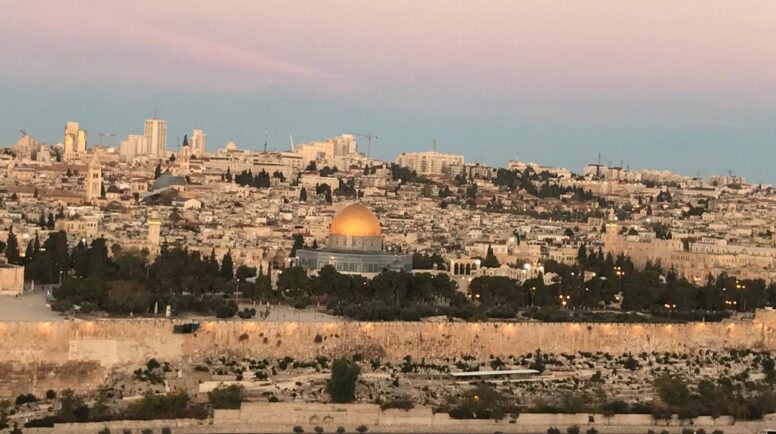
There are bridges that need to be repaired. Some are too worn out to be safe; yet every day we depend on them. They must be replaced sooner rather than later. Of course, I’m not only speaking about the infrastructure of our country’s highways; I am talking about the moral infrastructure of our common life in civil society. The relational fabric of our lives is in deep need of repair, restoration and rebuilding. The damage of the election cycle is serious and deep, creating a great need to construct new bridges and repair existing ones.
The church that is sustained by the crucified God whose reconciling love for all people was manifest in Jesus Christ can be a witness in these turbulent days – and not by speech alone. Bridge building is necessary – not only in this country but around the world – and it is certainly not the work of Christians alone. The work belongs to all people of faith and goodwill. One such group is Interfaith Partners for Peace, an organization to which I belong that brings together Jewish, Christian and Muslim leaders as partners for peace in local communities and on behalf of Israelis and Palestinians.
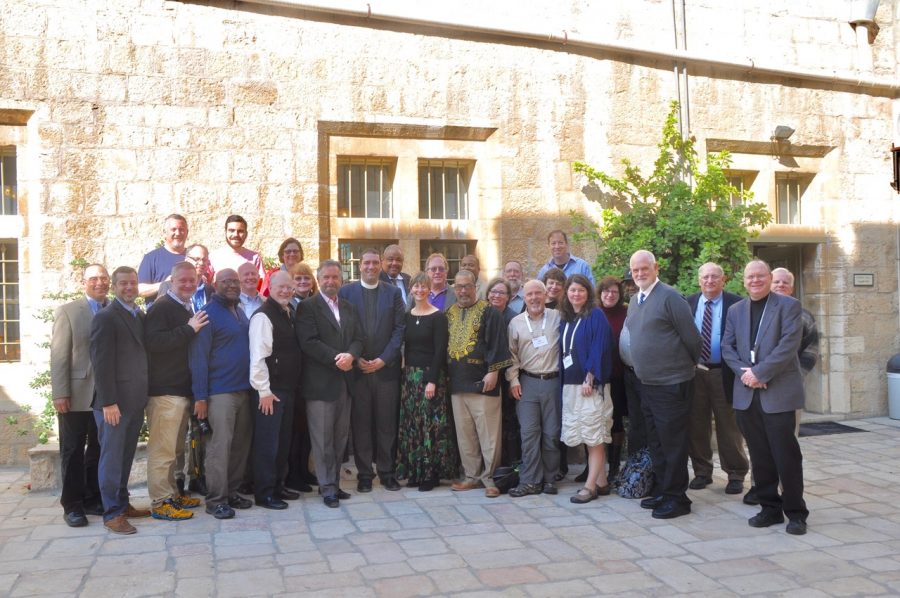
In early November, I traveled to Israel and Palestine with 27 other pastors and rabbis from across the country who are partners in their local communities. Never have I experienced as much hope for the possibilities of repairing relationships as I did on this trip. I cried frequently in grateful response to what we heard. My partner was Rabbi Greg Harris of Congregation Beth El in Maryland, someone with whom I’ve shared mutual ministry between our congregations for years. The goal of our visit was to listen and learn from Israelis and Palestinians – Jews, Christians and Muslims – as they shared their multiple narratives that often compete and collide. We especially were seeking people who are building bridges that foster new narratives that allow for hope in the face of despair and paralysis. It was an extraordinary experience that revealed stark despair, anger and fear that was countered by people daring to take risks in stunning ways.
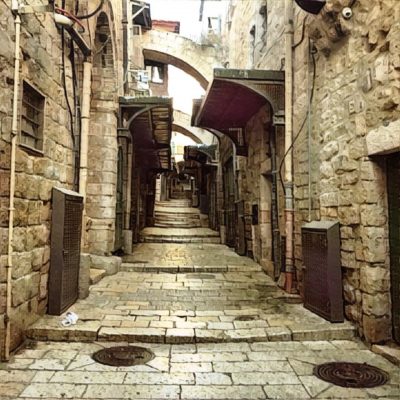
While I share just three examples, I must also say, in all candor, that no one we met in Israel or the West Bank is optimistic. Yet we met people who are hopeful in the face of the facts. This true hope, that runs deeper than sentimental optimism, is what gives them courage to do such bold things. It also challenges me to do the same across barriers that are much less daunting.
Shaul Yudelman is a Jewish teacher and settler who experienced the fear and anger of his local communities as they buried their dead from suicide bombings. He has joined with his enemy Ali Abu Awwad, a leading Palestinian activist and non-violent freedom fighter, to establish a center in the West Bank near a particularly violent checkpoint. It is here that Palestinian and Israeli families now share meals and their stories. They create programs attempting to mend relationships with people who both belong to the land that is holy. Neither has abandoned his people’s narrative, but both are trying to build a new one. I found it astonishing. As one rabbi said, “Tonight I stood in front of a man who identified himself as a terrorist and I looked into his eyes and I acknowledged his humanity and he acknowledged mine and I wrapped my arms around him and I felt guilt. I will go back and preach that story and remind people that every human being is capable of redemption, becoming greater than what they are.”
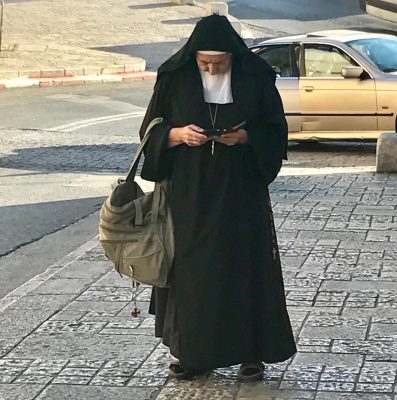
Hand in Hand (Yad B’ Yad) is an organization whose purpose is to build a shared society for Jews and Arabs in Israel through integrated schools and communities. There are now six schools in Israel, each with Arab and Israeli students who are Christians, Jews and Muslims, learning to respect each other. Imagine a child coming to school after a bombing or knifing. Each child learns the dominant language of Hebrew and Arabic. Imagine for a moment the power of language to build bridges of understanding. The teachers model a shared society and so do the students who shared their stories with us. While the wider society may be isolated from one another, this school is building for a future that will be different.
What might happen if Palestinians and Israeli children came together in face-to-face relationships over a long period of time? What bridges might be built? That’s the mission of Kids4Peace, dedicated to ending conflict and inspiring hope in Jerusalem, a very divided city. Their mission is to embody a culture of peace and build a movement for change. What an inspiration it was listening to a Meredith Rothbart (an Orthodox Jew) and Mohammad Joulnay (a Muslim Palestinian by birth and now an Israeli citizen) share the vision of this remarkably clear mission to build a new society from the simple act of bringing children of diverse backgrounds together.
We have much work to do building bridges of understanding. I learned from my experience that it’s possible to do the impossible – what may be lacking is the courage to try. I’m guessing we will have many opportunities going forward in our country. I never thought my teachers would be Israelis and Palestinians. I was left speechless with gratitude and the whole experience stirs my heart to similar hope and righteous action.
 Roy W. Howard is the pastor of Saint Mark Presbyterian Church in North Bethesda, Maryland, and the Outlook book editor.
You can learn more about Interfaith Partners for Peace at interfaithpartnersforpeace.org/our-statement.