 Ashley Hales
IVP Books, 192 pages
Reviewed by KJ Ramsey
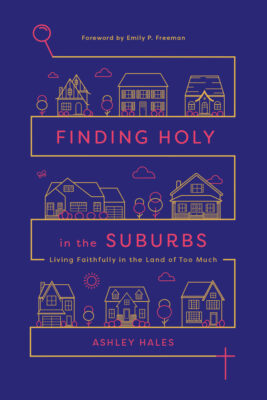
Hales offers a compelling invitation to live with purpose and meaning in the middle of the manicured lawns of the suburbs — not by pining after some amorphous ideal we wish we could achieve, but by attending to the reality that Jesus has already changed the world by offering us his presence. This month my husband and I relocated from the West to the gently curved, confusing streets of Charlotte, North Carolina, and after five years of finding my way by noticing the mountains to the west, I feel displaced. And though I have never lived in a suburb and have moved to yet another city, Hales’ book offered me grace to see my new surroundings as a place to find more than my own satisfaction. She writes, “I can never answer the needs of my neighborhood when I’m telling a story that has me at the center instead of us, and when home is a product of what I buy, and when worth is measured in square footage.”
Whether you find yourself situated in the suburbs or not, “Finding Holy in the Suburbs” will guide you to reevaluate your relationship with place. With wisdom borne of personal wrestling with discontentment, Hales exposes four idols common to life in the suburbs (and I’d argue, common to most Western Christians!): consumerism, individualism, busyness and safety. After exposing the ways these idols cause us to live in storylines that can never satisfy, she then points readers to the better story, in which we are held beautifully secure in the love of God. In the better “story of belovedness,” we can live with immense meaning right in the middle of communities that seem to scream we aren’t enough and, in fact, offer a fuller story of love and belonging to everyone we know through faithful presence in the small spaces of our lives. Hales invites readers to step into the fuller story of God’s love in the suburbs through chapters on hospitality, generosity, vulnerability and shalom. At moments the book feels repetitive, but perhaps in the repetition of its central themes it forces us to face truths we would rather gloss over.
Hales pairs honest confession of her own struggle to live rooted and free in her suburban calling and offers generous spiritual insight on practically being formed toward the wholeness she longs for. I particularly loved the way she encourages readers by example to engage their bodies as means to reorient their hearts. The forming of our loves does not exclusively happen with Bibles open but with our whole selves engaged in new habits of being. Each chapter pairs beautiful storytelling with a bold call to live more rooted and connected to our places and people therein, grounding spiritual repositioning in practical steps forward through “counter-liturgies” at the end of every chapter.
If you do not want to ask yourself hard questions, I recommend you don’t buy Hales’ book. If you only want to think theologically about place but don’t want to make actual changes, find a different book. But if you, like me, long to be grounded in a story where the light of God’s kingdom dawns in the faces of your neighbors and in your own humble choices to shift from selfish to secure, in “Finding Holy in the Suburbs” you will find room to repent and wisdom to actually sustain change.
KJ Ramsey is a writer, therapist and recovering idealist. She lives in Charlotte, North Carolina. You can find more of KJ’s writing at kjramsey.com.