 Plans for the virtual 2020 General Assembly continue to take shape — with the Committee on the Office of the General Assembly (COGA) voting April 30 to support a recommendation that would allow a group of special committees to keep working from now until 2022, as long as the committees meet virtually and incur no new travel costs except for their leadership to attend the 2022 General Assembly.
That would allow special committees that are doing work on behalf of the Presbyterian Church (U.S.A.) on subjects ranging from sexual misconduct to family leave policies to financial sustainability to continue their work — and to update their reports and recommendations “in light of the pandemic and its implications,” the recommendation states.
Another piece of that recommendation: that the Moving Forward Implementation Commission also continue its work for the next two years, but that its status be changed from that of a commission – with the power to act between General Assemblies – to a committee.
SOCIAL MEDIA
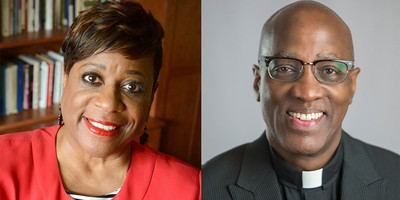
COGA also approved a new statement on social media — responding to at least one recent post on the PC(USA) Facebook page that was reported to the police and to the Federal Bureau of Investigation as a racist attack and a potential death threat against PC(USA) stated clerk J. Herbert Nelson.
The statement says that COGA “has been alarmed at the hateful postings on denominational social media pages, many of them racist and virulent against the Stated Clerk, and the neglect in eliminating the comments quickly.
“We respectfully request that whoever maintains the social media pages be required to moderate their content for violent, hateful, racist, and/or threatening comments in a timely matter.
“No such material should be allowed. Period.
“Should there not be the resources to allow for such close curating of those social media pages, we believe they should be removed or closed to unmoderated comments from the public until such a time the required supervision can be provided.”
COGA member Eliana Maxim said there’s been an increase in hateful and racist postings on the denomination’s social media pages, and “we have not seen the posts taken down in a timely fashion. … Some of these comments have been left up for several days. They should not even go beyond the five-minute mark, in my opinion.”
Diane Moffett, president and executive director of the Presbyterian Mission Agency, said PMA’s Office of Communication is responsible for supervising the PC(USA) Facebook page, but when a request is made to Facebook for comments to be removed, “it is in that process that there is a slowness sometimes to respond.”
Maxim said “this has been brought to the attention of the communications office,” but the response has been “they didn’t have the personnel, or they tried.” The most recent comment, involving Nelson, was “racist and could be categorized as a death threat,” and was visible on the page for more than a day, she said. “Until that department can find a way to effectively curate that page,” it should be closed to comments or taken down, she said.
Cindy Kohlmann, co-moderator of the 2018 General Assembly, offered an amendment to the statement, suggesting it say the protocol would be that all comments would be moderated before they were posted, so that people would feel free to leave comments but “nothing would be posted until it is cleared by the (communications) office.”
That approach might be easier for the staff, Kohlmann said, as “social media is 24 hours,” and hard to monitor round the clock. And “these kinds of comments – they’re sickening. Anything we can do so they don’t have a chance to appear I think is our first step.”
COGA voted to stick with the original statement, not to accept the amendment. The original approach gives the Office of Communication “flexibility to decide in their judgment what’s the best way,” Maxim said, including doing what Kohlmann had suggested.
When a threat is made on social media, the PC(USA) should take it “incredibly seriously,” said COGA member Wilson Kennedy. “We have an obligation to support our stated clerk.”
ASSEMBLY DETAILS
COGA, which has been meeting weekly via Zoom, acted during the April 30 meeting to approve four optional and virtual pre-assembly events:
- Small group gatherings for General Assembly commissioners and advisory delegates.
- The Poor People’s Campaign Assembly and Moral March on Washington, on June 20.
- A Youth Rising event, on a date in June to be determined.
- Bible study on June 24 at 7 p.m. Eastern Time.
COGA also voted to change its recommendation regarding special committees. Previously, it had recommended that the assembly in 2020 dismiss those committees with thanks, and forward their reports to the assembly in 2022.
Now, COGA is recommending that the special committees keep working virtually over the next two years, although if members resign, they would not be replaced.
“The reports and recommendations of the special committees that were submitted to the assembly for consideration are important in the life of the church,” the rationale for the recommendation states. “Unfortunately, the context in which those recommendations were created has changed significantly — COVID-19 has changed our world and our church in some known and yet unknown ways. We respectfully ask COGA to extend the terms of the special committees … to allow them to examine and possibly refine their recommendation in light of the pandemic and its implications.”
COGA also amended that recommendation to ask the assembly to change the status of Moving Forward Implementation Commission from a commission to a committee, also to allow it to continue its work for two more years. The Moving Forward co-moderators had sent a letter to COGA asking that Moving Forward continue its work as a commission through 2022 (Item F – Letter from MFIC).
Among the reasons Moving Forward gave: “We are deeply concerned by what we have seen over the course of many years including a history of management missteps at PMA and problems within PMAB (the Presbyterian Mission Agency Board) that have complicated the day-to-day operations of the agency. Though we are grateful to see the improvements that have emerged since Rev. Diane Moffett began her service as president of the Presbyterian Mission Agency, we believe there is much more that needs to be done. Similarly, there is evidence of real challenges related to ensuring diversity and inclusion across all of the agencies and entities of the PC(USA).
“MFIC is also concerned about the financial well being of the church, which we made evident in our recommendation that Mission Engagement Services (MES) become a part of the Administrative Services Group (ASG) and thus available to answer the financial sustainability concerns of both PMA and OGA (the Office of the General Assembly). These are not abstract concerns, but rather they represent urgent realities that continue to evolve in the context of the unpredictable background of a global pandemic.”
COGA, however, went a different way.
“For me, commissions are a big deal,” and the 2018 General Assembly gave Moving Forward a two-year timeline as a commission, said COGA vice moderator Stephanie Anthony, who proposed the amendment.
And both Nelson and Moffett spoke in favor of having Moving Forward work over the next two years as a committee but not a commission.
“This can be misunderstood,” Nelson said, but “I have to raise the question as to when is there going to be a time when I’m not gong to be micromanaged in this job” – there’s been a commission in place since the General Assembly elected him as clerk in 2016. “At some point, both Diane and I need to be trusted to do the work we’ve been called to do, and not have overseers.”
Moffett agreed, saying that she and Nelson have a track record of collaboration that will continue, and “our boards can keep us accountable. … We do know how important it is for our church to come together and work together. We have shown good faith in that. That’s not going to change. … We do not need a commission at all.”
COGA also received letters from the Rules of Discipline Task Force (Item E – Letter from RoDTF) and the General Assembly Committee on Ecumenical and Interfaith Relations (Item D – Letter from GACEIR).
It’s next scheduled to meet on May 7.