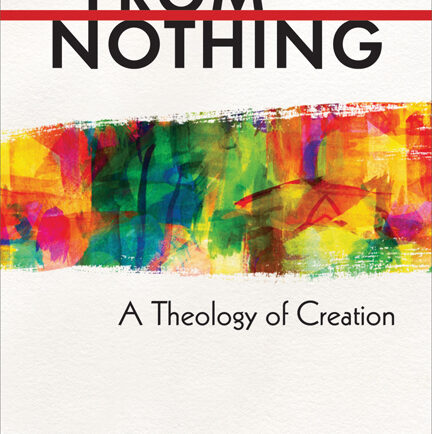
 by Ian A. McFarland
Westminster John Knox Press, Louisville, Ky. 256 pages
REVIEWED BY KEN KOVACS
The latest work by theologian Ian A. McFarland is a significant, groundbreaking theology of creation. It’s an example of rigorous theological reasoning done in service to the doxological and missional life of the church. For these reasons, it’s also a demanding text. Before he gets to the “practical” dimensions of his subject, we have to travel slowly, patiently, methodically through a sustained history and analysis of a theological idea: creatio ex nihilo. Creation from nothing — with a strict emphasis on nothing.
McFarland’s previous works explored theological anthropology. This turn toward the doctrine of creation is directly related to his foundational claim that “difference is central to human life before God, because God calls each human being to a different place within the body of Christ.” In order to ground “genuine theological significance to the differences that mark us as human beings before God and one another,” a more profound theology of creation is required. And so McFarland goes back to the beginning, as it were, to one of the earliest Christian understandings of creation.
In 180, Theophilus of Antioch wrote to an unnamed pagan, “God brought everything into being out of what does not exist, so that his greatness might be known and understood through his works.” It appears as if creation ex nihilo emerged early in Christian thought, but compared to other foundational beliefs, it took much longer to take root and grow. Although he provides an astonishing tour through the church’s engagement with the idea (especially Thomas Aquinas and Process theologians), McFarland is less concerned with the history of the concept than the theological implications of creation ex nihilo. What does it mean to be creature and how does ex nihilo inform our image of God as Creator?
McFarland argues that the “creation is not a great chain of being,” with some parts of creation ontologically closer to God than others. “The classical Christian doctrine of creation suggests that the most theologically significant thing that can be said about any creature is simply that it is not God and, as such, no closer to or farther from God than any other creature.” While remaining distinct from creation, the transcendent God is sustaining, upholding and, therefore, still creating — and in doing so creates space for the flourishing of all creatures. Seeing a corollary here in the way Chalcedon attests that God is present in Jesus, McFarland, significantly, grounds creation ex nihilo in the second person of the Trinity. “[C]reation from nothing implies that God is already maximally ‘inside’ the world: since God’s sustaining presence is the one necessary and sufficient condition of every creature’s existence at every moment of its existence, any degree of divine absence would result in the total and instantaneous dissolution of created being.”
Theology done well should lead us toward doxology. The book concludes with a magnificent theological reflection on the telos of creation — glory. McFarland leads us through a rich and fascinating discussion of worship, the use of icons, and a theology of the Eucharist that helpfully enriches (and critiques) some of our Reformed sensibilities concerning the Lord’s Supper. “From Nothing” is theology done well.
KEN KOVACS is the author of “The Relational Theology of James E. Loder: Encounter and Conviction” and the pastor of Catonsville Presbyterian Church in Catonsville, Maryland.