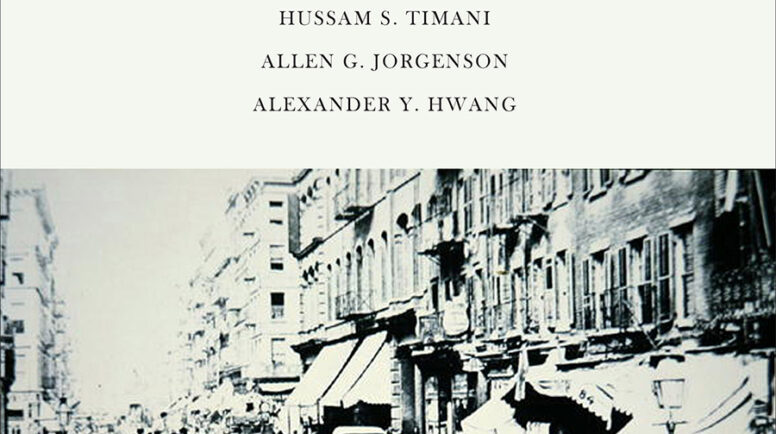
 Editors: Hussam S. Timani, Allen G. Jorgenson, Alexander Y. Hwang
Fortress Press, Minneapolis. 318 pages
REVIEWED BY NICHOLAS YODA
G.K. Chesterton spoke of how we should never remove a fence before we are sure of the reason that it was put there in the first place. Such a statement is easily invoked for its wit and charm in times such as these. The larger question that is rarely asked is: What if that fence was never intended to be there in the first place?
As I write this review, reports of death and destruction in the wake of the Paris attacks and beyond are fresh. We are palpably reminded of Christ telling a few in the inner circle, “When you hear of wars and rumors of wars … for nation will rise against nation, and kingdom against kingdom.” Some even react by calling on the need for more fences, more boundaries and more borders. I was personally overtaken by grief when 23 governors stated that they do not want Syrian refugees in their states. I am quickly reminded of the U.S. reaction
in 1939 when over 900 Jewish refugees arrived in our waters and our answer was to send them back to Germany, a move resulting in the death of over 250 at the hands of the Nazis. So much for the mythology that Lady Liberty stands upon: “Give me your tired, your poor, your huddled masses yearning to breathe free.”
In light of all of this, such a gathering of essays bound together in the book “Strangers in This World” could not have arrived at a more axial moment. This community of scholastic reflection is a geometrical progression of texts that allow many voices to share their own studies and narratives in sacred space as they weave together a tapestry of theological, contextual and cultural issues concerning immigration. This is a timely volume that, at its core, tries to capture the journey of the stranger (“refugees, strangers, aliens, exiles; tourism, migration, immigration; migration as chosen and forced; travel; pilgrimage and the religiously inspired mission; travel compelled by economic, political, and religious pressures,” according to Francis X. Clooney, SJ) and the responsibility of the host as we struggle with the fundamental questions that all religions, countries, cultures, and contexts wrestle with: “Who is my neighbor?” and “How are we to be hospitable?”
As we continue to ebb and flow within a world that continues to be caught in the mire of economic, political and religious pressures that both cause and call persons to literally become “strangers in the world,” there is a growing imperative that we take the time to step back and reevaluate our questions, assumptions and concerns around immigration. Beyond just pondering the issues of law and policy, spirituality and morality — we need to see that at such a time as this, our own humanity is at stake when it comes down to how we choose to encounter and welcome the stranger within our midst (or not). “Strangers in This World” becomes the perfect launch pad for such a conversation and pilgrimage. In the words of the Christ: “Just as you did it to one of the least of these who are members of my family, you did it to me.”
NICHOLAS YODA is the pastor of Pleasant Ridge Presbyterian Church in Cincinnati.