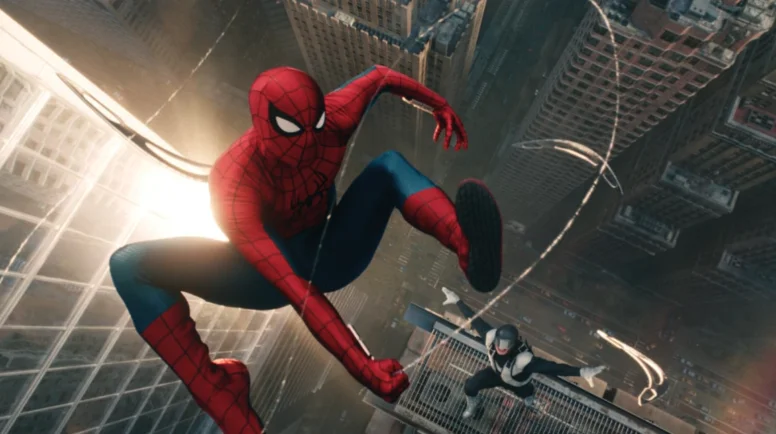
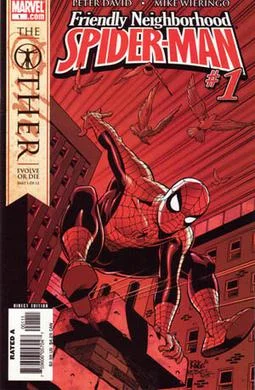
In the first issue of Tom Taylor’s Friendly Neighborhood Spider-Man comic miniseries, Spider-Man narrates that he knows exactly what it’s like to be scared — so afraid that it seems impossible even to move. Yet he says, “But then, there’d be a scream. Something that needed my attention more than my fear. Something more important than my safety. And so, I’d jump. It’s what I do. I’m Peter Parker … I’m your friendly neighborhood Spider-Man.”
Spider-Man is not an omnipotent alien crash-landed on Earth. He is not the heir to immense wealth with seemingly endless resources for creating superpowered gear. He is not a super-soldier highly trained in combat and military tactics. Spider-Man is Peter Parker, an ordinary public high school student who lives with his extended family. When his Uncle Ben – his father figure – is killed while Peter is 15, Peter resolves never to stop trying to do the right thing.
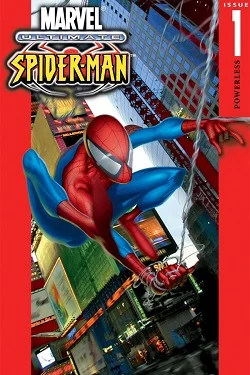
When I read the first issue of Ultimate Spider-Man as a second grader, I connected with Peter more than any other fictional character I had encountered. As I grew up, that connection deepened. Like Peter, I was raised not by a traditional nuclear family but by my mother and grandparents. At 15, my world was shattered when my father died by suicide. I attended public high school, where I experienced my share of bullying. As an adult, I have always rented rather than owned my home. The biggest difference between Peter Parker and me is that I have never been bitten by a radioactive spider that granted me superhuman abilities — nor do I plan to be.
Growing up in a church culture that emphasized being “in the world but not of the world,” I was discouraged from engaging too deeply with secular media, which was often considered corrupting. It wasn’t until adulthood that I recognized Spider-Man as one of my first ethical teachers. Through the comics, television shows and films I eagerly consumed as a child, I was learning what it meant to “learn to do good” (Isaiah 1:17), “do justice” (Micah 6:8) and “love your neighbor” (Leviticus 19:18; Matthew 22:39; James 2:8). Much of my moral imagination has been shaped by Spider-Man’s defining maxim: “With great power comes great responsibility.”
Though this guiding principle has been interpreted in many ways, the familiar version omits words that appeared in Spider-Man’s debut comic in 1962: “With great power there must also come — great responsibility!”
These original words by Stan Lee make the “Peter Parker principle” more than a statement about the nature of power. They are a moral imperative that holds people accountable for how they use power. Responsibility and accountability are not inherent in possessing power, no matter how extraordinary that power may be. Spider-Man’s villains illustrate this truth again and again.
Otto Octavius possesses a brilliant intellect and powerful mechanical arms fused to his body. Yet he uses these gifts to manipulate others, demand recognition and exact revenge as Doctor Octopus.
Norman Osborn commands a powerful corporate empire and possesses superhuman strength, agility, speed and durability. Yet he uses his power to accumulate even more wealth and influence while sowing chaos as the Green Goblin.
Both wield extraordinary power through their intelligence, wealth and abilities. Yet neither accepts responsibility for how that power is used. Rather than acknowledging the harm they cause, they blame Spider-Man for thwarting them. Their desire for revenge traps them in a cycle of violence that disregards the collateral damage inflicted on innocent neighbors.
Across decades of stories, it is tempting to see Spider-Man as the opposite of his villains. Yet the first comic tells a more complicated truth. Shortly after he comes into his powers, Peter pursues fame and fortune as a masked wrestler. When a fleeing burglar passes him after a television appearance, he doesn’t intervene, which ultimately leads to Uncle Ben’s death. Peter could have blamed the world and embraced the same cycle of resentment as his enemies. Instead, he accepts responsibility for his failure and commits himself to preventing such tragedy whenever he can.
Whether wearing the mask or living as Peter Parker, he strives to love his neighbors in both ordinary and extraordinary ways. He tries to do the right thing, but he does not always succeed. When he fails, he accepts responsibility, learns from his mistakes and resolves to do better.
Even when helping others seems impossible, he clings to hope and serves those around him, regardless of the odds. Though he possesses remarkable abilities, he understands that the future is never predetermined. It is shaped by the choices he makes with the gifts he has been given.
The greatest lesson I have learned from Spider-Man is deceptively simple: Whether I possess great power or not, I am called – as we all are – to choose the good that supports my neighbors. My responsibility is not measured by my abilities but by what I choose to do with them. I still hold out hope that, like Peter Parker, I can keep showing up, keep choosing my neighbors over my fears and keep trying to do good, even when the path before me is uncertain.