In the 1920s, my father’s parents (Beatrice and Edgar) emigrated from Scotland to the United States. Passing through Ellis Island, they moved into an apartment at 94-13 Jamaica Avenue in Queens.
My grandfather was a journeyman carpenter who plied his trade in the New York shipyards. My grandmother was a clerk at Bloomingdale’s.
They were pursuing the American dream. It was a tough slog. They scraped to raise three boys: Robert (the eldest), my father Malcolm, and then Neil.
Then tragedy hit. My grandparents’ firstborn, Robert, was killed when he fell onto the subway tracks and touched the third rail. It was terribly difficult time for the whole family, especially my grandmother.
In telling this difficult story, my dad’s voice would get low and quiet; until he would speak of the one oasis the family knew in this hard time. When Robert died, the local Presbyterian congregation encircled the family.
Throughout the season of my grandmother’s grief, the church plugged my dad and his younger brother into their theatrical productions. The church also wove the boys into their sports programs: baseball and basketball. My dad’s eyes would really light up when he explained that the church that embraced them “had a bowling alley in it!”
Last spring, I visited my friend Patrick O’Connor, pastor of First Presbyterian Church in Jamaica, Queens. We talked about what Presbyterians always seem to talk about: the things that threaten to divide us, and our hopes that it could all be different.
My friend walked me around the neighborhood. As we turned onto Jamaica Avenue, I remarked that my grandparents belonged to a Presbyterian church in the borough, but I didn’t know which one.
“All I remember,” I told Patrick, “is that the church had a bowling alley in it.”
“Scott,” Patrick said, “this is the only Presbyterian church in Queens that has a bowling alley in it!” He checked. Sure enough. In the church’s records, he found the baptismal dates for my father and both his brothers.
A few months ago, Patrick invited me to preach at First Presbyterian Church in Jamaica. The church, planted in 1662, was celebrating its 350th birthday. It was a rollicking party of a worship service.
My grandparents might not recognize their old church.
The pipe organ was silent. Music was projected on a big screen and accompanied by trumpets and drums. Three liturgical dance troupes performed. It’s a different congregation with a different style of worship. Long gone are the faded blue-jean eyes of the Scottish immigrants. In their place are the deep brown eyes of the African-American, Afro-Caribbean, and Latino/a families that live in the neighborhood.
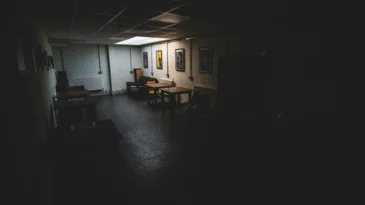
Youths from these families were prominent in the pews. Patrick tells me that they come to the church to play basketball and volleyball, to get tutoring and computer training, to eat at the multi-generational meal served every Thursday night, and to discover a worshipping community full of energy and love and wisdom.
Come to think of it, I bet my grandparents would recognize their church.
Standing in that pulpit this past Sunday, I looked down at the baptismal font that had claimed my dad and his brothers and probably most of the young people currently in that sanctuary, and I thought, not much has changed. Not much at all.
First Presbyterian in Jamaica still shelters the people of its neighborhood with the good news of Jesus Christ. It is still making the promise of baptism so very real.
Thanks be to God.
SCOTT BLACK JOHNSTON is pastor of Fifth Avenue Presbyterian Church in New York.