

In the wake of staff cuts at Columbia Theological Seminary and Presbyterian Life & Witness, William Yoo calls for greater transparency, accountability and care from the institutions that serve the PC(USA).
Scott Anderson argues that Christianity offers a way to think about markets, government and economic justice beyond the tired binary of capitalism and socialism.
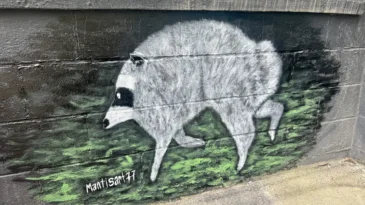
Meet Jimothy, the internet's new favorite raccoon, who can teach us that delight is more than a distraction — it's a spiritual practice, writes Brittany Harrold Porch.

As Katy Shevel prepares for a sabbatical, Ruth Haley Barton's vision of Sabbath reshapes her understanding of rest — not as self-care, but as a rhythm God intends for the whole church.

Following the General Assembly's referral of a proposed monogamy requirement, Jacob Douylliez reflects on why patient discernment has long been central to the church's search for truth.

Brendan McLean explores how Spider-Man taught him lessons about responsibility, service and loving his neighbor long before he recognized them as Christian morals.

"Class of 2026, receive this final blessing with some help from George Strait, Sabrina Carpenter, Ella Langley, Wendell Berry, Pope Francis, the prophet Micah and Lil Wayne," writes chaplain Maggie Alsup.

When misinformation fuels disease outbreaks and deepens inequality, science denialism becomes more than an intellectual debate. It becomes a social justice issue that Christians cannot ignore, writes Elizabeth Haswell.
In the wake of the PC(USA)'s condemnation of Christian nationalism, Matthew B. Warren explores how Presbyterians can love their country without confusing it with the kingdom of God.
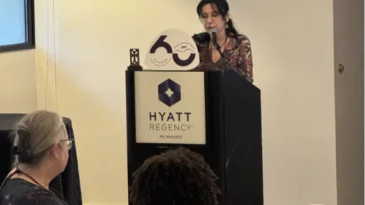
As the Jinishian Memorial Program marks 60 years, Greg Allen Pickett explores what its long commitment to local leadership and civic formation can teach the church about mission.
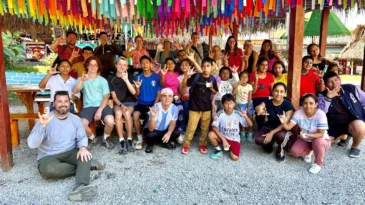
Acknowledging the grief surrounding the closure of World Mission, Brittany Harrold Porch reflects on a recent trip to Peru and offers a hopeful vision for the future of Presbyterian global partnerships.

Drawing on his experience serving a congregation after a pastor's sexual misconduct, Joel Moody argues that CON-06 would establish clearer expectations for restoration, strengthen accountability and ensure survivors' voices are heard.

As GA227 experiments with a new gathering space, Greg Allen-Pickett considers what the Town Square might reveal about connection, community and the future of in-person assemblies.
As GA considers CON-10, David W. Congdon argues that neither Scripture nor Reformed theology requires monogamy and that God's abundant love offers a foundation for affirming polyamorous relationships.
As GA227 considers CON-10, Alexander Haines argues that marriage's exclusive covenantal bond reflects God's faithfulness to the church and should remain the standard for Presbyterian ministers.
The authors of three overtures before GA227 contend that the abrupt closure of Presbyterian World Mission damaged global relationships and demands a broader conversation.
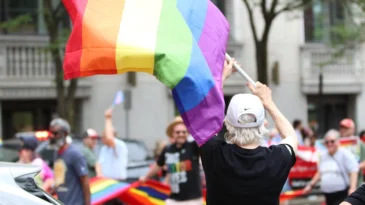
After encountering both condemnation and compassion at Cleveland Pride, Matthew Skolnik considers what faithful Christian witness looks like in the public square.
Recent General Assemblies have strengthened policies on sexual misconduct. The church must now ask whether those reforms are consistently serving survivors. — JoAnne Sharp
ORD-03 invites the PC(USA) to study collaborative approaches to ordained ministry that could strengthen congregations, support pastors and renew the church's connectional identity, writes Lyndsey McCall-Gilliam.
Historian and missiologist Stanley H. Skreslet reflects on Christian witness as the PC(USA) considers creating a new missiological statement.

Pastors often leave boundary training knowing the rules but still struggling with conflict, anxiety, and burnout. A new model in the Synod of Lincoln Trails aims to change that, writes Rebecca Blair.

Artist and mother Merideth Hite Estevez discovers that creativity — and grace — are often born in life’s glitter-covered chaos, where God meets us in the messy work of mending.
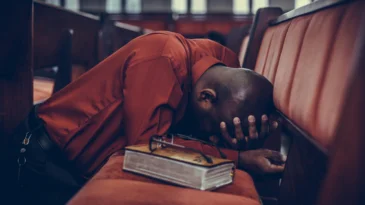
In this reflection, Brenda Moten explores how posture, humility and memory shape the way we pray.
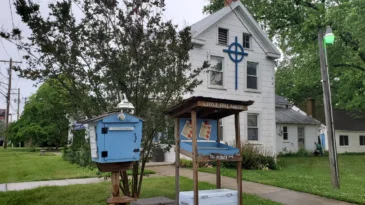
A small congregation discovered unexpected community – and new possibilities for fellowship – with neighboring Buddhist monks, writes David Williams.
Tara W. Bulger reflects on her daughter’s difficult question about evil. What is the role of prayer when tragedy defies explanation?
© Copyright 2026 The Presbyterian Outlook. All Rights Reserved. Privacy Statement. Website by Web Publisher PRO