I didn’t grow up going to church. As a high schooler, frustrated and confused, I went on a mission trip to Mexico only because I had some friends that were going, and hey, it was a cheap trip to a sunnier place. The work was mostly construction: students were working with locals to put up the cinderblock walls of a school. My job at the site was to shovel sand. I remember we’d start early in the morning, and as I dumped each absurdly heavy shovelful into the wheelbarrow, the sun crept higher and higher until I was drenched in sweat and completely exhausted by noon. Taking a break, drinking water, sensing the soreness in my muscles and tenderness of the raw skin on my hands, I remember feeling something I hadn’t felt in a long time: I was happy. I felt content. I felt good. What was happening? I was far from the routine of home, I was more tired than I’d ever been and wasn’t even getting paid.
If I have a “call story,” this is it. In that moment, I realized that there was something about service that made profound sense to me, and the calm contentment it provided led me to explore the God leaders of the service trip had been talking about but that I had, until that point, ignored.
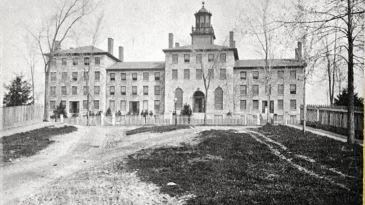
Fast-forward 10 years: I’ve been a student at Princeton Theological Seminary for a few months, on track to be ordained in the Presbyterian Church (U.S.A.). I’ve registered for classes, landed a job and found the best bars and diners. But something was missing. As I met student after student and we talked about why we were here and what our visions were for the next generation of church, a common trend emerged: Service for many students, as it had been for me, was a central part of their faith narrative. Community engagement was a major part of the journey that led them to seminary. Volunteering was a distinguishing feature of the development of their beliefs. Outreach is what they saw when they imagined the future church: an institution deeply connected with the real hurts of the world, a church working to feed the physical as well as the spiritual hunger of its community. Why then, as I filled my schedule with all the prescribed requirements for ordained ministry, was any sort of service work so conspicuously absent? 
Was there an absence of service because there wasn’t a need for it in our community? Certainly not! Princeton has its vulnerable families and struggling youth like any other town in America, and its needs are plain to see for anyone that’s looking. But if the needs of a wealthy town aren’t compelling enough, go just a few miles to the neighboring city of Trenton, one of the more underserved cities in America. The need for intentional service and engagement there is all too clear.
Was there an absence of service because students just didn’t care? Absolutely not! I’ve spoken to many prospective students, and the question I hear over and over is some form of: what’s community engagement like at Princeton Seminary? I don’t want an ‘ivory tower’ experience, spending all my time with books and papers.” Service is what compels many students to apply in the first place, and many students already here are on the lookout for meaningful ways to get involved.
Is there an absence of service because students don’t have the time? No! While it’s true that seminary is a busy place and students have many different commitments, there will always be time for the person who makes time. If we make service a priority, and think of it as an essential piece of our education and spiritual development, there’s no reason it can’t be done by organized groups of students, or even integrated with the daily life of the school: classes, field education placements and service trips/retreats.
There is an absence of service at seminaries across the country, not because of a lack of need, or concern, or time, but a lack of unified vision. Students, professors and administrators alike need to stop thinking of service as something “extra,” something “nice” that students can do in their free time and begin thinking of it as an essential component of their training to be leaders in an ever-challenging and ever-changing ministry career. Consider this: every year, thousands of young people apply for jobs with Teach for America, AmeriCorps and similar service programs. These young people, religious or otherwise, are clamoring for a chance to give back, even for little or no pay. Most colleges and now even high schools require some service work, and more and more students are inspiring their parents and friends to get involved in what has become a cultural shift in education. What if churches across the country were similarly engaged with service efforts? Wouldn’t that church be more compelling to this generation of volunteers than the dogmatic, out-of-touch place many perceive church to be?
Pastors and seminary students of my generation already have this vision for church: a vision of an institution deeply invested in issues of justice and equality, service and community engagement. If this vision is ever to be fully realized though, we will need skilled leaders for whom this work is a major priority. Leaders who believe that God calls them and their congregations to address the physical needs of the vulnerable and to be transformed by that work. Leaders who know how to build community partners, who see where and how the work needs to be done, and who can stay organized and on task for the long run. It won’t just happen: many seminary students have experience with service, but there are skills they need to develop when it comes to starting and leading service efforts in new places, new callings. They need the opportunities to develop these skills now, in seminary, where collaboration, the exchange of ideas and the support of fellow students are in ample supply.
Today, I am exactly halfway through seminary. In a year and a half, I’ve seen a group of like-minded students organize and implement a structure of service at Princeton Theological where interested students can plug into a number of different organizations: we’ve partnered with homelessness relief organizations, after-school programs, urban gardens, LGBT advocates and food security initiatives, just to name a few. We were on the ground just two days after Hurricane Sandy, organizing donated food and clothing, clearing trees and comforting displaced individuals. We’ve raised thousands of dollars to keep families in homes and we’ve only just begun to get this movement off the ground.
The need is real: the need for engagement, the need for conviction and the need for a more unified vision of what Christianity looks like in a country where fewer young people care about religion but increasingly care deeply about service. Working together, students from seminaries across the country can build this culture of service, and together we can change the way everyone thinks about seminary, pastors and ultimately about church. We can define religious life in America as something necessarily connected to the compassionate exchange of goods, ideas and experiences across boundaries and social lines rarely crossed otherwise. Working together, we can create a cultural shift that ripples and spreads, growing stronger all the time.
Nick Ison is a student in the M.Div. program at Princeton Theological Seminary, having been shaped in his faith especially by Second Church, Indianapolis, and the Broad Street Ministry in Philadelphia. He is a founding member of Community Action Network (CAN) and a Community Engagement Fellow.