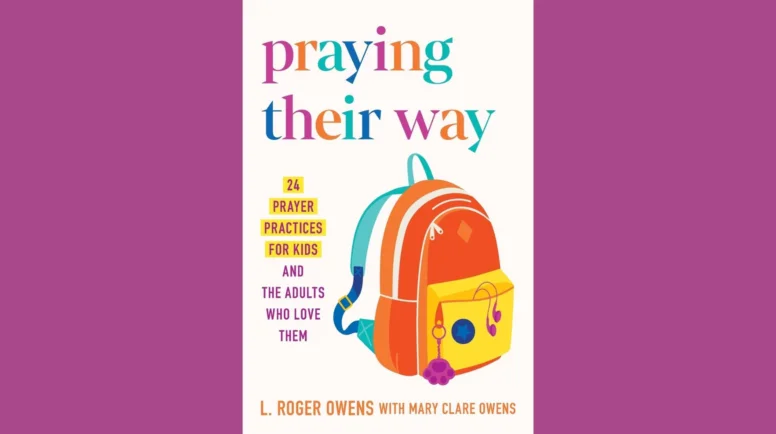
What led you to write a book together, as father and daughter, about prayer?
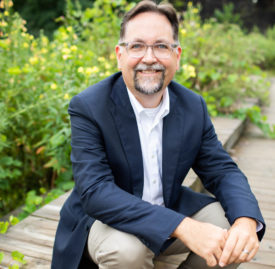
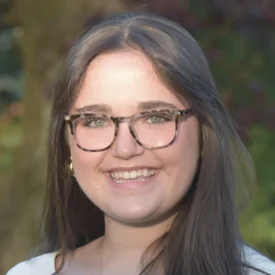
Roger Owens: Even as a pastor and a professor teaching spiritual formation, I didn’t always feel comfortable and confident talking with my kids about prayer. As Mary Clare got older, and I’d put her to bed, we’d talk about God and prayer – the spiritual life – and her curiosity and questions forced me to think about how to teach a kid to pray and let their own curiosity guide the conversation. When she was about twelve, someone gave her a book with mindfulness practices for kids. And I thought, “Where is the book like this about prayer that is simple, direct, and helpful for adults and kids alike?” So I asked Mary Clare if she wanted to work on one with me.
Mary Clare Owens: And I said yes!
What did you learn about each other working on this book?
Mary Clare: I learned my dad is good at explaining things about God and prayer in a way that’s accessible, and even funny. When I read what my dad wrote, I think, yep, that sounds just like him.
Roger Owens: I think I’ve always known Mary Clare has a big, compassionate heart and a real desire to know God. In writing her reflections, she allowed herself to be honest and vulnerable. She’s funny too, and wise. I’d read what she wrote, I’d sense I was in the presence of an old soul.
What did you learn about prayer?
Roger: Writing this book has helped me to remember that there are no experts in prayer. When you write books on prayer, people can start thinking you are an expert. You might even start thinking that you are one! But over the few years it took us to write this book, I was able to remember that no one has all the answers — especially me. And even now, my prayer life feels like it’s in transition, and I’m not sure where God is leading. And so I’ve found myself going to some of the prayer practices in the book that aren’t my usual way to pray and experimenting. I’m learning that we never get to a place in prayer and say, well, I guess I’ve finally arrived.
Mary Clare: I learned (as my dad writes in the book over and over) that there’s no right way to pray. When I was little, I’d sometimes wake up early, and I’d see my dad praying in the basement, so still and quiet. So I started thinking praying meant being still and quiet. Well, that can be hard for a kid, so when it was hard for me, I thought I was doing it wrong. Working on this book and exploring different prayer practices have helped me see that I wasn’t a failure.
Of all the prayer practices you write about in Praying Their Way, which resonate with you personally?
Roger: I’m most drawn to the prayer practices in the chapter called “Ways to Pray That Are Quiet.” That chapter includes a practice that repeats a prayer word, and I’m very comfortable with how it stills me in God’s presence. There’s also a practice that uses the imagination to bring someone you know and love into God’s presence, even if you don’t know what words to use.
Mary Clare: In the “Praying for Justice” chapter, I resonated with the prayer practice about homelessness. I’ve always felt a lot of compassion when I see people on a street corner who are homeless, and this practice gives me a great way to pray for them and do something to help.
What is your hope for this book?
Mary Clare: I hope it reaches kids, not only those who feel close to God, but also those who feel distant from God. I hope it helps those kids feel like they have practices that can help them connect with God, even when God feels far away.
Roger: I just hope that adults and kids will feel increasingly welcome in God’s presence. I want kids to feel safe and secure in God’s love, comfortable like they would feel in the presence of a really great friend. For adults who use the book, I hope they also feel a little more confident with their prayer and more comfortable talking and leading their kids. If they used to say, “Who am I to teach someone about prayer?” I hope that after using this book, they can affirm that prayer – practicing it and talking about it with their kids – is the most natural thing in the world.