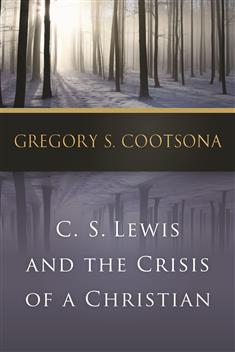
 by Gregory S. Cootsona
Westminster John Knox Press. Louisville, Ky. 169 pages
REVIEWED BY C. JEREMY CANNADA
Whether you have read C. S. Lewis’ writings extensively or know him only as the author of the beloved Narnia series, this book will speak to you. After reading it, individuals who have read Lewis’ works may rekindle fires of imagination and intellect and persons who have not read works by St. Clive (Cootsona’s affectionate nickname for Lewis) may be inspired to discover him. By blending biography, autobiography and theology, Cootsona encourages the reader to ponder his or her own life crises — those moments that dramatically affect a person either positively or negatively. Each chapter is brief, averaging approximately 15 pages. Despite this brevity, this book can aid the reader to put a mirror in front of his or her own face to consider who God is, how God works and God’s love and grace.
Cootsona introduces the book with a biographical sketch of Lewis to provide a structure for the three subsequent sections that focus on particular “crisises” of faith. By introducing Lewis’ life in this manner, any reader — whether he or she is knowledgeable or not about Lewis’ lifetime — will gain insight about what formed, shaped and expanded Lewis’ Christian journey. I found myself reflecting on my own past and pondering my crisis moments.
Section one, “The Crises of Atheism,” read slowest for me simply because it blended timeless theological information with historical fact. Cootsona acknowledges the necessity of this section because the following two depend upon this one. This section’s chapters communicate easily to those who understand theology, philosophy and literary vocabulary. For instance, they include discourse about primary and secondary causes, which may initially prove difficult to understand for anyone who is unfamiliar with theological usage of those terms. Also, chapter two speaks about Sehnsucht, a term Lewis loved and that takes some getting used to (Cootsona defines it prior to using it extensively).
The next two sections, “The Crises of Christian Faith” and “The Crises of Human Life,” span the remaining five chapters of the book; they speak to the ministry and pastoral side of C.S. Lewis’ crises. Both contain chapters that communicate issues facing congregations all church staffs will encounter. Questions involving Christ’s place in this world, God’s goodness despite evil and matters of suffering and death are the sort that Christians ask regularly — then, now and in the future. Cootsona shows Lewis’ intellectual and spiritual struggle with these questions; he provides insight as to Lewis’ mindset and faith as he sought to explain these in a timeless manner for Christians and non-Christians alike.
Cootsona’s book invites us to step into the wardrobe of Lewis’ past, his personal theology and his apologetics. Upon reading it, I found myself in a new and wonderful place. We are invited to learn more about St. Clive, and we come away (selfishly) grateful for the crises that pushed him to come to God, defined him as Christian, and left us with a literary and theological heritage that still rekindles and inspires Christians, even 51 years following his death.
C. JEREMY CANNADA is the pastor of the Amelia Presbyterian Church in Amelia, Virginia.