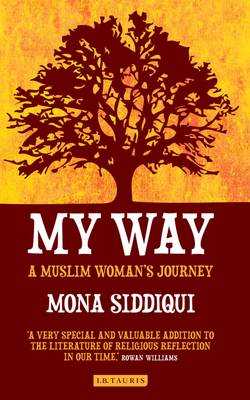
 by Mona Siddiqui
I.B. Tauris, London. 222 pages
REVIEWED BY LAWTON POSEY
“Religious faith doesn’t always provide assurances, but there is no substitute for faith in God.”
Mona Siddiqui teaches divinity and other subjects at the University of Edinburgh, Scotland. She is a distinguished scholar and has written a number of books on Islam and its relationship with the modern world and other religions. She speaks to Muslims and Christians both in this complex and moving book.
Born in Karachi, she has adapted to Western ways and has become familiar with Christian faith. How could she not, since she has in her classes students preparing for ministry in the Church of Scotland! At the heart of her theological approach is her understanding that while Muslims and Christians may indeed worship one God, there is a broad distinction that may be made in these ways.
For Islam, God speaks via prophets, among whom are Muhammad, Jesus and Moses. When hostile groups raise voices and guns, these names and the actual teachings of the Qur’an are seldom mentioned. If sacred texts are mentioned, they are most often used selectively. For Christians, Siddiqui says, God is most present to believers in the person of Jesus, who is God incarnate. She knows that Christians often confront the world, the flesh and the devil by throwing selected texts at them! She also knows the creative and salvific purposes of the Christian faith. She does not despair, for she sees that even though Muslims and Christians understand the workings of God in different ways, there is much common ground. Under the right conditions, a common belief in God can anchor any discussion.
Her question: Even if there is common ground, will practitioners of these two faiths lay aside their dogmatic leanings and seek to relate to each other? One example about current dialogue has the ring of truth. The participants are usually males; female voices are seldom heard. As a woman with strong academic credentials, she is surely owed a place at the table of dialogue. She thinks that things could be very different. Can they truly become different? As her book moves through various themes, her discussions of such topics as marriage, desire and sex open up the ways in which Islam, broadly understood, can clear the air for discussion. In her final chapter, she gives her own fervent profession of faith as a woman who believes in God. This reviewer notices that the author does not use the Arabic “Allah” for God.
There are no simple solutions here, but some starting points for discussion. In an ideal world, members of a local Islamic center and members of a local Christian congregation could gather about a table and open a discussion. What might happen is anyone’s guess, but skillful leadership must be given as both “sides” seek peace and pursue it.
LAWTON POSEY is a retired PC(USA) pastor now living in Charleston, West Virginia.