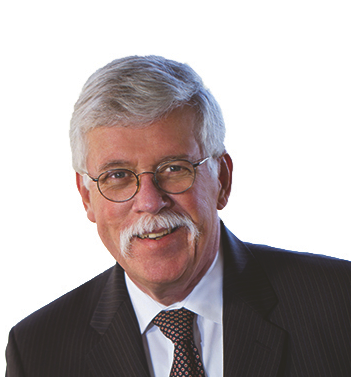
I have been a pastor in National Capital Presbytery for 39 years. Of all the things I have observed during that time, what I find most telling is the way a congregation will blossom or fade depending on who is serving as pastor. During one pastor’s tenure, a congregation will grow numerically and in mission. During another pastor’s tenure, the same congregation will decline in both categories. Usually, the only variable between growth and decline is the pastor. Call the wrong pastor to a healthy congregation and the congregation will struggle to remain healthy.
And yet, we de-emphasize the role of the pastor claiming the role is not crucial to growing congregations. We are a “lay-driven” denomination, it is said. Pastors are called to enable lay people, not exert forceful leadership. Obviously, the role of ordained and non-ordained lay people is of enormous and obvious significance in the PC(USA). Our appreciation of lay ministry is one of the reasons I remain a Presbyterian. However, it is no insult to the laity to say that pastors are absolutely crucial to the health and well-being of the congregations they serve. In fact, I think our congregations understand it better than some pastors.
Why do we have so much trouble owning the centrality of pastoral leadership to healthy congregations? Strong, demanding, pastoral leadership is not authoritarian dominance by pastors over congregations. On the contrary, leadership is about creating a vision that invites the members of a congregation to become engaged and then leading the effort to implement the vision. Of course, we cannot consider this subject in isolation from what is going on in the society around us. Our national government is virtually leaderless as the various people elected to be our leaders attempt to satisfy the interests of small interest groups rather than generate a bold vision of what is best for the whole nation.
Vision-casting leadership is at the heart of our faith tradition. Moses had a vision of freedom and convinced his people to follow him across a dangerous desert to a Promised Land. Mary had a vision of servant leadership that has inspired us for 2000 years. Dr. King had an electrifying vision that mobilized a nation to end formal segregation. As Isaiah predicted, without vision from leaders, very little happens in history or our congregations.
Congregations that thrive do not necessarily need magnetic leadership. But they do need consistent, persistent leadership from their pastors. Our churches yearn to be led by pastors who remind people of the vision when the going gets tough (that would be most days!), who see a way when there is no way, who can make the ideal real.
There is no group of people I would rather be around than pastors. I love what we do, our sense of humor, our sense of call. Oftentimes, I think we are underserved by the denomination we serve. We are not given the kind of ongoing training that healthy corporations routinely give their employees. Once we graduate from seminary, we are pretty much on our own when it comes to improving our professional skills.
At a time when our judicatories seem to be searching for a purpose, how about all of them focusing on improving pastoral leadership? Wouldn’t it be great to have presbyteries regularly provide local continuing education events for clergy around the subject of leadership? Spend some money and bring in high quality experts on leadership. As we try to start 1001 new congregations, why not have the General Assembly identify 1001 pastors willing to engage in a systematic program to improve their leadership skills?
 Behind my thoughts lies the assumption that leadership is a learned skill. Yes, some are born with natural leadership abilities. But not everyone. Actually, not most. Most leaders learn to be leaders. So if we want better and more leaders guiding our congregations, let’s make improving pastoral leadership a priority.
Yours in Christ,
John