Some students arrive at college focused and sure of what they want to do: a platoon of future pharmacists, engineers, teachers and doctors. Others don’t have a clue. And many think they know, coming with a plan, then changing their minds and their majors (sometimes over and over).

What is the responsibility of the college — particularly a church-related college — in helping students figure that out? What role might faith play in that exploration? And does the concept of vocation have a place in the career explorations of students — regardless of what kind of work they may be considering?
Presbyterian College in Clinton, South Carolina, is among 187 colleges that are members of the Network for Vocation in Undergraduate Education (NetVUE) — an initiative administered by the Council of Independent Colleges, with financial support from the Lilly Endowment Inc.
“Lilly has been pouring money into vocation programs for at least the last 15 years,” said Gary Luhr, who recently retired as executive director of the Association for Presbyterian Colleges and Universities.
At Presbyterian College, a two-year, $50,000 grant from Lilly has led to the creation of the Launch Program for Vocation, Leadership and Service — an initiative that involves faculty, administrators and alumni in helping students sift through ideas and possibilities for finding a sense of vocation in life. The basic idea: From the time when students arrive on campus until they graduate, they’ll be encouraged to think about issues of vocation and calling — to help them “articulate their own personal vision of vocation, leadership and service,” the grant application states.
This academic year, the Launch Program has included a class to help students explore the question of what might come next, after graduation or while still in college. They’re learning to assess their interests and values; to develop practical skills such as writing resumes or doing well in interviews; and to consider what for them is work worth doing, and why.
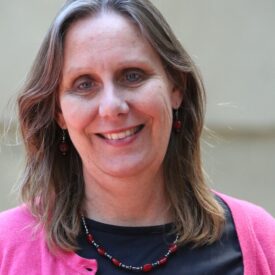
In the first year of Launch, the faculty received training in how to advise students for vocational development — helping them to think about “what it means to be called, and finding what it is you’re supposed to do with life,” said Anita Olson Gustafson, a Presbyterian College history professor who coordinates the Launch Program.
Liberal arts colleges are particularly well positioned to do that, Gustafson said — and to emphasize that incoming students can take some time to explore, that “you don’t have to declare (a major) right away.” Professors are introduced to the skills of “appreciative advising” — how to have one-on-one conversations with students to help them consider their sense of vocation. For example, if a student has a B in one class and a problematic D in another, “the natural thing is to ask them about the D,” she said. “Start with the B,” by asking, “What is going well? Why are you succeeding?” What is it about that class that engages you?
Other aspects of the Launch Program: Students take a small first-year experience class, in which they get to know a professor well. “Studies have shown that people who are really successful after college are people who are very engaged while in college,” Gustafson said.
Presbyterian College also emphasizes service — recognizing that a sense of vocation and calling sometimes comes from a person’s paid job, but other times through commitments in the community, in church, in coaching or mentoring, in relationships formed serving those in need.

Over the years, the focus of the Lilly grants involving vocation has shifted. From 1999 to 2012, the Lilly Endowment funded an initiative called the Program on the Theological Exploration of Vocation (PTEV) — challenging 88 liberal arts colleges and universities affiliated with Christian denominations to develop programs to encourage students to think about vocation. Over those years, Lilly poured more than $221 million into the program — and colleges responded by developing programs ranging from seminars on how to lead lives of significance to offering retreats, service-learning programs and internships.
NetVUE has a somewhat different focus: It’s a membership organization, created with the hope that participating institutions could learn from one another. The efforts include training administrators, senior faculty members and campus ministry staffs — trying to build some longevity into the exploration of vocation on college campuses.
These conversations also are happening when some of the stresses involving college students regularly make the news — including sexual assaults; student suicides and struggles with depression and anxiety; a heavy load of student debt; and the difficulty of finding good jobs after graduation.
Some students feel pressure to pick a major that will lead to a lucrative career — and to avoid majors they might be drawn to but fear wouldn’t pay the rent.

The exploration of vocation exposes students to the idea of people having a calling in life — regardless of what their profession might be. It relates to the idea that “God calls us to do and be whatever we’ve been gifted to do and be,” Luhr said. “To look for a purpose in our life beyond just making enough money and putting food on the table.”
At Presbyterian College, Gustafson encourages students to remain open to that sense of calling — to take a variety of courses, to become involved in service, to talk with mentors, advisors and their peers about possibilities, to explore their own interests and skills.
“There are people who come in knowing exactly what they want, like pre-med, and they take biology and chemistry the same semester and they hate it,” she said. “It ends up being this cathartic semester where everything they thought they wanted to do, they don’t.”
Through the Launch Program, Presbyterian College encourages faculty and staff members to share their own stories of call as well — telling how they found their way, not always in a straight line. “We didn’t have it all figured out either, the vast majority of us,” Gustafson said. “It helps the students a lot” to know they’re not alone.