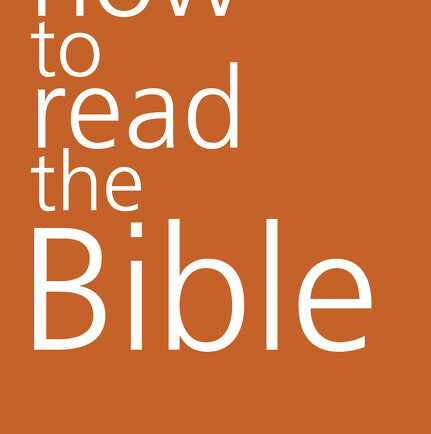

by Harvey Cox
HarperOne, San Francisco. 272 pages
REVIEWED BY DOROTHY LAPENTA
For the past 13 years, I have facilitated a group known as “The Thursday Afternoon Bible Study.” They have recently considered changing their name. “People are really missing out on this great opportunity,” they say. “Call something a Bible study, and people either smirk or tell you they don’t know enough about the Bible to be part of a Bible study.” There’s been no name change. Bible study is what they do, and yet even more.
“How To Read The Bible,” by Harvey Cox, the Hollis Research Professor of Divinity at Harvard University, is just what the title states, and yet even more. Cox draws the distinction between “Bible studies,” where small groups gather to learn and discuss the Bible and “biblical studies,” where scholars gather to scrutinize biblical texts. These groups need each other. His hope in writing the book is to construct a bridge between “Bible study” and “biblical study” using a spiritual approach to the Bible to deepen one’s personal involvement in the inseparable journey of knowing God and knowing self.
The reader is led through Cox’s own journey of approaching the Bible — beginning with the “good ole” Bible stories heard in Sunday school, to the historical critical approach, to spiritual readings — and how each of these becomes integrated in his own life of faith. This is where he tells the reader to begin. Begin with the narrative, ask what is happening, then become an amateur history detective uncovering who, what, when, where and why. Then move to the spiritual stage and dialogue with the text. Be ready to change and be surprised. Be ready to argue, respecting what the texts says, but honoring your right to see it differently.
The experience of reading this book engages one in both Bible study and biblical study as each chapter addresses a certain book of the Bible, placing it in context, considering translation, discussing overarching themes, making connections to archaeology and history, and making clear that approaches need to be different. One cannot approach and read the Book of Joshua and its narrative of a conquest of slaughter in the same way one approaches and reads Paul’s letters to churches forming in the time of the Roman Empire. In each chapter, there are sections specifically dedicated to enhancing study tips. Examples include: Compare Job’s protest against being born with Jeremiah’s protest; close the Bible, and listen to the words of Matthew set to music in J.S. Bach’s “St. Matthew’s Passion;” check out these resources for discovering how the Bible is read in settings different from your own.
This book would not be my first choice for a beginning group in the observation phase of discovering Bible study. But with time, trust and an openness to let Scripture both comfort and disturb, Cox’s book should not be missed.
Cox tells the reader to close his book, open the Bible and start reading, believing that the Bible itself leads our reading. I would agree, but would add that with the guidance of Cox’s book, we glean even more.
DOROTHY LAPENTA is the pastor of Hope Presbyterian Church in Mitchellville, Maryland.